Growing & Caring for Beardtongue (Penstemon)
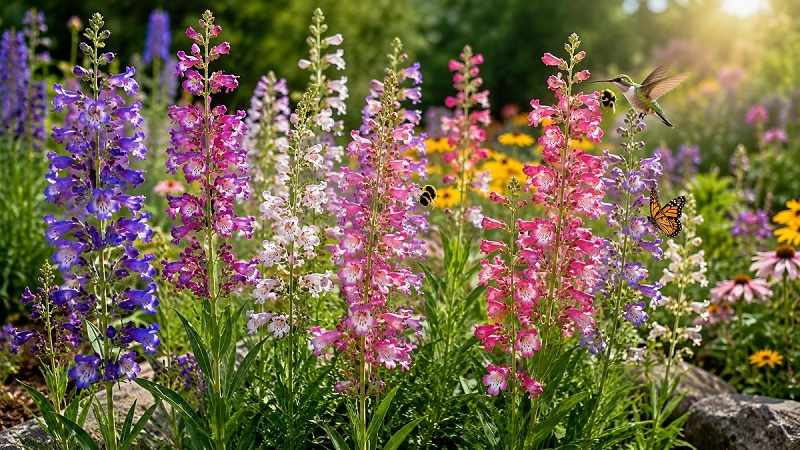
Few native North American perennials match the sheer versatility, striking structural form, and ecological value of the genus Penstemon, universally known by the common name Beardtongue.
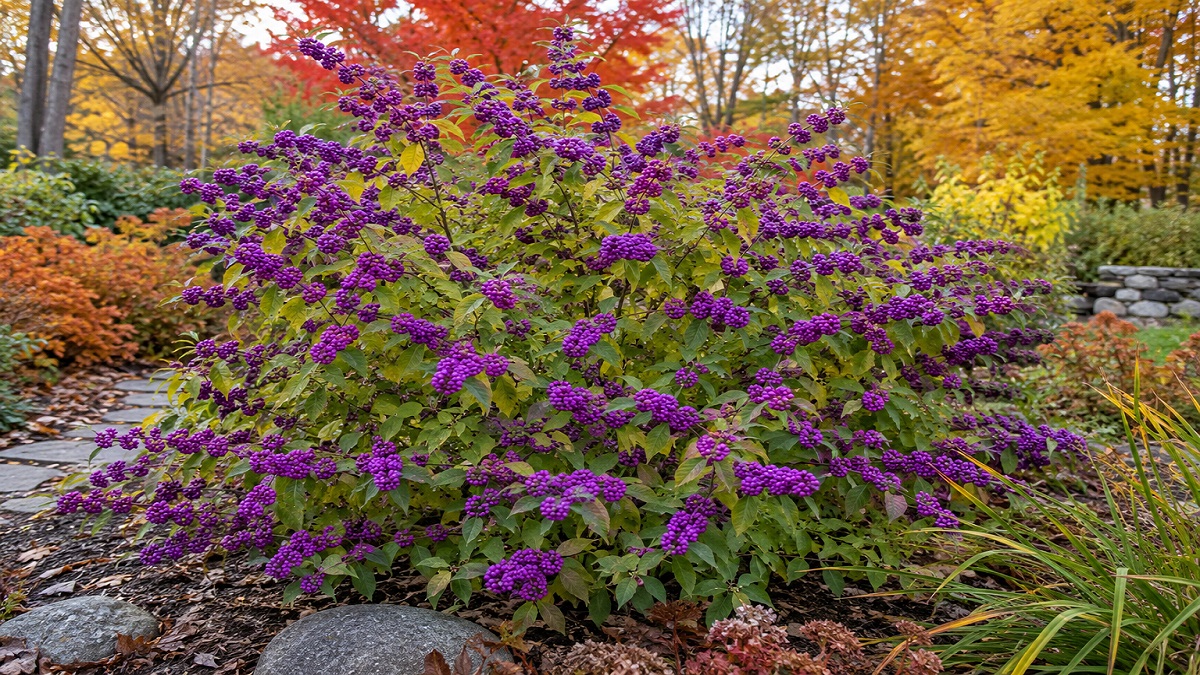
Few plants can truly claim to steal the spotlight during the quiet, fading days of autumn. While maples offer their fiery canopies and chrysanthemums color the borders, the Beautyberry (genus Callicarpa) performs a theatrical transformation that is virtually unmatched in the plant kingdom. From late summer through the heart of winter, this otherwise unassuming deciduous shrub erupts into heavy, tight clusters of glossy, metallic-purple berries that look almost synthetic in their brilliance.
Whether you want to support native wildlife, introduce a powerful pop of late-season color to your landscape, or grow an exceptionally low-maintenance shrub that thrives in tough conditions, the Beautyberry is a premier candidate for your backyard. In this exhaustive, masterclass-level guide, we will cover everything from identifying the best species for your region to planting, pruning, propagating, and managing pests.
The name Callicarpa is derived from the Greek words kallos, meaning "beautiful," and karpos, meaning "fruit." This botanical title is entirely well-earned. Distributed widely throughout temperate and subtropical regions of North America, Asia, and Central America, the genus contains roughly 140 species of deciduous and evergreen shrubs and small trees.
In the home garden, we primarily focus on a handful of highly ornamental, cold-hardy deciduous species. While their spring flowers are small, dainty, and often overlooked, their real claim to fame is the autumn fruit display. These berries serve as a critical food source for over forty species of songbirds, making the Beautyberry an ecological powerhouse as well as an aesthetic treasure.
Before adding a Beautyberry to your shopping cart, it is important to understand the distinctions between the primary species available in the nursery trade. While they all boast gorgeous autumn berries, they differ in size, growth habit, cold hardiness, and native status.
The native darling of the southeastern United States, Callicarpa americana is perhaps the most robust and dramatic of the species. It features large, fuzzy, light-green leaves and produces tight, heavy clusters of deep violet-purple berries that hug the woody stems closely. This species is slightly less cold-hardy than its Asian cousins, thriving comfortably in USDA Zones 6 to 10. Left unpruned, it easily reaches 6 to 8 feet tall and wide with a loose, open, and relaxed growth habit.
Known for its refined elegance, the Japanese Beautyberry is more compact and upright, typically maturing around 4 to 6 feet tall. Its leaves are narrower and smoother than the American species, and its purple berries are carried on short, delicate stalks just above the foliage, giving it an airy, artistic appearance. It is highly cold-hardy, performing exceptionally well down to USDA Zone 5.
If you have a smaller yard, Callicarpa dichotoma (sometimes called the Purple Beautyberry) is an excellent choice. Reaching just 3 to 5 feet in height, it possesses a graceful, weeping growth habit. The long, arching branches cascade downward, loaded with small but incredibly dense violet berries. The cultivar 'Early Amethyst' is highly prized for setting its fruits much earlier in the season than other varieties.
| Species / Cultivar | Native Origin | Hardiness Zones | Mature Dimensions | Notable Characteristics |
|---|---|---|---|---|
| Callicarpa americana | North America (Southeastern US) | 6 - 10 | 6' - 8' Tall & Wide | Large, fuzzy leaves; dense, heavy, stem-hugging purple berry clusters. |
| Callicarpa dichotoma | East Asia (China, Japan, Korea) | 5 - 8 | 3' - 5' Tall & Wide | Compact, weeping habit; dainty, small violet berries arranged neatly along branches. |
| Callicarpa japonica | Japan | 5 - 8 | 4' - 6' Tall & Wide | Sleek, upright habit; highly cold-tolerant; metallic purple berries on delicate stalks. |
| 'Lactea' (C. japonica) | Cultivar | 5 - 8 | 4' - 5' Tall & Wide | Rare, exquisite pure-white berries that contrast beautifully against dark foliage. |
| 'Pearl Glam' ® | Hybrid Cultivar | 5 - 8 | 4' - 5' Tall (Narrow) | Dark purple foliage from spring to fall with upright growth and violet-purple berries. |
Beautyberries are incredibly forgiving, resilient plants. They can take a beating from heat, survive cold snaps, and adapt to mediocre soils. However, to coax the most spectacular berry display out of your shrub, you should aim to meet their optimal environmental preferences.
While Beautyberry grows naturally in the understory of pine and hardwood forests (implying a tolerance for shade), it produces the most berries and maintains a tighter, more attractive form when planted in full sun (at least 6 hours of direct sunlight per day). In deep shade, the plant will become leggy, sparse, and produce only a scattering of fruit.
The ideal soil is a loose, organic-rich, moist loam that drains freely. However, Beautyberries are notoriously adaptable. They will grow in heavy clay, sandy soils, and rocky terrains. The key factor is drainage; they do not like their roots sitting in stagnant, waterlogged water, which can encourage root rot.
Once established, Beautyberry is remarkably drought-tolerant, thanks to a deep and expansive root system. During its first growing season, give it deep, weekly waterings to help the roots take hold. Once mature, normal rainfall is usually sufficient, though supplemental watering during hot, dry summer stretches will keep the foliage looking lush and ensure a heavy berry crop.
Planting a Beautyberry is straightforward. While you can plant it in late spring after the threat of frost has passed, autumn is the absolute best time to plant. Planting in the fall allows the shrub to establish a robust root system over the winter without having to battle scorching summer heat.
Many novice gardeners are afraid to prune their shrubs, fearing they might cut off next season's flowers. With Beautyberry, you can set those fears aside. Beautyberries bloom and produce fruit on "new wood" (the fresh growth produced during the current spring and summer).
Because of this, you can prune the plant back quite hard in the late winter or very early spring, just as the plant is waking up from dormancy. Pruning serves two critical purposes: it keeps the shrub from becoming wild and leggy, and it stimulates a flush of vigorous new growth, which translates directly into more branches, more flowers, and ultimately, a massive bounty of autumn berries.
For most upright and weeping species, like Callicarpa dichotoma and Callicarpa japonica, you can cut the entire plant back to a low framework of 12 to 18 inches above the ground every late winter. For the larger native Callicarpa americana, you can either cut it back to 2 feet from the ground, or simply remove one-third of the oldest, thickest woody stems down to ground level to rejuvenate the plant while maintaining its natural, large, arching architecture.
To help you manage your Beautyberry care routine throughout the year, refer to this handy seasonal checklist:
Apply a balanced, slow-release organic fertilizer or a fresh top-dressing of compost around the drip line of the shrub as new growth emerges. Apply a fresh layer of mulch to lock in spring rains. Watch for the emergence of soft, light-green leaves and tiny pinkish-purple flower buds in late spring.
Monitor soil moisture during prolonged hot, dry spells. If leaves begin to droop slightly, provide a deep watering at the base. The inconspicuous flowers will bloom during this time, attracting bees, butterflies, and other beneficial pollinators. Do not prune during summer, as you will cut off the developing flower clusters.
This is the prime showcase season! The foliage may turn a pleasant, soft yellow before dropping, leaving behind breathtaking, naked branches packed with metallic purple fruits. Take note of the songbirds visiting your yard to feast. This is also the ideal time to dig, divide, or plant new shrubs.
Enjoy the architectural beauty of the berry-laden bare branches in the snow. Once the berries are completely consumed by birds or drop off, and the plant is fully dormant (late winter), get your hand pruners and loppers ready to cut the shrub back to rejuvenate it for the coming spring.
If you fall in love with your Beautyberry, you don't need to spend a fortune at the garden center to get more. They are exceptionally easy to propagate through several simple techniques.
Take a 4-to-6-inch cutting from a flexible, green, non-blooming stem in late spring. Strip the leaves from the bottom half of the cutting. Dip the cut end in rooting hormone powder, then insert it into a small pot filled with a moist, sterile mix of peat moss and perlite. Cover the pot with a clear plastic bag to create a mini-greenhouse, keeping it in indirect light. Keep the soil moist, and roots should develop in 4 to 6 weeks.
When the plant is dormant, cut a pencil-thick woody stem about 6 to 8 inches long. Make a straight cut just below a bud at the bottom, and an angled cut at the top. Dip the bottom in rooting hormone and push it deep into a pot of moist potting soil, leaving only the top two buds exposed. Keep the pot in a sheltered, frost-free area (like an unheated garage or greenhouse). By spring, the cutting will root and push out new leaves.
In summer, take one of the long, flexible outer branches of the shrub and bend it gently down to the ground. Scratch a small nick in the bark on the underside of the branch where it touches the soil. Pin this section of the branch securely to the dirt using a landscape staple or a heavy rock, leaving the leafy tip exposed. Within a few months, roots will grow from the buried nick. Once a strong root system forms, simply snip the branch away from the mother plant and transplant your new baby shrub.
One of the greatest joys of growing Beautyberry is its virtually pest-free nature. It is highly resistant to deer, and native insects rarely cause significant cosmetic damage. However, occasionally gardeners may run into minor issues:
Browse through our collection of comprehensive plant profiles to find the perfect additions to your sunny landscape borders and native meadows.