Aeonium vs. Echeveria: Key Differences
Learn the differences between Aeonium and Echeveria, including growth habit, leaves, light, watering, seasonal growth, flowers, propagation, and climate needs.

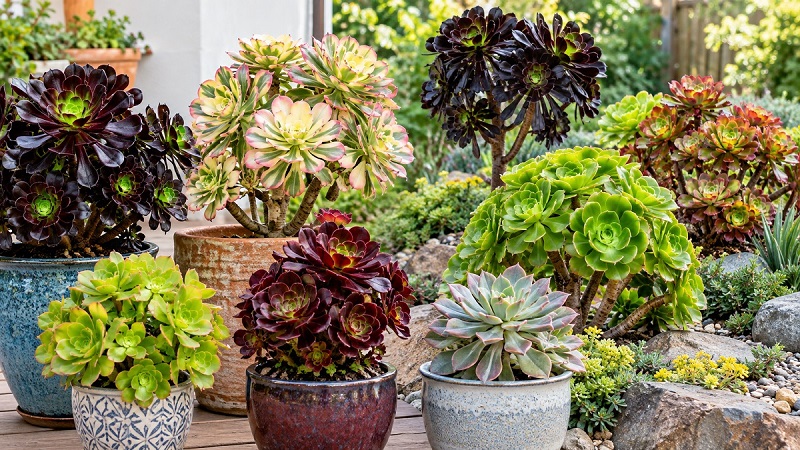
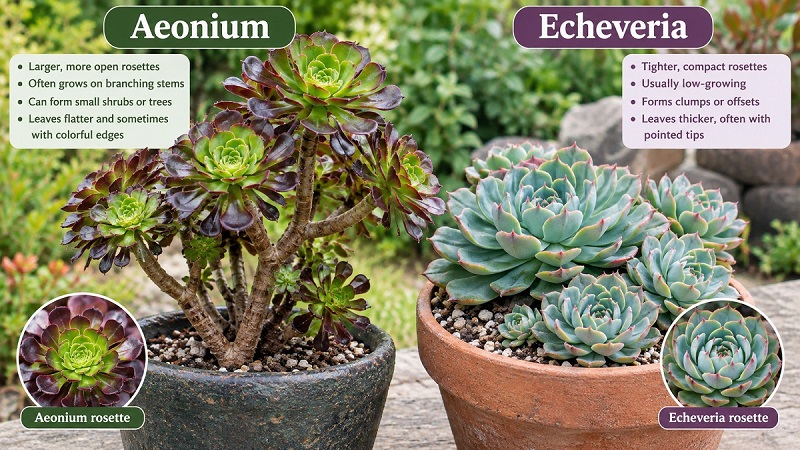
Aeoniums are among the most distinctive succulents for gardeners who enjoy bold foliage without needing a plant that demands constant attention. Their fleshy leaves are arranged in neat rosettes, often perched on branching stems that gradually develop a small, tree-like appearance. Depending on the species and cultivar, the foliage may be bright green, deep burgundy, almost black, yellow-green, or variegated.
Although aeoniums are often sold alongside other drought-tolerant succulents, their growing rhythm is somewhat different. Many species grow most actively during the cooler months and slow down or become partly dormant during hot summer weather. Understanding this seasonal pattern is one of the most important parts of successful aeonium care. A plant that appears quiet during a hot spell may simply be responding normally to the conditions.
With bright light, excellent drainage, sensible watering, and protection from severe frost, aeoniums can remain attractive for years. They work particularly well in containers because their growth habit can be easily managed and individual rosettes can be propagated from stem cuttings when a plant becomes too large or leggy.
The key to healthy aeoniums: bright light, fast-draining soil, and watering that follows their seasonal growth pattern.
Aeonium is a genus of succulent plants in the family Crassulaceae. Most species cultivated by gardeners are valued for their architectural rosettes rather than for flowers. The rosettes may sit close to the ground in smaller species or develop at the ends of elongated, branching stems in larger types.
One of the best-known species is Aeonium arboreum, sometimes called tree aeonium because mature plants can develop woody-looking stems and a branching habit. Other species have very different forms. Aeonium tabuliforme, for example, develops an unusually flat rosette, while popular dark-leaved cultivars are grown for their dramatic contrast with green companion plants.
The fleshy leaves store water, allowing the plants to cope with periods of dryness. However, this does not mean aeoniums should be treated exactly like every other succulent. Their preference for cooler growing conditions is particularly important. During hot weather, leaves may curl inward and the rosettes may become smaller as the plant reduces water loss.
Many familiar succulents are strongest during the hottest part of the year. Aeoniums often behave differently. They can become much more active when temperatures moderate, particularly in autumn, winter, and spring.
This seasonal rhythm affects watering, feeding, pruning, and even the plant's appearance. A summer aeonium that looks less vigorous is not necessarily suffering from a lack of water.
Aeonium leaves grow in a spiral arrangement around the center of each rosette. Avoid repeatedly wetting the center of tightly packed rosettes, especially where airflow is poor. Good drainage and adequate ventilation are more useful than keeping the foliage constantly moist.
The following table summarizes the general characteristics of commonly cultivated aeoniums. Individual species and cultivars can vary, so use the plant's specific requirements when they are known.
| Characteristic | Specific Aeonium Information |
|---|---|
| Genus | Aeonium |
| Plant family | Crassulaceae |
| Plant type | Succulent perennial |
| Leaf arrangement | Fleshy leaves arranged in rosettes |
| Growth habit | Low-growing, branching, or tree-like depending on species |
| Typical foliage colors | Green, yellow-green, burgundy, dark purple, and variegated forms |
| Light requirement | Bright light; many types tolerate full sun when acclimated |
| Soil requirement | Fast-draining soil with good mineral content and no standing water |
| Water requirement | Water thoroughly when appropriate, then allow the growing medium to dry; reduce watering during hot dormancy |
| Active growing period | Often autumn through spring, depending on climate and species |
| Summer behavior | Many types slow down or become partly dormant during hot weather |
| Flower color | Usually yellow or yellowish flowers in branched clusters |
| Flowering | Generally occurs after sufficient maturity; flowering timing varies by species and climate |
| Propagation | Stem cuttings, offsets, and sometimes seeds |
| Cold tolerance | Generally frost-sensitive; protect plants from freezing temperatures |
| Best growing method | Containers are particularly useful where winters are cold or summers are excessively wet |
| Common garden use | Container displays, rock gardens, succulent beds, balconies, patios, and sheltered borders |
Bright light is essential for compact, attractive aeonium growth. In mild climates, many aeoniums can handle several hours of direct sunlight. Plants with dark or strongly colored foliage generally develop better coloration when they receive plenty of light.
However, a plant that has been growing indoors or in shade should not suddenly be moved into intense afternoon sun. The leaves can scorch before the plant has time to adjust. Gradually increase exposure over several days or weeks, depending on how different the new location is.
In very hot climates, morning sun followed by bright afternoon light can be easier for container-grown aeoniums than uninterrupted exposure to harsh afternoon heat. Some light shade during the hottest part of the day can help reduce stress without making the plant overly shaded.
If the rosettes become stretched, loose, or unusually green, insufficient light may be responsible. Move the plant gradually toward a brighter location rather than making a sudden change.
Good drainage matters more than soil richness. Aeoniums can tolerate periods of dryness, but roots that remain surrounded by saturated soil for too long are vulnerable to rot.
A quality succulent or cactus mix can work well, particularly when combined with additional mineral material such as pumice, perlite, coarse grit, or another suitable drainage amendment. The finished mix should drain quickly while still holding enough moisture for the roots to use.
Aim for a loose, porous growing medium rather than dense garden soil. The roots need access to both moisture and air.
Watering is where aeonium care often differs from the advice given for other popular succulents. Instead of following a rigid weekly schedule, pay attention to temperature, season, soil moisture, and the condition of the plant.
During active growth, water thoroughly enough to moisten the root ball, then allow excess water to drain away. The growing medium should be allowed to dry sufficiently before watering again. Avoid giving frequent small amounts that only wet the surface.
When temperatures become very high, many aeoniums slow their growth or enter partial dormancy. Their water demand can drop significantly. Watering heavily simply because the leaves look less plump can increase the risk of root problems.
Summer care depends on local conditions. A plant in a cool, bright coastal climate may continue growing while one exposed to intense inland heat becomes dormant. Watch the plant rather than relying solely on the calendar.
Persistent softness, yellowing lower leaves, a collapsing stem, unpleasant-smelling soil, or blackening tissue can indicate serious moisture problems. Remove affected material where appropriate and allow the growing medium to dry. If the stem or roots have rotted extensively, healthy sections may need to be salvaged for propagation.
Aeoniums generally prefer mild temperatures and should be protected from freezing conditions. Their tolerance varies between species, but prolonged frost can cause severe damage to leaves, stems, and growing points.
In regions with cold winters, containers make seasonal protection much easier. Move plants into a bright sheltered position when freezing weather is expected. Avoid placing them directly beside a strong heat source because sudden dry heat can also stress the foliage.
Aeoniums generally do not need artificially high humidity. Good air circulation is more useful than constantly moist air, particularly when plants are grown close together or during prolonged rainy periods.
In humid climates, drainage becomes especially important. Protect outdoor plants from locations where rainwater repeatedly pools around the roots.
Aeoniums are not heavy feeders. A modest amount of balanced fertilizer during active growth is usually sufficient for container plants, provided the growing medium is otherwise suitable.
Avoid repeatedly feeding a plant that is dormant or visibly stressed by extreme heat. Fertilizing a plant that is struggling with poor drainage, root damage, or inadequate light will not solve the underlying problem.
If you regularly repot into fresh, nutrient-containing potting mix, additional fertilizer may be needed less often. Always follow the dilution instructions for the fertilizer you use rather than assuming stronger feeding will produce faster growth.
Containers are one of the easiest ways to grow aeoniums successfully. They allow you to control drainage and move the plant when weather conditions become unsuitable.
Select a pot with drainage holes and choose a size appropriate for the root system. An oversized container filled with wet soil can remain damp for much longer than a well-matched pot.
Terracotta pots are useful because their porous sides can allow the growing medium to dry more quickly. Plastic and glazed containers can also work perfectly well when the soil mix and watering habits are appropriate.
As aeoniums become tall or branch heavily, choose a stable container that will not tip easily. Heavy pots can be particularly useful for large tree-form plants grown on patios or balconies.
Pruning is not normally necessary for basic health, but it can improve the shape of mature plants and provide useful material for propagation. Tall stems can eventually become bare beneath their rosettes, particularly when older leaves naturally drop away.
Use clean, sharp pruning tools when removing stems. Make deliberate cuts rather than crushing the tissue. If you plan to propagate the removed stem, allow the cutting surface to dry and callus before planting it in a suitable growing medium.
Older leaves beneath the rosette commonly dry and fall away. You can gently remove completely dead leaves, but do not pull firmly on leaves that are still attached and green.
Keeping the plant reasonably open also improves air movement around the stems and makes it easier to spot pests or damaged tissue.
Stem cuttings are one of the simplest ways to propagate branching aeoniums. The method works particularly well when pruning has produced healthy pieces of stem with a rosette at the end.
Choose a firm, healthy stem with no obvious signs of rot or pest damage. A cutting with a healthy rosette and a reasonable length of stem gives you a useful starting point.
Use a clean sharp knife or pruning tool. Avoid crushing the stem because damaged tissue can be more vulnerable to decay.
Place the cutting somewhere bright and sheltered while the cut surface dries and forms a callus. The exact time required varies with temperature, humidity, and the thickness of the stem.
Once the cut end has dried, place the stem into a suitable succulent growing medium. Keep the cutting stable and avoid burying a large portion of the stem.
Give the cutting bright indirect or filtered light initially and avoid keeping the medium constantly wet. Once roots begin developing and the plant resumes growth, gradually establish it in its normal growing position.
Some aeoniums also produce offsets or branches that can be separated and rooted. Propagation from seed is possible but is less commonly used by home gardeners who want plants identical to a particular cultivar.
Curled leaves are not automatically a sign of serious drought. Aeoniums naturally change their appearance during hot weather and may close their rosettes to reduce water loss. Check the soil and growing conditions before increasing irrigation.
Long bare stems and widely spaced leaves often indicate insufficient light. Move the plant gradually toward brighter conditions. If the plant has become severely stretched, pruning and propagation can be a better solution than trying to restore the old growth.
A small number of aging lower leaves turning yellow and drying is normal. Widespread yellowing combined with persistently wet soil is more concerning and may indicate overwatering or root stress.
A soft stem can indicate rot, particularly when the plant has been kept wet for an extended period. Inspect the affected area promptly. If healthy stem tissue remains above the damaged section, a clean cutting may sometimes be salvaged and rooted.
Pale, tan, brown, or bleached patches can develop when a plant accustomed to shade is suddenly exposed to intense sunlight. Increase light gradually whenever possible.
Aeoniums can occasionally attract common succulent pests, particularly when grown in crowded conditions or protected environments. Regular inspection is more useful than treating a problem that has not appeared.
Mealybugs may hide around leaf bases, stems, and the protected center of rosettes. Small infestations can often be removed manually. Improve airflow and continue checking the plant because pests can remain hidden in tight growth.
Aphids may gather around young growth and developing flower stems. A strong but gentle stream of water can dislodge some insects, while insecticidal soap can be considered when a larger infestation persists. Test any spray on a small area first.
Scale can appear as small, fixed bumps on stems or leaves. Remove isolated pests carefully and monitor nearby plants. Persistent infestations may require repeated treatment with an appropriate horticultural product.
Mature aeoniums can produce attractive branched flower clusters, often carrying yellow or yellowish flowers. Flowering is generally more common when plants are mature and growing under favorable conditions.
A rosette that flowers may change afterward, depending on the species and growth form. Some monocarpic aeoniums die after flowering, while other rosettes or branches on the same plant can continue growing. Do not assume that every flowering aeonium will behave in exactly the same way.
If a flowering stem appears, enjoy the display and continue monitoring the plant's condition. Remove spent flower structures when they have finished if you want to keep the plant tidy.
| Season | What to Watch For | Care Approach |
|---|---|---|
| Autumn | Temperatures begin to moderate and growth may increase. | Gradually resume more regular watering as the plant becomes active. |
| Winter | Many aeoniums remain actively growing in mild climates. | Provide bright light and water according to soil moisture and weather. |
| Spring | Growth can remain strong before summer heat arrives. | Continue sensible watering and provide adequate light and airflow. |
| Summer | Hot conditions may cause partial or complete dormancy. | Reduce watering as necessary and protect plants from extreme heat and prolonged wet conditions. |
This seasonal pattern is a useful general guide rather than a strict calendar. Local climate has a major influence on aeonium behavior. In places with mild summers, plants may continue growing while those exposed to extreme heat can shut down almost completely.
In frost-free or very mild regions, aeoniums can be grown outdoors throughout the year. They are particularly effective in rock gardens, raised beds, succulent borders, and patio containers.
Choose a position where excess rain can drain away quickly. Aeoniums can cope with periods of dryness, but a combination of heavy rainfall, poor drainage, and cool temperatures can create difficult conditions for the roots.
In very hot areas, give plants protection from the most intense afternoon sun if they show signs of heat stress. A position with strong morning light and some afternoon protection can provide a useful compromise.
Aeoniums can be grown indoors when they receive enough bright light. A bright window, sunroom, or other well-lit location is preferable to a dim corner.
Keep the container away from consistently wet conditions and make sure excess irrigation can drain freely. Rotate the pot periodically if the plant begins leaning toward the light.
Indoor plants may also benefit from being moved outdoors during suitable weather. Make the transition gradually so that foliage does not become scorched by sudden exposure to strong sunlight.
Light is the biggest factor in maintaining a compact shape. A plant receiving inadequate light may stretch toward the brightest window, leaving long sections of bare stem between rosettes.
Rather than repeatedly cutting the plant without addressing the cause, improve the growing conditions first. Once light is adequate, older leggy sections can be pruned and healthy rosettes can be rooted as new plants.
Containers can also be rotated occasionally to encourage more even growth. Remove dead leaves and inspect stems regularly so that small pest or rot problems do not remain hidden.
The architectural shape of aeonium rosettes makes them useful as focal plants. Green varieties provide a calm backdrop, while dark-leaved cultivars can create strong contrast beside silver, blue-green, or bright green foliage.
Container displays are particularly effective because the sculptural rosettes can be positioned where they are easy to appreciate at eye level. Combine them with other plants only when their watering and light requirements are compatible.
Avoid overcrowding. Giving each plant enough space for airflow helps preserve the clean appearance of the rosettes and makes routine inspection much easier.
Growing aeoniums successfully is less about constant attention and more about understanding their natural rhythm. Give them plenty of light, use a loose and fast-draining soil mix, and adjust watering according to the season rather than following a rigid schedule.
The most important change for gardeners accustomed to summer-growing succulents is recognizing that aeoniums often become less active during intense summer heat. When the weather cools, their rosettes can open again and new growth can resume.
Once established in the right position, aeoniums are rewarding plants with year-round visual interest. Their sculptural rosettes, branching stems, unusual seasonal behavior, and wide range of foliage colors make them especially valuable for containers, succulent collections, and water-wise garden designs.
Continue exploring our gardening guides with more plant profiles, growing tips, and practical advice for creating a healthy, productive garden.