Growing & Caring for Aeoniums
Learn how to grow and care for aeoniums, including light, watering, soil, temperature, propagation, pruning, pests, flowering, and seasonal care.
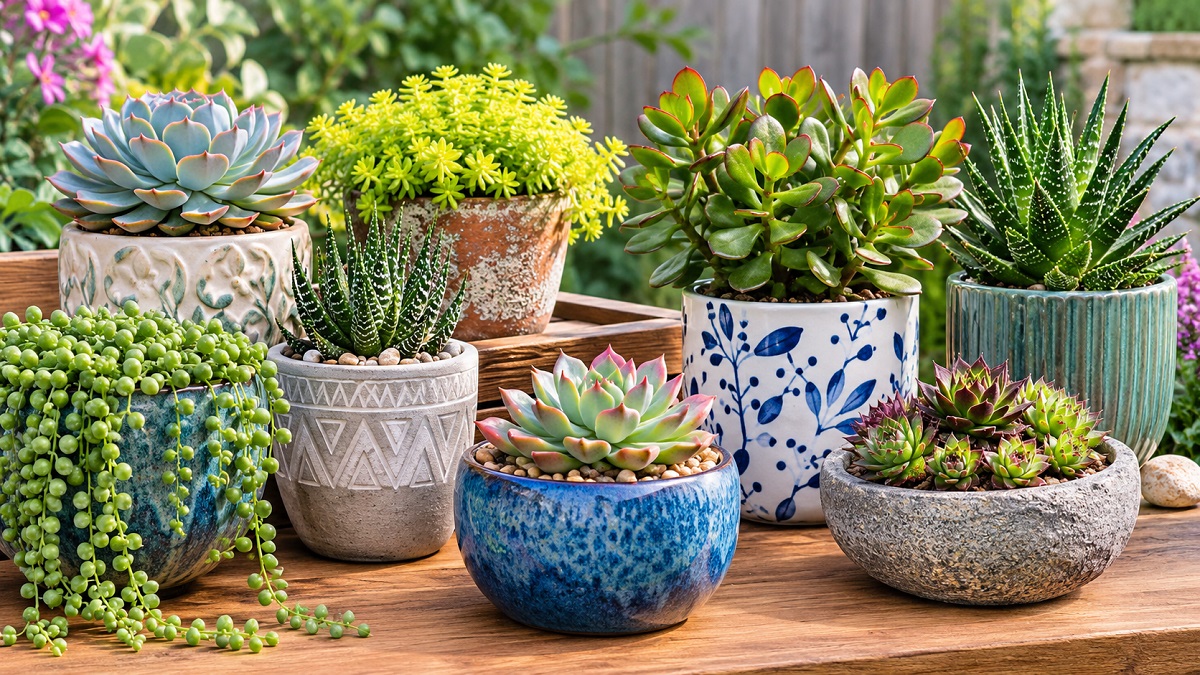
Succulents are among the easiest plants to fit into a small garden. Their architectural shapes, unusual colors, and generally modest water needs make them useful for patios, balconies, windowsills, courtyards, and other spaces where traditional garden plants may feel crowded. A well-chosen collection can provide plenty of character without taking up much room.
The best succulents for containers are not necessarily the largest or most dramatic varieties. Compact rosette-forming plants, trailing species, clumping types, and small upright succulents often perform better when space is limited. The key is matching the plant with the amount of sunlight, container size, drainage, and climate available.
Small space tip: Choose plants according to light and mature size rather than appearance alone.
A small garden does not mean you have to settle for a limited selection of plants. In fact, succulents offer one of the widest ranges of forms for container gardening. Some grow as tight rosettes, others form upright columns, while trailing varieties soften the edges of pots and hanging baskets.
Start by looking at the mature size of the plant. A succulent that is only a few inches wide at the nursery may eventually outgrow a small pot. Compact varieties are usually easier to manage, particularly on balconies, shelves, narrow patios, and small courtyards.
Sun exposure is equally important. Many succulents appreciate strong light, but not every species handles intense afternoon sun equally well. If your garden receives only a few hours of direct sunlight, choose plants that tolerate bright indirect light or partial sun rather than forcing sun-loving varieties into a dim corner.
Compact growth, attractive foliage, modest water requirements, and tolerance of container conditions are all useful qualities. Plants that remain relatively tidy are especially convenient where there is little room for pruning or rearranging.
Succulents are often chosen for their flowers, but foliage is usually their main attraction. Blue-gray leaves, deep green rosettes, silvery surfaces, red margins, and geometric growth habits can keep a container interesting even when no flowers are present.
Echeverias are excellent choices when you want a compact plant with a neat, symmetrical appearance. Their fleshy leaves form attractive rosettes in shades ranging from green and blue-gray to pink, purple, and red depending on the species and cultivar.
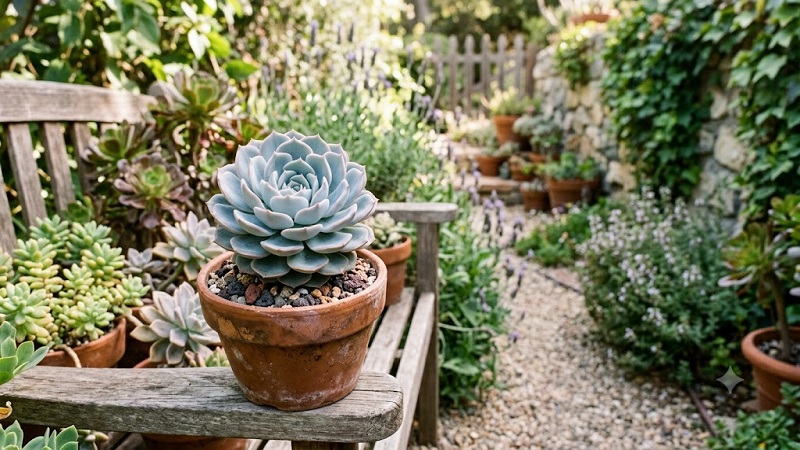
They work particularly well in shallow bowls, small pots, troughs, and mixed succulent arrangements. Give them plenty of light and use a sharply draining growing medium. Avoid allowing water to sit in the center of the rosette for long periods.
Haworthias are particularly useful for bright indoor spaces, covered patios, and gardens that receive filtered light. Many stay compact and produce attractive pointed leaves, stripes, spots, or translucent markings.
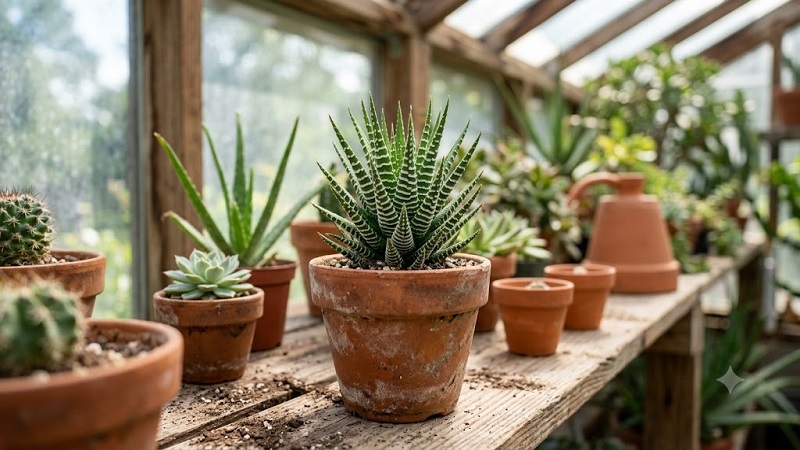
Compared with many sun-loving succulents, Haworthia can be more forgiving in lower-light locations. That makes it a practical choice for a small balcony or windowsill that does not receive strong afternoon sun.
Smaller Aloe species and cultivars can bring bold, upright foliage to a container without requiring a large planting area. Their pointed leaves provide a different shape from the rounded rosettes of Echeveria and make them useful for adding height.
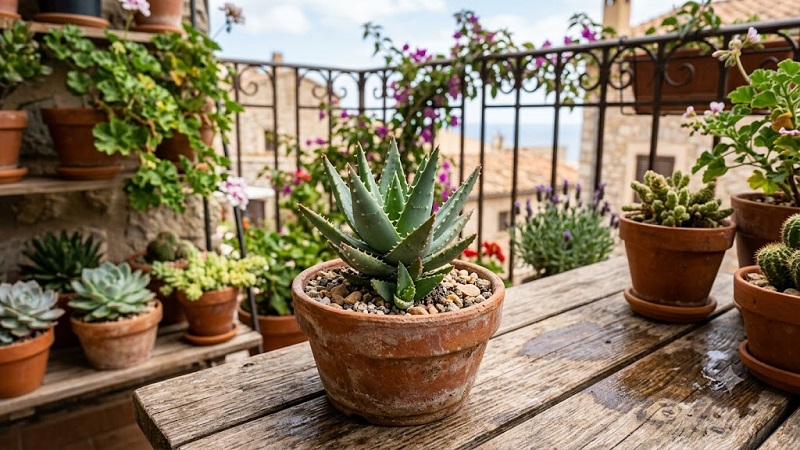
Choose compact forms for small pots and avoid planting a naturally large Aloe in a tiny container simply because it looks small at the nursery. Good drainage is essential, particularly during cooler or rainy periods.
Sedums offer tremendous variety. Some form low mats, some produce upright clusters, and others trail over the edge of a pot. Their small leaves can create a softer texture than larger-leaved succulents.
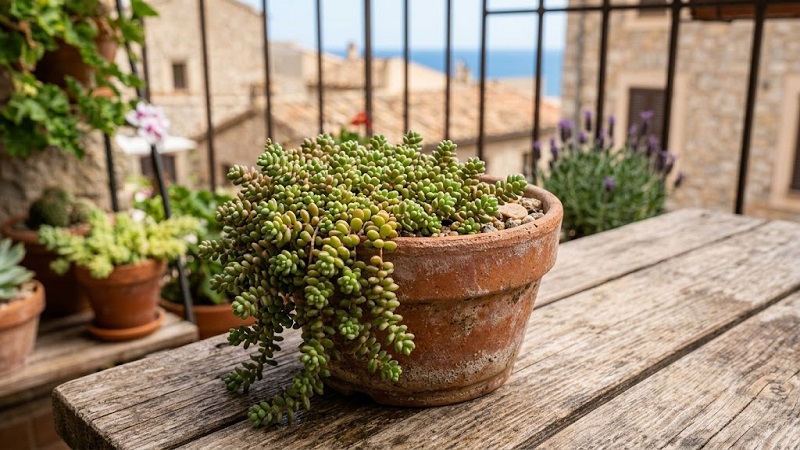
Trailing Sedums are especially useful for raised containers and hanging planters. They can spill over the edge while leaving the center of the container available for an upright companion plant.
Crassulas include many compact plants suitable for containers. Their growth habits range from low and spreading to upright and branching, giving gardeners plenty of choices for small-space displays.
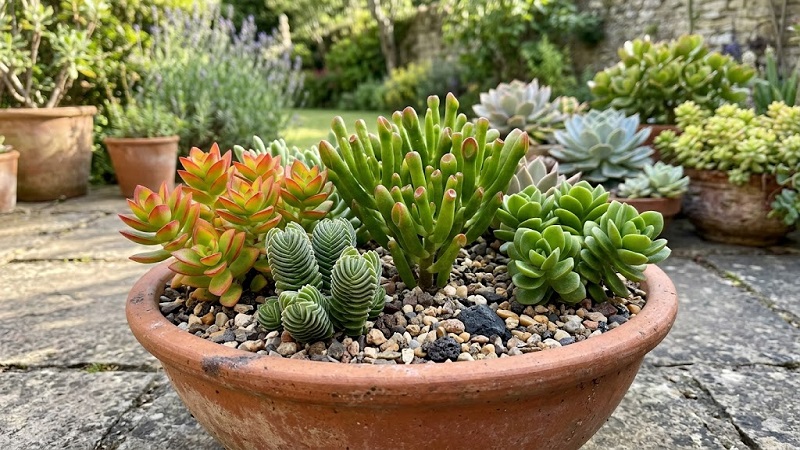
Jade plant types are among the best known, although compact Crassula cultivars can be more appropriate where space is limited. Let the growing medium dry between thorough waterings and provide strong light.
Sempervivums, often called hens and chicks, produce clusters of rosettes that gradually fill a container. Their ability to form offsets makes them particularly appealing for shallow pots, rock gardens, and compact outdoor displays.
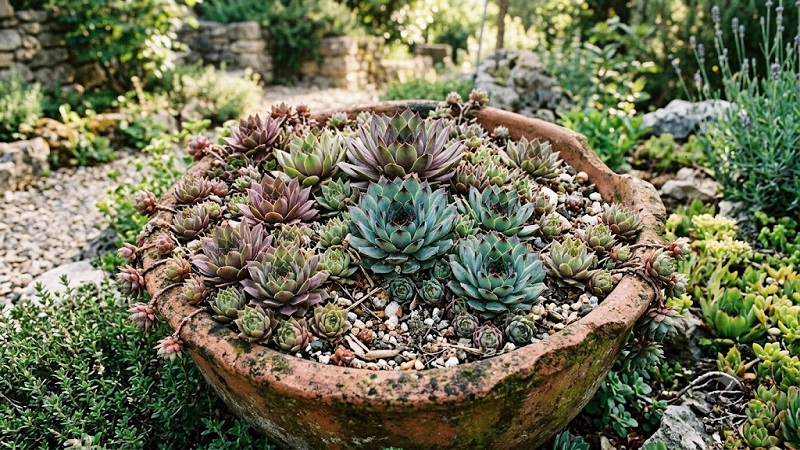
They are best suited to conditions where they receive adequate sunlight and excellent drainage. Their clustered growth also gives a container a naturally layered appearance without requiring several different plants.
Graptopetalum species are prized for their attractive rosettes and often subtle pastel coloring. Their leaves can develop pink, lavender, gray, or blue-gray tones under suitable growing conditions.
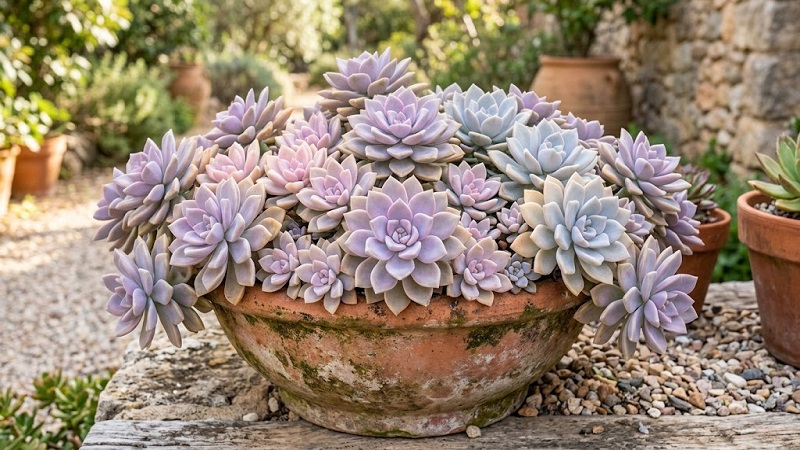
These plants are useful when you want a container to have a calm, muted color palette rather than relying on bright flowers. They can also combine well with Echeveria and other rosette-forming succulents.
Graptoveria hybrids combine characteristics of Graptopetalum and Echeveria. Many have compact rosettes with attractive coloring and a strong architectural form.
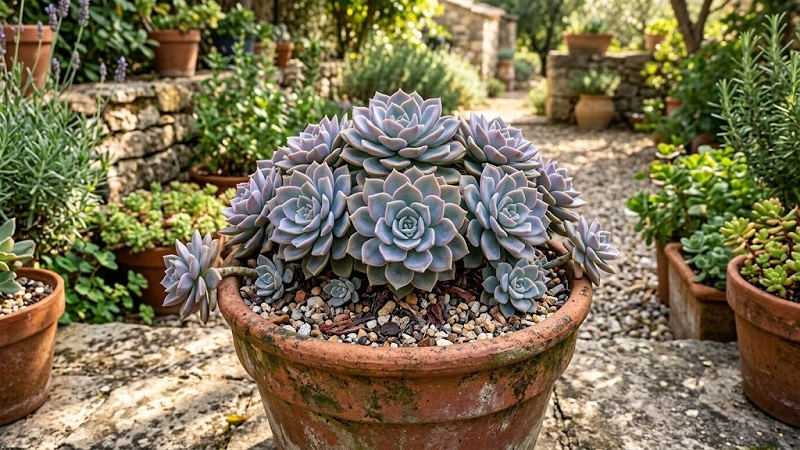
Their appearance makes them particularly effective as focal plants in small arrangements. Use a pot with excellent drainage and avoid placing several plants together so tightly that their leaves overlap heavily.
Kalanchoes are useful when flowers are an important part of the display. Depending on the species, they may produce colorful blooms while retaining fleshy foliage that fits naturally into a succulent collection.
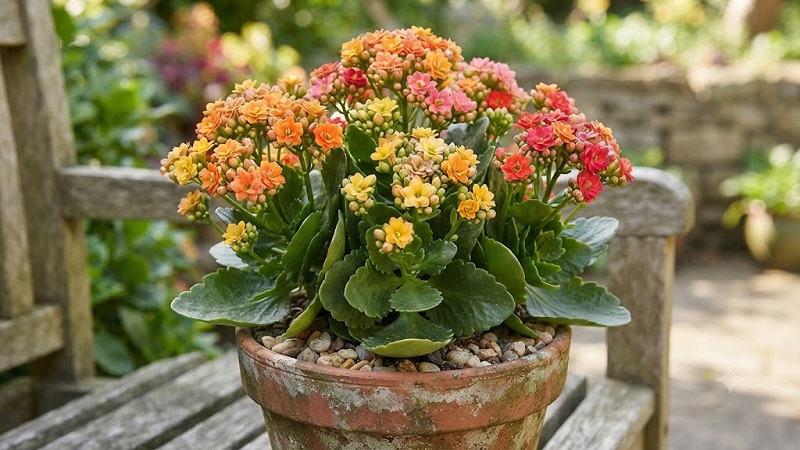
Place flowering types where they receive bright light. After flowering, remove spent blooms and allow the plant to maintain its foliage rather than treating it as a disposable seasonal plant.
String of Pearls is an excellent trailing succulent for containers where you want foliage to spill over the edge. Its rounded leaves create a distinctive appearance that contrasts nicely with upright or rosette-forming plants.
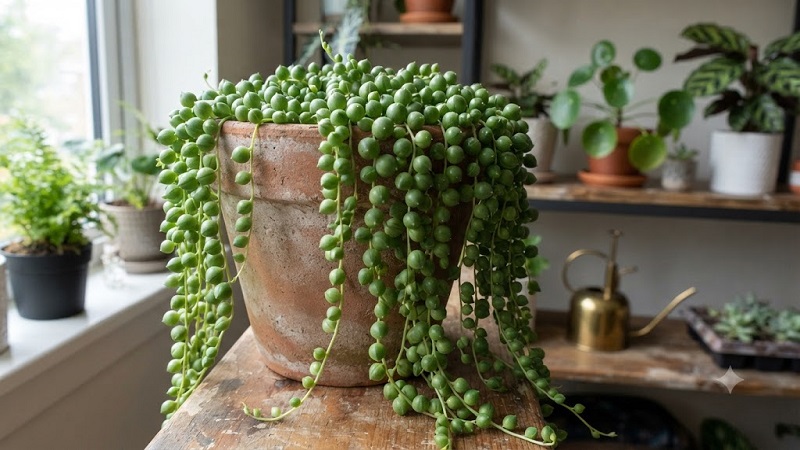
A hanging basket or elevated container can show off its trailing habit particularly well. Keep the soil on the dry side between waterings and provide bright light without exposing the plant to unsuitable extremes.
Gasteria is another good option for gardeners who have bright but partially shaded spaces. Its thick, textured leaves often grow in attractive arrangements and remain relatively compact.
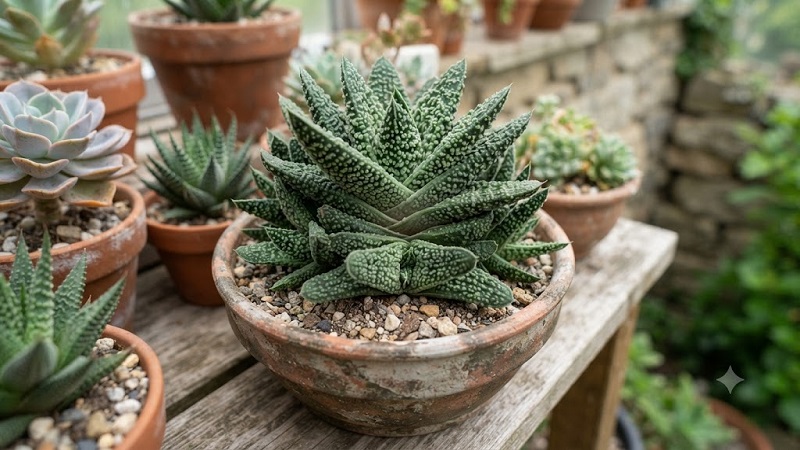
This makes Gasteria useful for patios, windowsills, sheltered balconies, and other locations where intense direct sun is limited. As with other succulents, drainage should remain a priority.
Sedeveria hybrids combine traits from Sedum and Echeveria and can provide compact rosettes with interesting colors and forms. They are especially useful in mixed containers where different textures are needed.
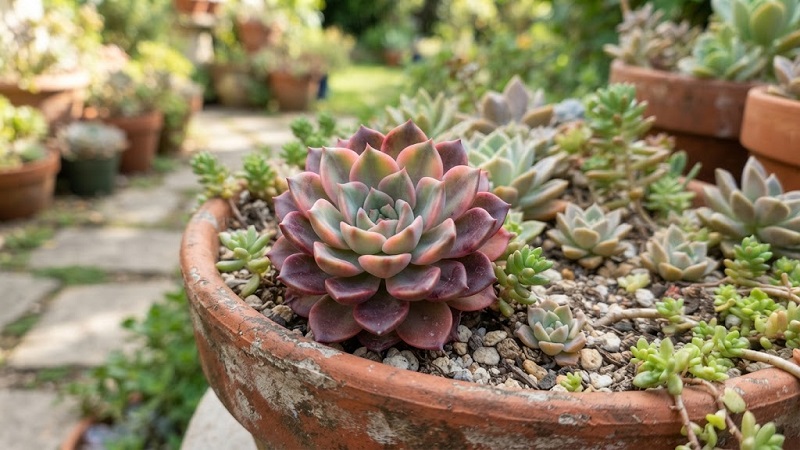
Pair them with a trailing succulent or a contrasting upright plant rather than filling the entire container with varieties that have the same shape.
| Succulent | Growth Habit | Light | Container Use |
|---|---|---|---|
| Echeveria | Compact rosette | Bright light to sun | Small pots and bowls |
| Haworthia | Clumping rosette | Bright indirect light to partial sun | Windowsills and sheltered containers |
| Aloe | Upright rosette | Bright light | Accent containers |
| Sedum | Trailing or spreading | Bright light | Hanging baskets and edges |
| Crassula | Upright or branching | Bright light | Feature pots |
| Sempervivum | Clumping rosettes | Full sun to bright light | Shallow containers |
| Graptopetalum | Rosette | Bright light | Mixed arrangements |
| Graptoveria | Compact rosette | Bright light | Focal plants |
| Kalanchoe | Upright or branching | Bright light | Flowering containers |
| String of Pearls | Trailing | Bright light | Hanging baskets |
| Gasteria | Compact clump | Bright indirect light to partial sun | Sheltered containers |
| Sedeveria | Rosette | Bright light | Mixed succulent displays |
The container is just as important as the plant. Succulents generally perform better in pots that allow excess water to escape quickly. A drainage hole at the bottom is one of the most useful features you can provide.
Terracotta is a popular choice because its porous surface allows some moisture to evaporate through the sides. Ceramic and other decorative containers can also work well when they have suitable drainage.
Avoid choosing an enormous pot for a small succulent. Excess soil can retain moisture for longer than the plant needs, increasing the risk of root problems. A container that gives the roots room to grow without leaving a large volume of unused wet soil is usually a better choice.
Shallow pots are particularly effective for compact rosette succulents and clustered plants. They also make attractive displays on tables, shelves, steps, and narrow ledges.
When floor space is scarce, use vertical arrangements or hanging baskets. Trailing Sedum and String of Pearls can make use of vertical space while keeping the ground area open.
Succulents need a growing medium that drains freely. Ordinary garden soil can hold too much moisture in a container, particularly when the pot is small or the weather is cool.
A commercial cactus or succulent mix is a convenient starting point. Gardeners who make their own mix can combine a suitable organic component with coarse mineral material to improve drainage and airflow around the roots.
One of the most common mistakes with succulents is watering too frequently. Their fleshy leaves and stems are adapted to storing water, so they generally prefer a cycle of thorough watering followed by a period in which the growing medium dries.
Rather than following a rigid calendar, check the soil and consider the weather, container size, plant type, and growing conditions. A small pot in hot weather may dry much faster than a larger container kept in a cool, shaded location.
When watering is needed, soak the growing medium thoroughly until excess water drains from the bottom. Then allow the soil to dry appropriately before watering again.
Succulents often need less water when temperatures are cooler or natural rainfall is frequent. Outdoor containers should be protected from prolonged saturation, especially if they are placed in areas where rainwater cannot drain away quickly.
Light is one of the biggest factors determining whether a succulent remains compact and colorful or becomes stretched and weak. Plants that need strong light may become elongated when kept too far from a bright window or placed in deep shade.
Introduce plants to stronger sunlight gradually if they have previously been grown in protected conditions. A sudden move from low light into intense sun can cause leaf damage.
Echeveria, Sempervivum, many Sedums, and other sun-tolerant types can be good choices when the growing area receives substantial direct light.
Haworthia and Gasteria are useful options where bright light is available without intense exposure throughout the day. They can be particularly convenient for covered patios and bright indoor areas.
A successful succulent container does not have to contain a dozen different plants. Three or four carefully chosen forms can create a much stronger display than a crowded collection.
Combine a rosette-forming plant with a trailing succulent and an upright accent. The contrast creates depth without requiring a large container.
Repeating a foliage color can make a small display look intentional. For example, several plants with silvery or blue-gray leaves can be connected visually even when their growth habits differ.
It can be tempting to plant everything close together for an instant full appearance. Give the plants some space instead. Succulents grow, offsets appear, and leaves spread. A little empty space at planting time often disappears naturally.
A low bowl can display rosettes beautifully, while a taller container can provide room for an upright centerpiece. Hanging baskets are another way to add interest without sacrificing valuable floor space.
A succulent may look perfect in a garden center but still be unsuitable for your particular light conditions. Always consider where the plant will live before buying it.
Decorative pots without drainage can trap water around the roots. If you want to use one, consider placing a properly potted plant inside it rather than planting directly into a container that cannot drain.
Seasonal conditions change. Check the growing medium instead of automatically watering every few days.
Compact Echeveria, Haworthia, Gasteria, small Sedum, Graptopetalum, and other naturally small varieties are good candidates. Choose according to the available light as well as the size of the container.
Yes. Many succulents perform very well on balconies when they receive suitable light and are planted in containers with excellent drainage. The amount of direct sunlight will determine which varieties are most appropriate.
There is no fixed number. A small container may work best with one focal plant, while a larger bowl can hold several compatible varieties. Avoid overcrowding and leave enough room for future growth.
They generally benefit from a fast-draining growing medium designed for succulents or cacti. Heavy garden soil can remain wet for too long when used in containers.
Trailing types such as String of Pearls and trailing Sedums can work particularly well in hanging containers. Their growth habit allows the foliage to spill naturally over the sides.
Some succulents can grow successfully indoors when placed near a bright window or another suitable light source. Haworthia and Gasteria are often useful for bright indoor locations, while many other types need stronger light.
The best succulents for containers and small gardens are the ones that fit both your available space and your growing conditions. Compact Echeverias and Haworthias are excellent for small pots, trailing Sedums and String of Pearls make good use of vertical space, while Aloe and compact Crassulas can provide height and structure.
Start with a container that drains well, use an appropriate growing medium, and place each plant where its light requirements can be met. With those basics in place, even a tiny balcony, patio, windowsill, or courtyard can become an attractive succulent garden.
Continue exploring our gardening guides with more plant profiles, growing tips, and practical advice for creating a healthy, productive garden.