Best Succulents for Containers and Small Gardens
Discover the best succulents for containers and small gardens, including Echeveria, Haworthia, Aloe, Sedum, Crassula, Kalanchoe, and more.
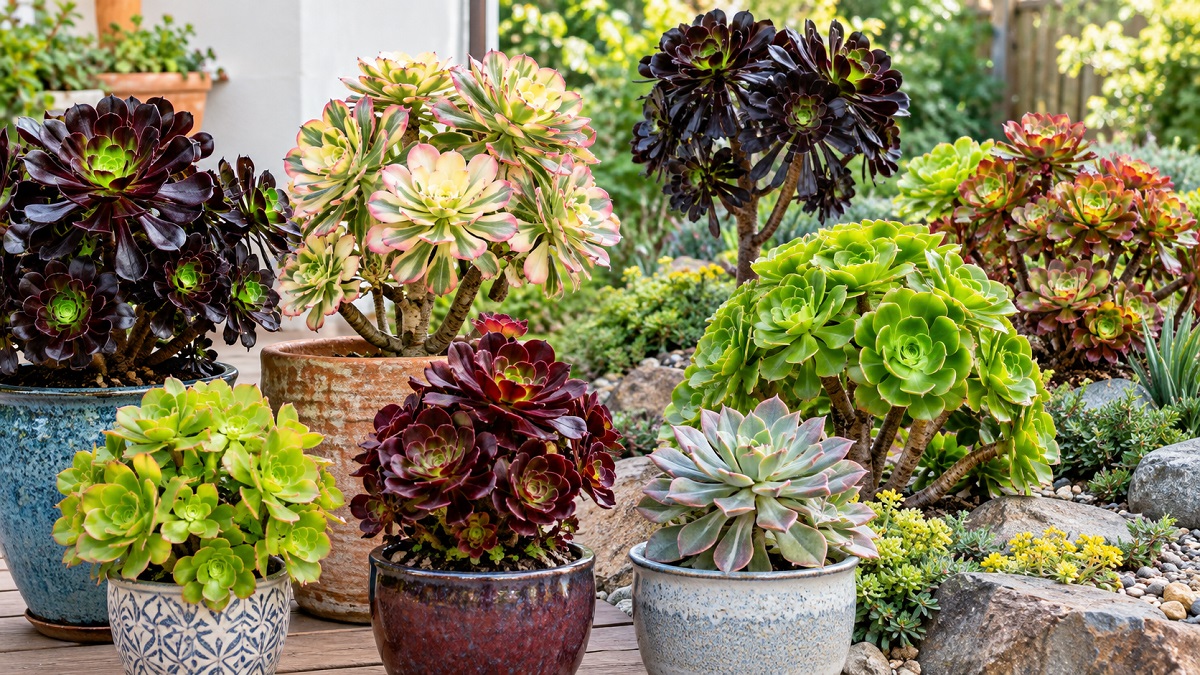
Aeoniums are among the easiest succulents to recognize. Instead of forming the tight, ground-hugging shapes associated with many familiar succulents, numerous Aeonium varieties produce leafy rosettes on branching or upright stems. Some look almost like miniature trees, while others stay low and form neat clusters of colorful rosettes.
Their appeal goes well beyond simple drought tolerance. A single plant can bring burgundy-black foliage, lime-green leaves, cream variegation or pink-edged rosettes into a planting scheme. This makes Aeoniums useful as container specimens, patio plants, balcony accents, rock-garden subjects and focal points in warm-climate gardens.
The ten selections below cover a useful range of forms. There are dramatic dark-leaved cultivars such as Aeonium 'Zwartkop', brightly variegated choices such as 'Sunburst' and compact colorful forms such as 'Kiwi'. The list also includes unusually shaped Aeoniums that are worth growing simply for their architecture.
Good drainage and sensible watering are the keys to keeping Aeoniums looking their best.
Aeoniums belong to the Crassulaceae family and are native mainly to the Canary Islands and nearby regions. Their fleshy leaves are arranged in rosettes, often at the ends of stems, giving many species and cultivars a distinctive architectural appearance.
Unlike many common succulents, Aeoniums have a growth rhythm that is worth understanding. They generally grow most actively during cooler, brighter periods and can slow down considerably during very hot weather. A plant that looks slightly tired or folds its rosettes during a hot spell may not necessarily be suffering from a lack of water.
That seasonal behavior is one reason they are so interesting in the garden. Their appearance changes with temperature, light and moisture. Rosettes may open wider when conditions are favorable and become tighter or less colorful when the plant is stressed.
Many Aeoniums combine succulent leaves with woody or semi-woody stems. As they mature, some develop a small branching framework that gives them a miniature-tree appearance. This makes them particularly effective when placed where their silhouettes can be appreciated.
Their rosettes also create a strong contrast with finer-textured plants. A large Aeonium can act almost like a living sculpture, while a group of smaller plants can create a layered succulent display.
Containers are often the easiest option because drainage can be controlled and plants can be moved when weather becomes unsuitable. Aeoniums also work well in raised beds, rock gardens and sheltered borders in climates where winter conditions are mild.
The following varieties were selected for their distinctive appearance, garden value and usefulness to home growers. Some are compact enough for a windowsill or small container, while others eventually become substantial architectural plants.
Few Aeoniums make a stronger first impression than Aeonium 'Zwartkop'. Its broad rosettes develop extremely dark burgundy to almost black foliage when the plant receives plenty of light. The contrast between its dark leaves and the green foliage of neighboring plants makes it an excellent focal point.
'Zwartkop' is particularly effective in a large terracotta container or as a specimen on a sunny patio. Mature plants can develop a branching, tree-like structure, while younger specimens remain relatively compact.
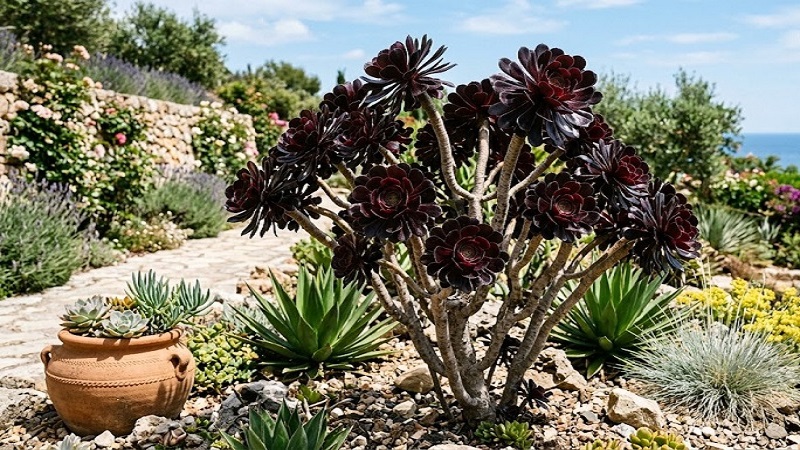
The color can vary with growing conditions, so do not be disappointed if a plant becomes greener after being moved into lower light. Its dark tones are strongest when the plant receives suitable bright conditions.
If 'Zwartkop' is the dark drama of the group, 'Sunburst' provides the opposite effect. This striking variegated Aeonium carries green and yellow foliage with pink to reddish tones along the outer edges when grown in bright conditions.
The rosettes can become quite large, giving the plant a bold presence despite its relatively restrained overall height. It works especially well in containers where its unusual foliage can be viewed from above.
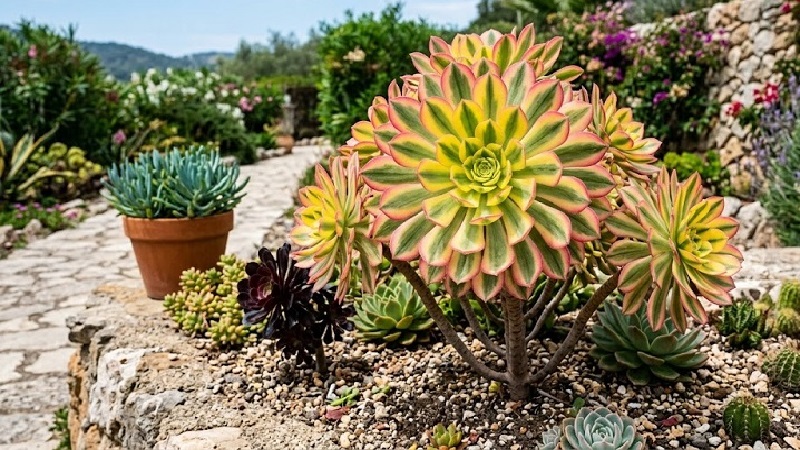
Avoid placing a newly purchased plant immediately into intense midday sunlight. Gradual acclimatization is safer, particularly for plants that have been grown under nursery shade.
'Kiwi' is one of the most colorful choices for gardeners who prefer smaller, branching Aeoniums. Its rosettes combine green centers with creamy or yellowish sections and pink to reddish margins. Under good light, the color combination can be remarkably vivid.
It is a good choice for smaller containers because it does not have the same imposing presence as the taller tree-form varieties. The branching habit also allows one plant to become a rounded, multi-rosette display over time.
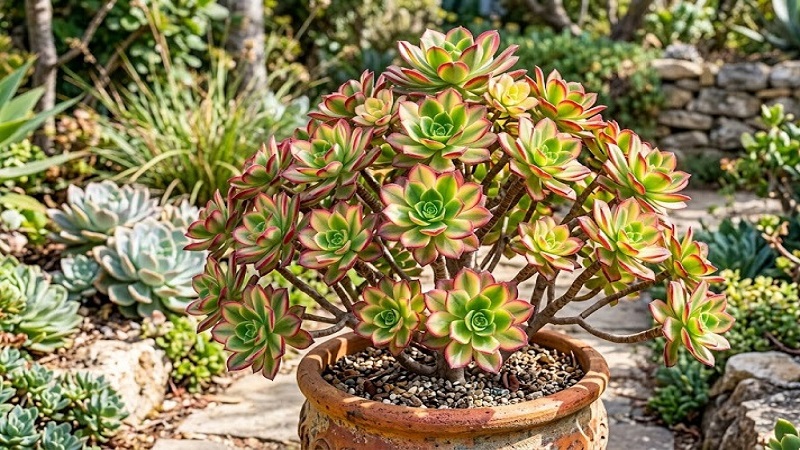
Use it as a colorful companion to dark-leaved succulents or place several containers together for a layered display.
'Atropurpureum' is an excellent option when you want a darker Aeonium without the near-black appearance of 'Zwartkop'. Its green foliage can develop reddish-purple tones, creating a softer and more natural transition between green and dark foliage.
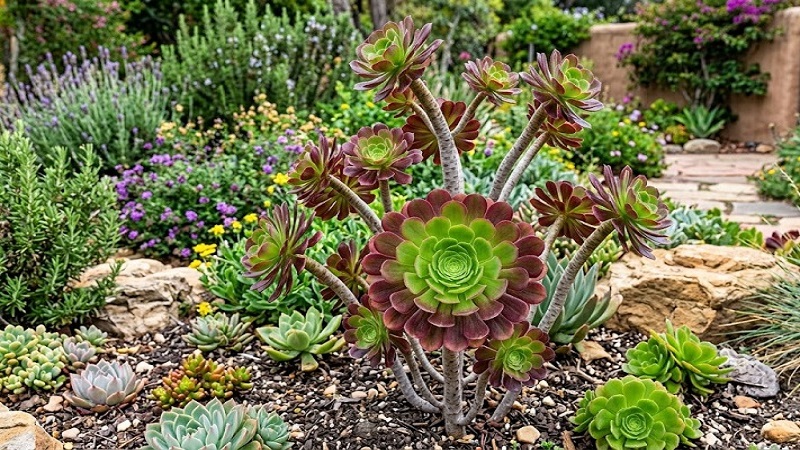
The plant develops a tree-like framework and can become a useful vertical element in a succulent collection. The stems also give the rosettes room to stand apart rather than forming a low mound.
'Cyclops' has the kind of presence that makes it useful as a single specimen. Its large rosette sits prominently above the stem, and the foliage develops rich bronze, burgundy and green tones as light conditions change.
Give this variety enough room to show its shape. Crowding it between low succulents can hide the architectural stem and reduce some of the visual impact that makes 'Cyclops' interesting.
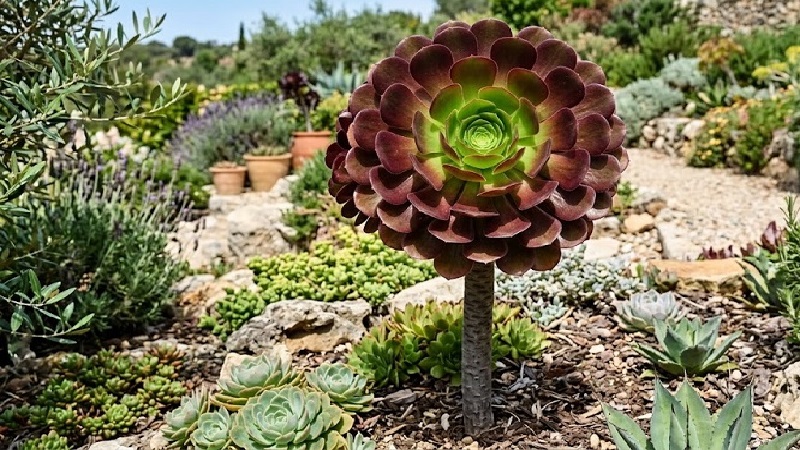
A heavy container is useful for larger specimens because a tall Aeonium can become top-heavy. The combination of a substantial pot and gritty growing medium also provides useful stability.
'Blushing Beauty' is a good choice for gardeners who enjoy changing foliage color rather than a permanently fixed pattern. Its rosettes can develop attractive pinkish or reddish tones under favorable conditions while retaining green as an important part of the display.
The plant forms a pleasing branched mound as it matures. That makes it useful when you want an Aeonium with more of a shrub-like presence rather than a single dramatic central rosette.
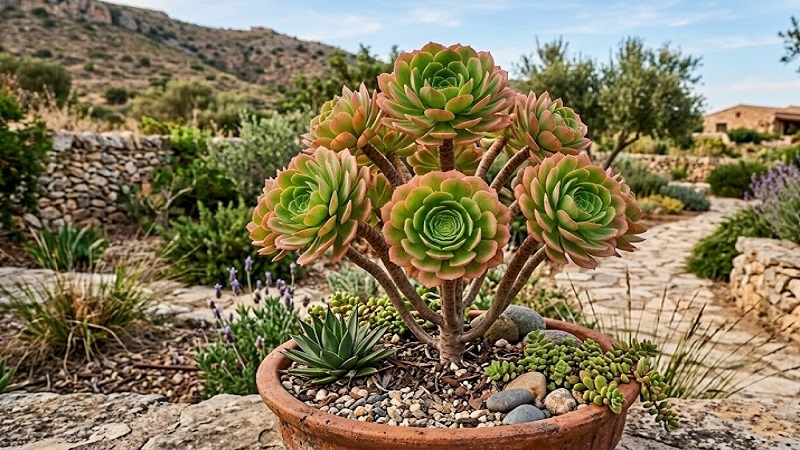
Color intensity is influenced by growing conditions, so two plants of the same cultivar may not look identical at the same time. Bright light, temperature and the plant's stage of growth all play a role.
'Dream Color' is another variegated Aeonium worth growing when foliage color is more important to you than flowers. The leaves combine green with lighter cream or yellowish markings, and the margins can take on warmer tones under suitable light.
Its compact branching habit makes it particularly useful for smaller gardens. It can also be grown in a shallow container where the rosettes are displayed almost like a miniature succulent landscape.
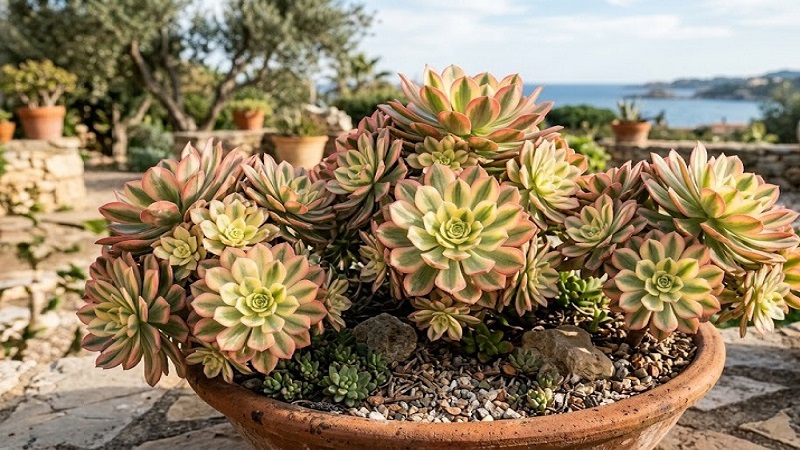
Variegated plants generally appreciate good light because insufficient light can reduce the intensity of their markings and cause weaker, stretched growth.
Aeonium tabuliforme is unlike the taller, stem-forming varieties on this list. Instead of looking like a miniature tree, it forms an unusually flat rosette in which numerous leaves overlap to create a nearly circular plate.
This is one of the Aeoniums to choose when you want something genuinely unusual. The flattened shape makes it especially attractive in a shallow pot, raised container or carefully positioned rock-garden display.
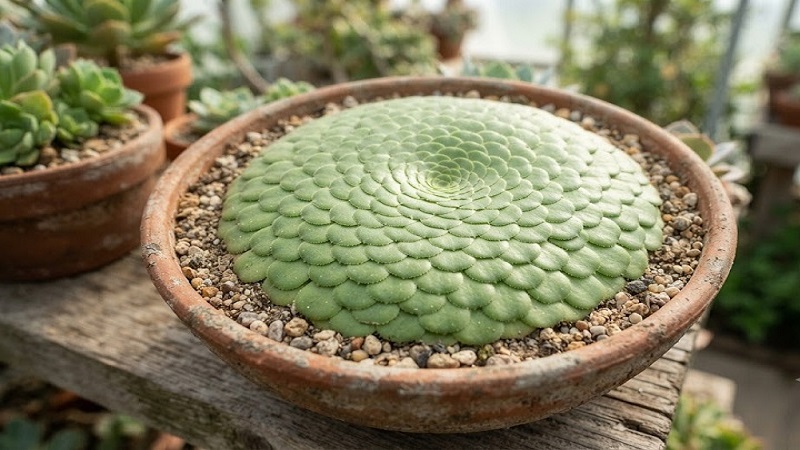
It also needs a slightly different approach to exposure. Unlike many Aeoniums that enjoy strong sun, A. tabuliforme benefits from protection from harsh, intense sunlight, particularly in very hot conditions.
For gardeners who like the classic tree-like Aeonium form but want lighter foliage, 'Variegatum' is an attractive alternative. Its rosettes combine green with cream or pale yellow variegation, giving the plant a much brighter appearance than solid-green forms.
The contrast becomes especially useful when the plant is positioned beside darker succulents. It can also brighten a predominantly green patio collection without relying on flowers.
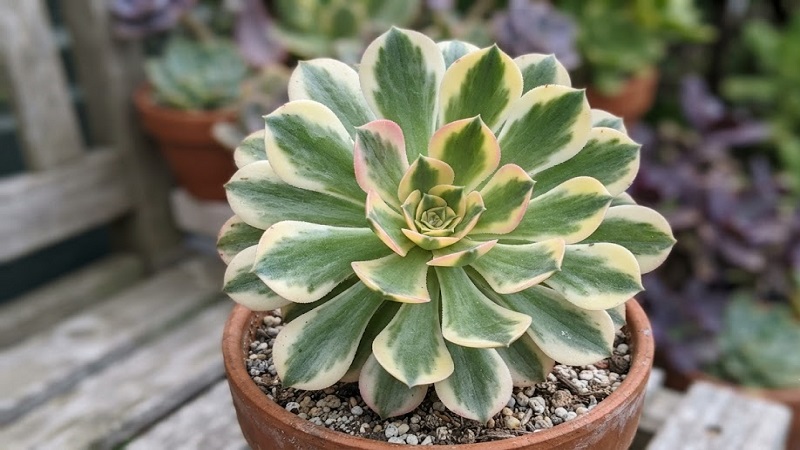
As with other variegated plants, the amount of light affects the appearance of the foliage. Protect newly acclimatized plants from sudden exposure to severe afternoon sun.
'Mardi Gras' is a colorful choice for collectors who want an Aeonium with several foliage tones in the same plant. Its rosettes can show green, yellowish and reddish coloration, producing a lively display that changes with light and temperature.
Rather than treating this plant simply as another drought-tolerant succulent, use it as a foliage accent. It looks particularly effective when surrounded by plain green plants that allow its more complicated coloring to stand out.
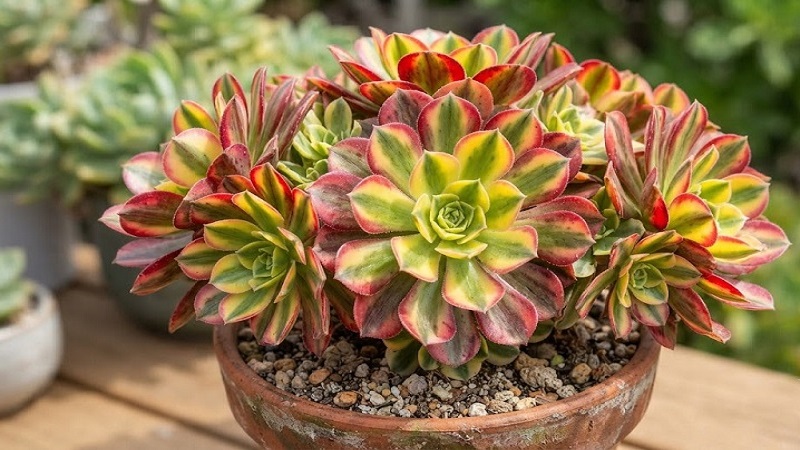
Give it a bright position and avoid keeping the pot continually wet. Like other Aeoniums, it is much happier when excess water can drain freely.
Choosing between Aeoniums is easier when you compare their visual character rather than focusing only on size. Think about whether you want dark foliage, variegation, a compact mound or a taller architectural specimen.
| Variety | Main Attraction | Growth Style | Best Garden Use |
|---|---|---|---|
| 'Zwartkop' | Very dark burgundy-black foliage | Upright and branching | Statement container |
| 'Sunburst' | Green, yellow and pink variegation | Upright rosette | Bright patio display |
| 'Kiwi' | Green, cream and pink tones | Compact and branching | Small containers |
| 'Atropurpureum' | Green foliage with reddish-purple tones | Tree-like | Architectural planting |
| 'Cyclops' | Large bronze and burgundy rosette | Tall and architectural | Specimen plant |
| 'Blushing Beauty' | Green foliage with pinkish blush | Branched mound | Mixed succulent beds |
| 'Dream Color' | Colorful variegated foliage | Compact and branching | Small gardens |
| A. tabuliforme | Extremely flat rosette | Low-growing | Specialty containers |
| 'Variegatum' | Green and cream foliage | Upright and branching | Bright containers |
| 'Mardi Gras' | Multiple foliage colors | Rosette-forming | Color-focused displays |
The best variety for your garden depends on more than appearance. Consider the amount of sunlight available, the size of the growing space, your winter temperatures and whether you want to grow the plant indoors or outdoors.
Choose 'Zwartkop' if you want an Aeonium that immediately draws attention. Its near-black foliage creates excellent contrast with silver, blue-green or bright green plants.
'Sunburst', 'Kiwi', 'Dream Color' and 'Variegatum' are better suited to gardeners who prefer light-colored foliage. They can brighten a collection even when few plants are flowering.
Compact selections such as 'Kiwi' and 'Dream Color' are easier to accommodate than large tree-form Aeoniums. Containers are especially useful when space is limited.
Aeonium tabuliforme is the standout choice if unusual form is your priority. Its nearly flat rosette looks very different from the conventional stemmed Aeonium.
Look at 'Zwartkop', 'Atropurpureum' and other tree-form Aeoniums. With time, their stems can create the appearance of a small succulent shrub or tree.
Poor drainage is one of the easiest ways to lose an Aeonium. A container should have an unobstructed drainage hole, and the growing medium should allow water to move away from the roots rather than remaining saturated for long periods.
A gritty succulent mix works well. If you are creating your own blend, incorporate materials that improve drainage and air space rather than relying on dense garden soil alone.
Most Aeoniums develop their strongest colors in bright light. Dark cultivars in particular can lose some of their intense coloration when kept too far from a bright window or grown in heavy shade.
However, more sun is not always better. Plants moved suddenly from a shaded nursery, greenhouse or indoor location into intense afternoon sun can suffer leaf scorch. Gradual acclimatization is the safer approach.
Aeoniums should not be treated like plants that need constant moisture. Water thoroughly when the plant is actively growing, then allow excess water to drain away. Avoid repeatedly giving small amounts of water that only wet the surface.
During periods of intense heat, many Aeoniums slow their growth and may naturally close their rosettes. This can be mistaken for severe thirst. Check the growing medium and the overall condition of the plant before adding more water.
Containers make Aeoniums easier to manage because you can control soil composition, drainage and exposure. They are also convenient in climates where winter cold or prolonged wet weather requires plants to be moved under cover.
Choose a container that is stable enough for the mature plant. Taller varieties can become top-heavy, particularly when several large rosettes develop on branching stems.
Aeoniums do not need heavy fertilization. During active growth, a balanced fertilizer diluted according to the product instructions can support healthy foliage and new stems. Avoid repeatedly applying strong fertilizer to plants growing in small containers.
Aeoniums are not frost-hardy garden plants in the way many temperate perennials are. In cooler climates, containers can be moved into a bright, sheltered area before damaging cold arrives.
The exact temperature tolerance varies between species and cultivars, so local conditions matter. When in doubt, protect valuable specimens rather than waiting for a severe cold event.
Understanding the seasonal rhythm of Aeoniums makes their care much easier. Unlike some succulents that remain visibly active through the hottest part of summer, many Aeoniums can enter a period of reduced activity during extreme heat.
When temperatures are moderate and light levels are good, plants may produce fresh leaves, expand rosettes and develop new branches. This is usually the time to monitor watering more closely and provide light feeding if necessary.
Rosettes may become smaller or more tightly closed. Avoid responding automatically by increasing irrigation. Instead, check the soil and roots. If the medium is already wet, additional water can create a much bigger problem than temporary heat stress.
Many Aeoniums look particularly attractive when temperatures moderate. Foliage color can become more pronounced, and the plants often regain a fuller appearance after the hottest part of the year.
Soft, dark tissue around the base or stems can indicate excessive moisture or rot. Check the roots and growing medium, improve drainage and remove damaged tissue where appropriate. Avoid watering again until the situation has been assessed.
A dark cultivar may become greener when it receives less light. This does not automatically mean the plant is unhealthy. Move it toward a brighter position gradually rather than exposing it abruptly to strong sunlight.
Weak, elongated stems usually indicate insufficient light. Move the plant to a brighter position and rotate containers periodically so growth remains more balanced.
Older leaves naturally age and dry from the bottom of the rosette or along the stem. Remove completely dry material gently, but investigate further if large numbers of leaves collapse suddenly.
Succulents can occasionally attract sap-feeding pests, including aphids and mealybugs. Inspect the undersides of leaves and the sheltered areas around stems and rosettes. Early detection makes control much easier.
Many Aeoniums are conveniently propagated from stem or rosette cuttings. This is especially useful with branching varieties because pruning or accidental breakage can sometimes provide suitable material for starting another plant.
Choose a firm, healthy section of stem or a suitable rosette. Use a clean, sharp cutting tool to make the cut rather than tearing the plant.
Allow the cutting to dry and form a callus before placing it into the growing medium. The exact time varies with temperature, humidity and cutting size.
Insert the cutting into a fast-draining medium. It should be supported firmly enough to remain upright but should not be buried deeply.
Avoid keeping a fresh cutting constantly wet. Once roots begin to develop, normal watering can gradually be introduced according to the plant's growing conditions.
Seed propagation is also possible for Aeoniums, but cuttings are generally more practical for maintaining the characteristics of a named cultivar.
Aeoniums are especially useful when a garden needs strong foliage structure rather than another burst of flower color. Their rosettes can repeat circular shapes throughout a planting bed, while taller forms add height without becoming visually heavy.
Pair a dark Aeonium such as 'Zwartkop' with silvery foliage, pale gravel or light-colored containers. Variegated selections work well beside dark green foliage because their cream and yellow tones become easier to appreciate.
For a small balcony, choose two or three varieties with different forms instead of filling every pot with the same plant. A tall specimen, a branching compact cultivar and a low rosette-forming type can create considerably more interest than a larger number of identical plants.
Aeonium 'Zwartkop' is one of the best-known dark-leaved Aeoniums. In bright conditions its burgundy foliage can become so dark that it appears almost black.
Compact forms such as 'Kiwi' and 'Dream Color' are useful for smaller containers. Their branching growth allows a single plant to develop into an attractive multi-rosette display without requiring the space of a large tree-form Aeonium.
'Sunburst' prefers bright conditions and can be grown in full sun when properly acclimatized. Plants coming from shade should be introduced to intense direct sunlight gradually to reduce the risk of leaf scorch.
A closing or tightening rosette can be part of the plant's response to heat or reduced activity. Check the soil moisture before watering because adding water simply because the rosette is closed can lead to overwatering.
Yes. Aeoniums can grow indoors when they receive strong natural light, particularly near a bright window. Good drainage and careful watering are still essential. If the plant becomes stretched and pale, it may need substantially more light.
There is no reliable single schedule because watering depends on temperature, light, pot size, soil and growth stage. Water thoroughly when appropriate and allow the growing medium to dry somewhat rather than following a rigid calendar.
Most popular Aeoniums should be treated as tender or frost-sensitive plants. If frost is possible, move container-grown plants to a protected location and avoid exposing them to prolonged freezing conditions.
Aeonium tabuliforme is famous for its exceptionally flat, plate-like rosette. It is one of the most unusual Aeoniums and makes an excellent specialty container plant.
Aeoniums offer far more variety than their familiar succulent label might suggest. From the almost-black rosettes of 'Zwartkop' to the bright variegation of 'Sunburst' and the unusual flat form of Aeonium tabuliforme, there is a shape and color for almost every sunny container collection.
The most important thing is to match the variety to your growing conditions. Give them bright light, use a free-draining medium and pay attention to seasonal changes rather than watering automatically. Once those basics are right, Aeoniums can become some of the most distinctive plants in a home garden.
If you are new to Aeoniums, start with one or two varieties rather than buying a large collection at once. A dark cultivar paired with a variegated one is an easy way to learn how light, temperature and watering affect their appearance while creating an attractive display from the beginning.
Continue exploring our gardening guides with more plant profiles, growing tips, and practical advice for creating a healthy, productive garden.