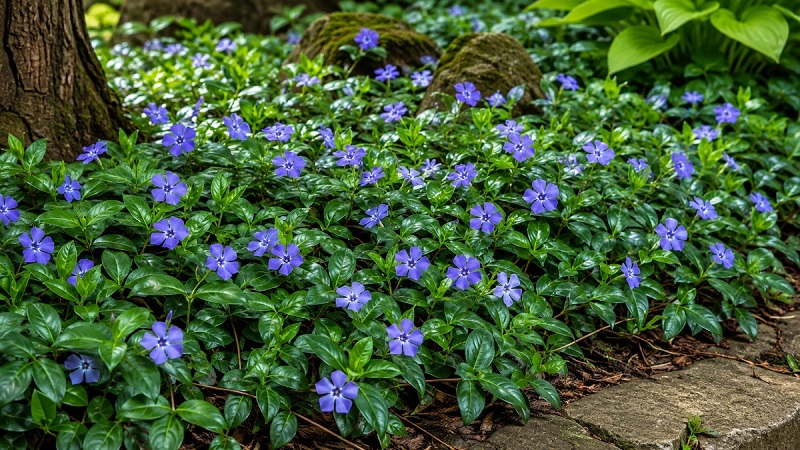
Growing & Caring for Bigleaf Periwinkle (Vinca major)
Learn how to grow and care for Bigleaf Periwinkle (Vinca major). Discover planting, watering, pruning, propagation, ground cover uses, pest control, and spread management tips.
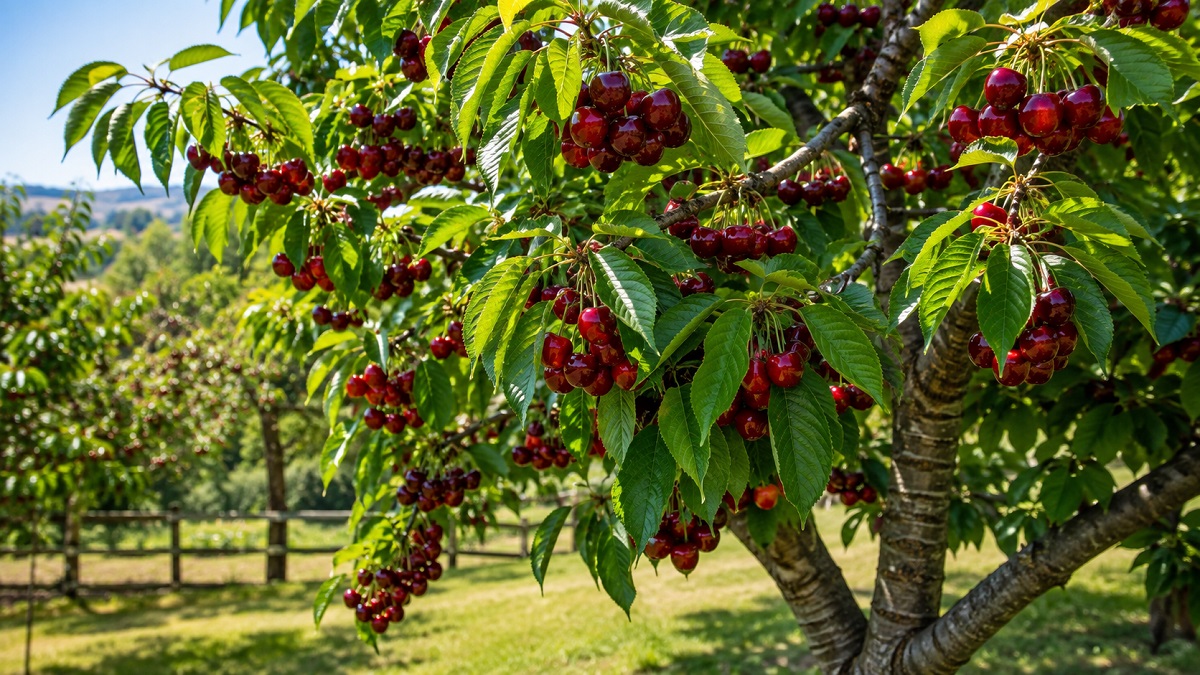
Among sweet cherries, few varieties carry the prestige, flavor profile, and cultural iconic status of the Bing cherry (Prunus avium 'Bing'). Known for its plump size, deep mahogany skin, intensely sweet flesh, and satisfying crunch, Bing remains the gold standard against which all other sweet cherries are measured. However, for all its culinary brilliance, the Bing cherry tree is also notorious among orchardists for being somewhat demanding. It thrives under precise climatic conditions, requires strategic pollination planning, and demands vigilant monitoring against fungal pressures and orchard pests.
Whether you are planning to plant a single dwarf specimen in a sunny suburban backyard or establishing a multi-row home orchard, success with Bing cherries comes down to mastering soil physics, winter chilling hours, seasonal canopy management, and integrated pest control. This comprehensive care manual breaks down every phase of Bing cherry cultivation—from selecting healthy nursery stock to timing your harvest for maximum sweetness.
The Bing cherry was developed in Milwaukie, Oregon, in 1875 by horticulturalist Seth Lewelling and his Manchurian orchard foreman, Ah Bing, after whom the cultivar was named. Derived as a seedling selection from the 'Republican' cherry cultivar, Bing quickly set a new standard for sweet cherry quality across North America.
Botanically classified as a heart-shaped stone fruit within the Rosaceae family, the Bing cherry tree exhibits vigorous, upright growth with wide-spreading branches under proper training. In mid-spring, before full leaf emergence, the tree bursts into a dense blanket of fragrant, five-petaled white flowers that attract numerous native bees and honeybees.
The fruit itself develops over a 60-to-80-day post-bloom window. Starting as firm green drupes, the cherries transition through shades of amber, crimson, and finally a deep mahogany-black when fully ripe. The flesh inside is dense, firm, extremely sweet, and rich in natural antioxidants, particularly anthocyanins, which give the fruit its dark pigmentation.
Bing cherries perform best in moderate, temperate climates with hot, dry summers and cold, crisp winters. They are recommended for USDA Hardiness Zones 5 through 8. Attempting to grow Bing cherries outside these zones often yields frustrating results due to two major environmental bottlenecks: chill hours and summer moisture.
Like most temperate fruit trees, Bing cherry buds enter a state of endodormancy in autumn. To break this dormancy and trigger uniform flowering and leaf emergence in spring, the tree must experience between 700 and 800+ cumulative chill hours below 45°F (7°C) during winter.
If planted in warm winter zones (such as USDA Zone 9 or lower California/Florida regions), the tree will exhibit erratic bloom, poor leaf expansion, aborted fruit buds, and severely reduced yields. Conversely, in extreme Northern climates (USDA Zone 4 or lower), sub-zero winter temperatures can cause severe bark splitting, dieback of fruit spurs, or total tree death.
While Bing trees require steady soil moisture during fruit growth, they are notoriously susceptible to rain splitting (fruit cracking) as the fruit matures. Raindrops accumulating on the skin of near-ripe cherries are absorbed osmotically through the cuticle, causing the internal sugars to swell and the outer skin to burst open. Microclimates with warm, dry spring-to-summer transition periods are ideal.
One of the most frequent reasons home orchardists fail to harvest Bing cherries is a lack of effective cross-pollination. Bing cherry trees are completely self-sterile (self-unfruitful). Planting a single Bing tree in isolation will result in beautiful spring blossoms, but zero fruit set.
When purchasing a Bing cherry tree, the rootstock onto which the Bing scion is grafted determines the tree's ultimate height, soil adaptability, wind resistance, and time to first bearing. Selecting the right rootstock for your garden space is critical.
| Rootstock Type | Mature Height | Spacing Needed | Years to First Bearing | Best Soil & Conditions |
|---|---|---|---|---|
| Mazzard (Standard) | 25 – 35 feet | 25 – 30 feet | 4 – 7 years | Deep, well-drained loams; excellent root anchorage; highly durable long-term. |
| Mahaleb (Standard/Semi) | 20 – 25 feet | 20 – 24 feet | 4 – 5 years | Light loams, sandy soils; intolerant of heavy clay or wet roots. |
| Gisela 6 (Semi-Dwarf) | 12 – 18 feet | 15 – 18 feet | 3 – 4 years | Wide soil adaptability; precocious yield; requires staking in early years. |
| Gisela 5 / Krymsk 5 (Dwarf) | 8 – 12 feet | 10 – 12 feet | 2 – 3 years | Suburban garden beds; ideal for netting against birds; requires regular pruning and irrigation. |
Proper planting sets the trajectory for the entire 30+ year lifespan of your Bing cherry tree. Plant bare-root trees in late winter or early spring while the tree is dormant. Container-grown trees can be planted anytime from spring through early autumn, avoiding periods of intense summer heat.
Select a location in full sun that receives a minimum of 8 hours of direct unfiltered light daily. Sunlight is required for bud differentiation, disease resistance, and sugar development in ripening fruit. Avoid low-lying frost pockets where cold air settles in spring, as late frosts will kill sensitive blossom buds.
Bing cherries cannot tolerate "wet feet." Plant in a spot with fast-draining, fertile soil with a pH between 6.0 and 7.0. Test drainage by digging a 12-inch deep hole and filling it with water. If the water drains in less than 3 to 4 hours, drainage is adequate. If water sits for longer than 6 hours, construct a raised planting mound 12 to 18 inches high and 4 feet wide.
Dig a hole twice as wide as the root mass, but no deeper than the root structure. Crucial rule: The graft union (visible as a noticeable swell or angled scar near the base of the trunk) must remain 2 to 3 inches above the soil line. If planted too deep, the scion may grow its own roots, overriding the dwarfing characteristics of the rootstock, or the trunk may succumb to collar rot.
Backfill the hole using the native soil removed. Avoid adding high-nitrogen fertilizers or uncomposted manure directly into the planting hole, as this can burn delicate feeder roots. Tamp down gently with your feet to remove air pockets. Water deeply with 5 to 10 gallons of water immediately after planting, then apply a 3-inch layer of organic wood mulch around the base (keeping mulch 4 inches away from the bark itself).
Young Bing cherry trees require consistent soil moisture to build strong root architectures. Water new trees once or twice a week, delivering roughly 10 gallons of water per week during the first growing season.
For established trees, deep watering every 10 to 14 days during dry spells is far more beneficial than frequent shallow sprayings. Reduce watering during the late harvest window to minimize internal osmotic pressure that contributes to fruit cracking, but resume deep irrigation after harvest to support next year's fruit bud formation.
Avoid heavy nitrogen applications on Bing cherry trees. Excessive nitrogen stimulates rapid leafy foliage growth at the expense of fruit production, while creating soft tender growth vulnerable to aphids and bacterial canker.
Pruning Bing cherry trees is vital for maintaining air circulation, admitting sunlight to inner fruit spurs, and restricting tree height for easier harvesting. Sweet cherries produce fruit primarily on 2-year-old wood and long-lived lateral fruit spurs.
The Open Center (Vase shape) system is popular for home growers. It creates a hollow-centered bowl shape with 3 to 5 main scaffold branches radiating outward. This allows sunlight to penetrate every corner of the canopy, maximizing cherry sweetness and accelerating drying after rain.
Unlike many stone fruits that are pruned strictly in winter, sweet cherries require a hybrid pruning schedule:
Dormant Pruning (Late Winter): Perform major structural cuts, remove dead, diseased, or crossing branches, and thin out overcrowded limbs. Do not prune during wet winter days, as open wounds are entry vectors for Pseudomonas bacteria.
Summer Pruning (Post-Harvest): Pruning immediately after summer harvest restricts tree height, removes aggressive upright watersprouts, and reduces overall tree vigor without triggering new vegetative flushes before winter. Summer pruning is exceptionally effective for maintaining dwarf Bing trees in tight garden spaces.
| Issue / Disease | Symptoms | Prevention & Treatment |
|---|---|---|
| Bacterial Canker (Pseudomonas syringae) | Sunken dark lesions on bark, thick amber gum (gummosis) oozing from limbs, blighted blossoms. | Prune only during dry summer weather. Spray copper fungicide during autumn leaf drop and early spring bud break. Clean tools with rubbing alcohol between cuts. |
| Brown Rot (Monilinia fructicola) | Blossoms turn brown and wither; ripe fruit turns brown, rots rapidly, and develops gray powdery spore tufts. | Remove and burn all dried, mummified fruits in fall. Apply organic sulfur or copper sprays during bloom period if wet weather persists. |
| Western Cherry Fruit Fly | Small white maggots inside ripening cherries; fruit becomes soft, sunken, and unpalatable. | Hang yellow sticky traps with ammonium acetate lures in late spring to monitor adult emergence. Apply neem oil or spinosad sprays promptly when adults appear. |
| Black Cherry Aphids | Leaves curl downward violently; sticky honeydew covers foliage and stems; growth stunting. | Blast colonies with strong water sprays; apply insecticidal soap or horticultural oil before bud break in early spring. Protect ladybugs and lace wings. |
| Birds (Robins, Starlings) | Peck marks, half-eaten fruit, stripped trees within days of ripening. | Drape physical 3/4-inch anti-bird netting over the entire canopy as cherries change color from green to pink. Use reflective visual deterrents. |
Unlike apples or bananas, Bing cherries do not continue to ripen once picked. They must reach peak flavor, dark coloration, and maximum sugar density while still attached to the tree stem.
Always harvest cherries during cool morning hours. Pick the fruit with stems intact. Grasp the stem at the point where it attaches to the fruit spur and roll it upward gently. Avoid ripping the fruit off the stem or tearing the spur wood, as future years' flowers develop on those same long-lived spurs.
Unwashed cherries should be placed in perforated plastic bags and stored immediately in the coldest part of your refrigerator (32°F to 36°F with high humidity). Under ideal cold storage, fresh Bing cherries remain crisp for 2 to 3 weeks. Wash thoroughly under cold water only right before eating.
| Season | Key Maintenance Tasks |
|---|---|
| Late Winter (Feb–Mar) | Perform structural pruning during dry conditions. Apply dormant copper sprays to control bacterial canker and scale insects. Check rootstock stakes. |
| Spring (Apr–May) | Monitor bloom timing; introduce bee houses. Apply sulfur sprays during bloom if wet. Top-dress with organic compost along drip line. |
| Summer (Jun–Jul) | Install bird netting when cherries blush pink. Adjust deep watering schedules. Harvest ripe fruit in morning hours. Perform post-harvest summer pruning. |
| Autumn (Sep–Nov) | Clean up fallen fruit, leaves, and mummies to eliminate pest overwintering sites. Apply autumn copper spray at 50% leaf drop. Protect trunk from winter sunburn. |
Continue exploring our gardening guides with more plant profiles, growing tips, and practical advice for creating a healthy, productive garden.