Scale Insects in Gardening
Learn how to identify scale insects in the garden, understand the damage they cause, and control them with natural methods, horticultural oil, pruning, beneficial insects, and prevention.
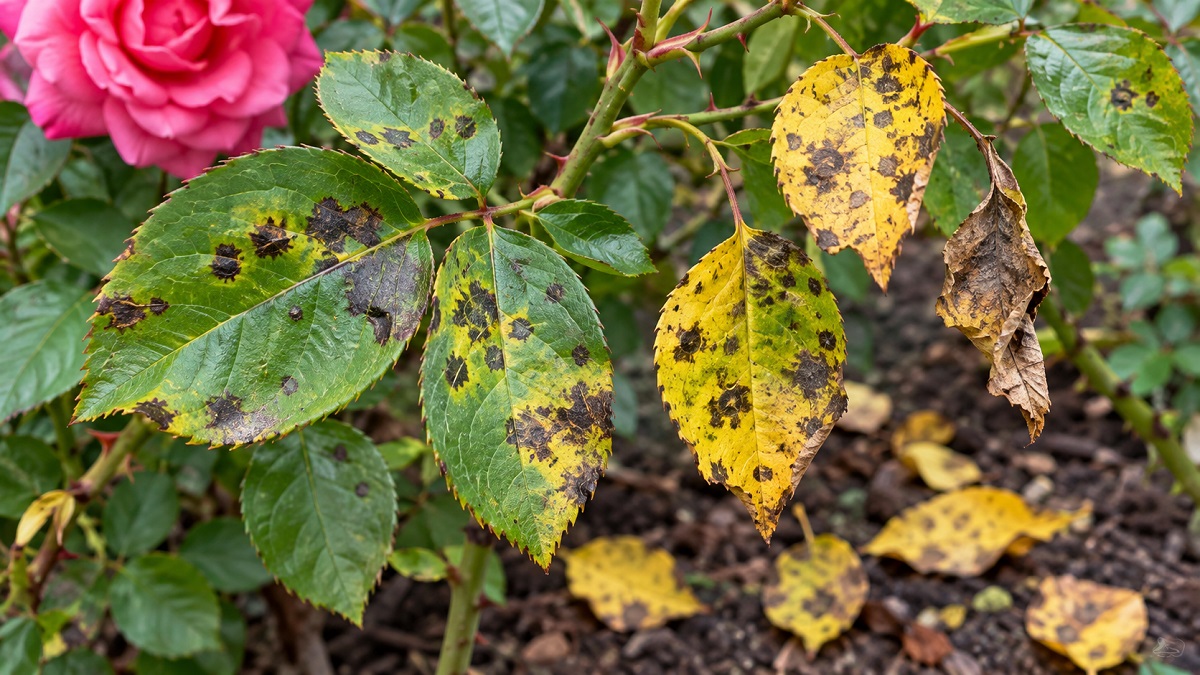
Black spot is one of the most recognizable diseases of roses. It begins as small dark marks on the leaves, but a serious infection can cause foliage to turn yellow and drop well before autumn. Once a rose loses a large amount of foliage, it has less opportunity to produce food, put on healthy new growth, and prepare for another flush of flowers.
The disease is caused by the fungus Diplocarpon rosae. It spreads particularly well when rose foliage remains wet for long periods, especially during warm, humid, rainy weather. Fortunately, black spot can usually be managed by combining good sanitation, sensible watering, adequate air circulation, resistant varieties, and timely fungicide applications when necessary.
The key to management: keep foliage as dry as practical and remove infected leaves promptly.
Black spot is a fungal disease that primarily affects rose leaves and can also affect young stems. Its scientific name is Diplocarpon rosae. The disease is especially troublesome because it can repeatedly infect fresh foliage throughout the growing season when weather conditions remain favorable.
The first symptoms often appear as small, dark, circular lesions on the upper surfaces of leaves. As they enlarge, the spots may develop irregular edges and become surrounded by yellow tissue. Several spots can eventually merge, leaving large areas of damaged foliage.
Affected leaves commonly turn yellow and fall from the plant. The result can be a rose bush with flowers at the ends of increasingly bare stems. Repeated severe defoliation weakens the plant and may reduce flowering, although established roses can often recover when growing conditions improve and the disease is brought under control.
Look for dark brown to black spots that are usually concentrated on rose leaves. The lesions can have feathery or irregular margins and may become surrounded by yellowing tissue. Older infected leaves often drop before the rest of the foliage.
Black spot is much easier to manage before an entire plant becomes infected. Removing badly affected foliage, improving airflow, and changing watering habits can reduce the amount of disease pressure before it builds.
Recognizing the disease early helps prevent an isolated problem from becoming a season-long battle. Symptoms do not always appear at exactly the same stage on every rose, but several features are characteristic.
The most obvious symptom is the appearance of black, dark brown, or nearly black spots on the leaves. Individual lesions can start quite small and gradually expand. In many cases, the margins of the spots are uneven rather than perfectly circular.
As infection progresses, tissue surrounding the spots may become yellow. Instead of seeing isolated black marks on otherwise green leaves, you may eventually find leaves covered with multiple lesions and broad areas of discoloration.
One of the clearest signs of a significant infection is early defoliation. Leaves may fall while the rose is still actively growing. Lower leaves are often affected first, although disease can spread throughout the plant.
Repeated loss of foliage leaves the plant looking thin. A rose that continually produces new leaves only to lose them to disease can spend considerable energy replacing foliage rather than maintaining a full, healthy canopy.
In some situations, black spot can also produce lesions on young stems. These may appear as darkened or purplish areas and can contribute to weakened new growth.
| Symptom | What You May Notice | What It Suggests |
|---|---|---|
| Black spots | Dark lesions on leaves | Typical early symptom |
| Yellowing | Yellow tissue surrounding or between spots | Progressing infection or leaf stress |
| Leaf drop | Leaves fall earlier than expected | More established disease |
| Thin canopy | Stems become increasingly bare | Repeated defoliation |
| Stem lesions | Darkened areas on young stems | Possible stem infection |
Understanding the disease cycle makes prevention much easier. The fungus can survive on infected plant material, particularly fallen leaves and affected tissue left around the rose. Spores can then be moved to healthy foliage by splashing water, rain, irrigation, and other forms of moisture movement.
When a rose leaf stays wet for an extended period, conditions can become favorable for infection. Once the fungus becomes established, additional spores can develop and spread to other leaves. Repeated cycles of infection are why black spot can become progressively worse during a rainy or humid growing season.
This is also why simply removing one visibly spotted leaf does not necessarily solve the problem. Sanitation reduces sources of infection, but the surrounding environment must also be changed where possible. A rose growing in stagnant, humid air and receiving frequent overhead irrigation remains vulnerable even after damaged leaves are removed.
Black spot is strongly associated with moisture on foliage. The fungus benefits when leaves remain wet for long periods, particularly when warm temperatures and high humidity accompany that moisture.
You cannot control the weather, but you can control many of the conditions around the plant. Even small changes, such as watering at the soil surface instead of over the leaves, can make the foliage less favorable for disease development.
Not every dark mark on a rose leaf is black spot. Insect feeding, environmental stress, other fungal diseases, and physical damage can all cause discoloration. Look at the entire plant rather than judging a single spot in isolation.
| Problem | Typical Clues | How It Differs From Black Spot |
|---|---|---|
| Black spot | Dark leaf spots followed by yellowing and leaf drop | Usually associated with wet foliage and repeated defoliation |
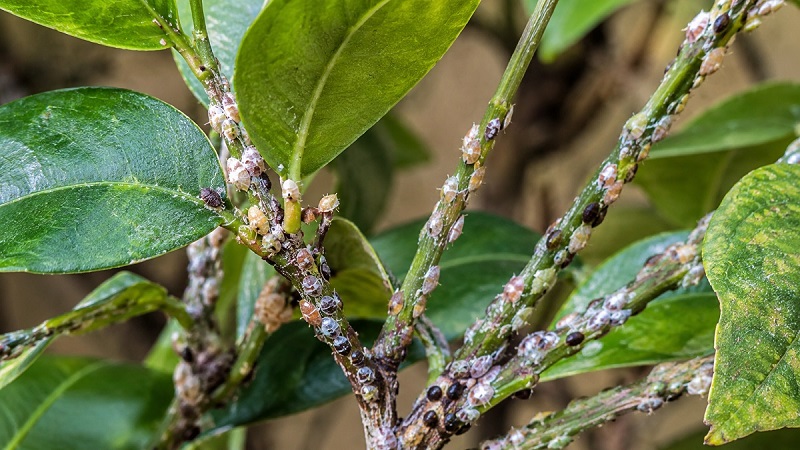
| Insect feeding | Holes, stippling, distorted growth, insects or their evidence | Damage pattern is often related to feeding sites |
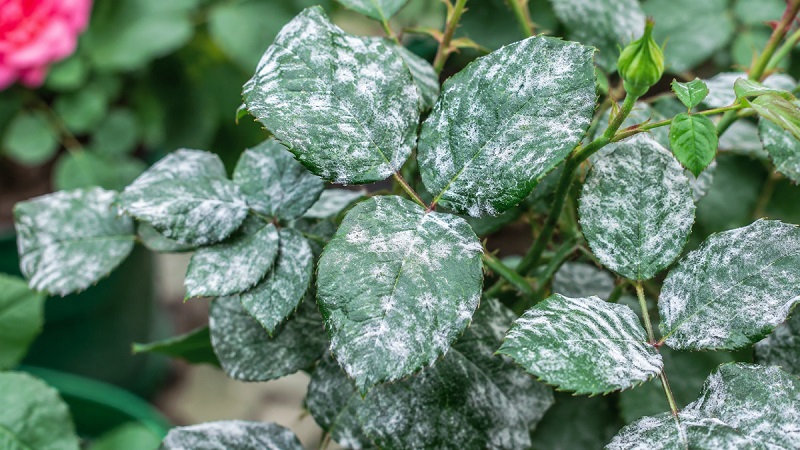
| Powdery mildew | White or gray powdery growth | Leaves are covered with a powder-like coating rather than black lesions |
| Environmental scorch | Brown or crispy leaf edges and patches | Often associated with heat, drought, salts, or root stress |
When the diagnosis is uncertain, examine several leaves and consider recent weather, watering practices, and the location of the damaged foliage. A pattern across the plant is often more informative than one unusual leaf.
The first response should focus on limiting the spread rather than trying to make existing lesions disappear. A leaf that already has fungal damage will not become spotless again.
Avoid stripping a rose completely unless there is a compelling horticultural reason to do so. The plant still needs healthy leaves to photosynthesize. Remove infected material selectively while preserving as much healthy foliage as possible.
Cultural practices are the foundation of black spot management. They do not depend on a single treatment and can be maintained throughout the season.
Fallen leaves should be collected regularly when black spot has been a problem. Removing this material reduces the amount of infected debris remaining close to the plant.
Crowded roses form dense pockets of humid air. Adequate spacing allows wind to move through the foliage and helps leaves dry after rain or irrigation.
Roses generally perform best where they receive sufficient sunlight and good air circulation. A site that stays damp and poorly ventilated for much of the day can make disease management considerably harder.
A layer of suitable organic mulch can help reduce soil splash onto leaves and conserve moisture. Keep mulch slightly away from the base of the rose rather than piling it directly against the stems.
Healthy plants are better positioned to replace damaged foliage and recover from periods of disease pressure. Provide appropriate water and nutrition without excessive fertilization, especially when lush growth is being produced faster than the plant can support.
Fungicides can be useful when black spot is persistent or when environmental conditions strongly favor disease. However, they work best as part of a broader management program rather than as a substitute for sanitation and good growing practices.
Many fungicides work primarily by protecting healthy tissue. They generally cannot turn an already spotted leaf back into healthy foliage. For this reason, preventive applications may be more effective than waiting until a rose is heavily infected.
Select only products that are labeled for use on roses and the disease you are trying to control. Follow the listed application rate, interval, protective equipment requirements, harvest or re-entry information where applicable, and restrictions on use.
Repeated use of products with the same mode of action can contribute to fungicide resistance. Where product labels and local recommendations permit, rotating products with different modes of action can form part of a resistance-management strategy.
More product does not necessarily mean better disease control. Applying a higher concentration than the label allows can injure plants, create unnecessary environmental exposure, and may violate the product's legal directions.
Organic gardening does not mean ignoring disease-management principles. Products marketed for organic production can still have specific restrictions and application requirements, so read the label just as carefully.
Pruning can help create a more open canopy, but it should be done thoughtfully. Removing every branch in an attempt to create maximum airflow can stress the plant or reduce flowering.
Start by removing dead, damaged, or obviously diseased growth when appropriate. Then look for stems that cross, rub against each other, or grow into the center of an already crowded plant. Selective thinning can allow more light and air to reach the interior.
Always use clean, sharp pruning tools. If you are moving between visibly diseased plants, cleaning tools can reduce the chance of transferring contaminated material.
Watering technique has a major influence on the environment around rose foliage. When possible, water the soil rather than spraying the leaves.
Morning watering is generally preferable to late-evening irrigation because it gives surface moisture more opportunity to dry during the day. The exact irrigation schedule should depend on soil, temperature, rainfall, container size, plant age, and local conditions rather than a rigid calendar.
Avoid shallow, frequent watering that keeps the upper soil constantly damp unless the plant's conditions specifically require it. Instead, provide appropriate moisture to the root zone and allow the soil to drain properly.
If black spot has been troublesome this year, prevention should begin before symptoms return. The most effective strategy is usually a combination of several small improvements rather than relying on one treatment.
Remove fallen diseased leaves from around the rose. At the end of the season, clean up remaining infected plant debris rather than leaving it in place.
When buying new roses, look for varieties described by reputable growers or extension resources as having good resistance to black spot. Resistance is not the same as complete immunity, but it can make a noticeable difference under disease-favorable conditions.
Avoid squeezing several roses into a small space simply because the plants are young. They will become much larger, and a planting arrangement that looks spacious initially can become crowded after a few seasons.
New leaves should be checked regularly during periods of warm, wet weather. Early detection gives you more options than waiting until a large percentage of the foliage has been affected.
Gardeners who know their roses are susceptible can prepare before disease pressure becomes severe. Depending on local conditions and the products available, that plan may include sanitation, resistant varieties, cultural controls, and preventive fungicide applications.
Variety selection is one of the most practical long-term ways to reduce disease problems. Some roses are considerably less susceptible to black spot than others, although no variety should be assumed to be completely disease-proof under every growing condition.
When shopping for roses, look beyond flower color and bloom form. Disease resistance, mature size, climate suitability, fragrance, repeat flowering, and maintenance requirements all affect whether a plant will work well in a particular garden.
Local extension services, botanical gardens, rose societies, and experienced regional nurseries can be useful sources when identifying varieties that perform reliably in your climate.
A rose that has lost most of its leaves to black spot can look alarming, but severe defoliation does not automatically mean the plant is dead. If the stems and root system remain healthy, the rose may produce new foliage once conditions become more favorable.
Begin by removing fallen leaves and badly affected foliage. Improve airflow, correct watering practices, and avoid unnecessary stress. Do not immediately compensate with excessive fertilizer; producing a rush of soft new growth is not a substitute for addressing the disease environment.
Continue watching the plant as new leaves emerge. If black spot repeatedly returns, reconsider the planting location, spacing, irrigation method, and rose variety. Persistent disease can sometimes indicate that the plant is simply poorly matched to the site.
| Task | Purpose | When to Do It |
|---|---|---|
| Inspect foliage | Catch symptoms early | Regularly during active growth |
| Remove infected leaves | Reduce diseased material | As symptoms appear |
| Clear fallen leaves | Improve garden sanitation | Throughout the season |
| Water at soil level | Reduce prolonged leaf wetness | Whenever irrigation is needed |
| Improve airflow | Help foliage dry more quickly | During pruning and plant maintenance |
| Use labeled fungicides if needed | Protect healthy foliage | According to the product label |
| Choose resistant varieties | Lower future disease pressure | When adding or replacing roses |
Gardeners often concentrate on the leaves still attached to the rose and forget about the infected material underneath it. Regular cleanup is an important part of reducing sources of disease.
Evening overhead irrigation can leave foliage wet for hours. If the plant is already susceptible and weather conditions are favorable, this habit can make disease management more difficult.
Roses can look sparse when newly planted, but mature plants need considerably more room. Crowding creates a dense canopy where humidity can remain high and leaves dry slowly.
Fungicides and cultural controls can protect new growth and slow the disease, but a leaf that is already covered with black spot will not return to perfect condition. Judge progress by the health of new foliage as well as the appearance of old leaves.
A product that controls insects is not automatically useful against a fungal disease. Correct identification should come before treatment, and all chemical products should be used according to their labels.
Black spot can be frustrating, particularly when a rose looks healthy in spring and then begins losing leaves during a stretch of humid or rainy weather. The good news is that management does not have to depend on one perfect treatment. Sanitation, sensible watering, good air circulation, appropriate pruning, resistant varieties, and correctly selected disease-control products can all work together.
The most useful habit is to start watching before the disease becomes severe. Healthy new foliage is worth protecting, and a clean growing environment gives roses a much better chance of keeping their leaves through the season.
Browse our gardening guides to identify and manage common insect pests, plant diseases, and other plant problems.