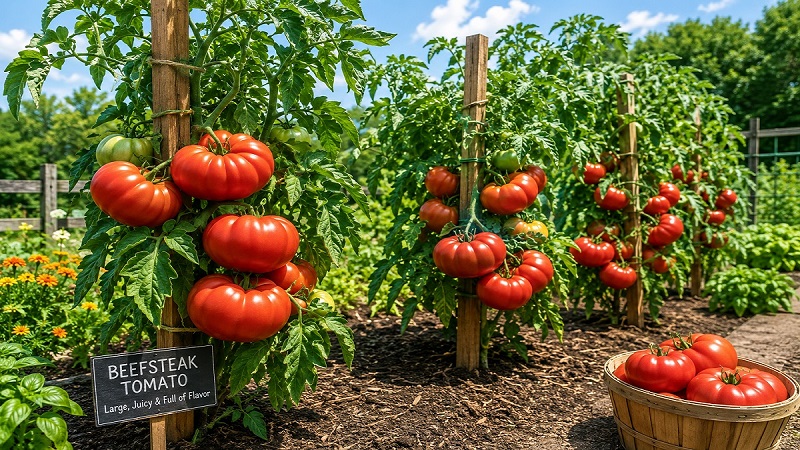
Growing & Caring for Beefsteak Tomatoes
Beefsteak tomatoes demand more of everything. They require more sun, more consistent watering, heavier structure for vertical support, and a lengthier, warm growing season than almost any other tomato type.
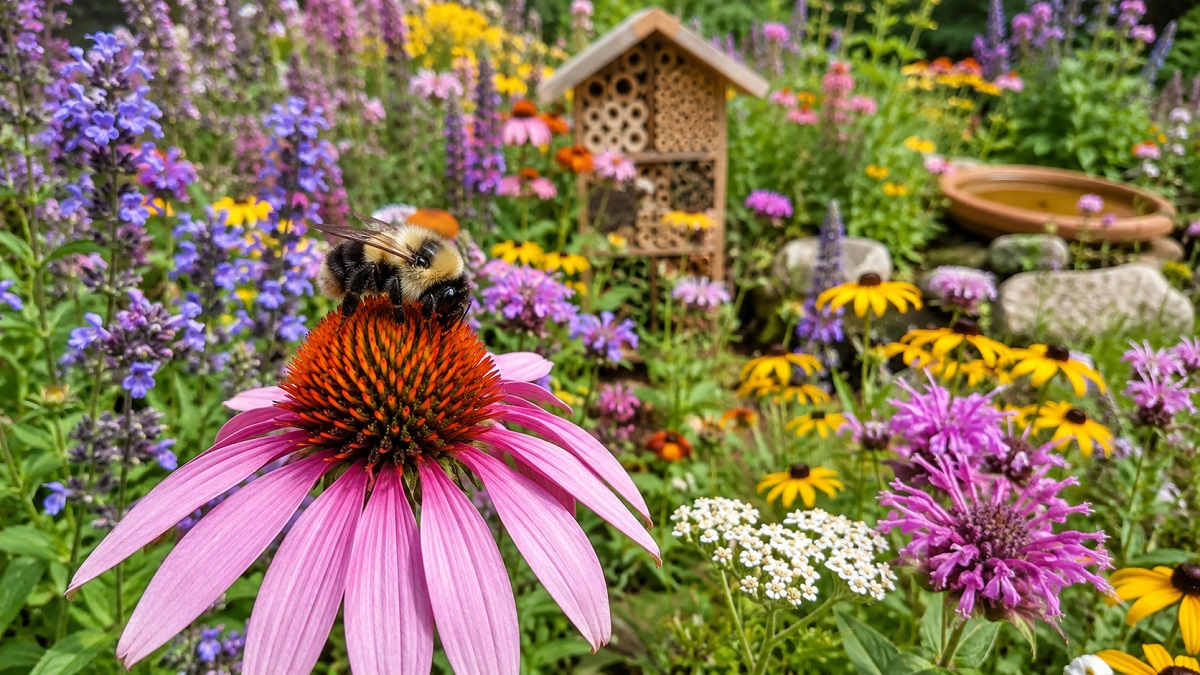
When people think about bees, the image that usually comes to mind is the industrious honeybee, flying systematically from flower to flower. Yet, the Western honeybee (Apis mellifera) is actually an agricultural import brought from Europe centuries ago. If you want to support your local ecosystem, true biodiversity begins with our native pollinators. Among the most charismatic, vital, and effective of these are the native bumblebees (genus Bombus). With their plump, velvet-furred bodies and low, rhythmic buzz, bumblebees are the structural cornerstones of wild landscapes and domestic vegetable patches alike.
Unfortunately, urban sprawl, systematic lawn monocultures, and widespread chemical usage have pushed many native bumblebee populations into a steep decline. Reversing this trend does not require miles of untouched wilderness; it can start right in your backyard. By transforming a portion of your lawn into a diverse, pesticide-free sanctuary, you can provide the essential forage, nesting structures, and overwintering sites that these beautiful insects need to survive. This comprehensive guide walks you through the step-by-step ecological science and hands-on methods required to turn your space into a true bumblebee magnet.
To create a garden that works seamlessly for bumblebees, you must look at the world through their big compound eyes. Unlike honeybees, which maintain permanent perennial hives containing tens of thousands of individuals, bumblebee colonies are small, annual affairs. A typical bumblebee nest peaks at anywhere between 50 and 500 individuals by mid-summer. The entire survival mechanism of the species relies on a single, fertilized queen who must brave the harsh winter alone, buried underground or hidden deep under layers of forest leaf litter.
The lifecycle begins in the earliest warm days of spring. The solitary queen emerges from her underground slumber, cold and desperately hungry. She has very little fat reserves left and must quickly find high-energy early-blooming flora to fuel her search for a new nesting site. Once she selects a spot—often an abandoned mouse hole, a dry hollow under a log, or a tussock of native grass—she builds small wax cups, fills them with nectar, lays her initial batch of worker eggs, and incubates them using her own body heat.
By late spring, the first generation of female worker bees emerges to take over foraging duties, allowing the queen to focus entirely on laying eggs. Throughout the summer, the colony grows rapidly. By early autumn, the focus shifts: the colony begins producing new virgin queens and male drones. After mating, the old queen, the workers, and the males all naturally die off as frost approaches. Only the newly mated queens survive, consuming vast amounts of nectar to store fat before digging down into the soil to begin their overwintering dormancy. Recognizing this annual cycle highlights the extreme importance of early spring and late autumn blooms; a gap in resources during these transitional windows can cause entire lineages to collapse.
Bumblebees are generalist foragers, meaning they can extract nutrition from an incredibly diverse array of flowers. However, they possess a strong evolutionary bias toward native plants, which offer significantly higher concentrations of sugars in their nectar and protein in their pollen compared to heavily hybridized ornamental cultivars. When landscape planners select non-native double-petal roses or highly modified annual bedding plants, they are often unknowingly planting sterile ornaments that offer zero ecological value.
To properly optimize your garden space, you must plant in broad, distinct sweeps rather than scattering individual flowers across a bed. Bumblebees exhibit "flower constancy," a behavior where an individual bee prefers to focus on one specific plant species during a foraging flight because it makes their collection process far more efficient. Creating dense clusters of the same flower (at least three feet by three feet in area) allows them to spot the resource easily from the air and forage systematically without expending precious energy flying long distances between solitary stems.
Furthermore, you must account for tongue length diversity. The bumblebee family includes species with short tongues (like Bombus terricola) and others with remarkably long tongues (like Bombus pensylvanicus). Short-tongued bees require shallow, open composite flowers like asters and coneflowers, whereas long-tongued bees specialize in deep, tubular flowers belonging to the mint and legume families. Providing a diverse structural variety of blossom shapes ensures all native species find a seat at the table.
| Botanical Name | Common Name | Bloom Season | Flower Structure | Ecological Value |
|---|---|---|---|---|
| Salix discolor | Pussy Willow | Early Spring | Catkins (Open) | Vital early nectar/pollen source for emerging queens. |
| Cercis canadensis | Eastern Redbud | Mid Spring | Pea-like (Tubular) | High-nitrogen pollen supporting the first worker broods. |
| Monarda fistulosa | Wild Bergamot | Mid-Late Summer | Deep Tubular Clusters | Rich nectar source favored by long-tongued bumblebees. |
| Echinacea purpurea | Purple Coneflower | Summer | Central Cone Composite | Excellent, highly accessible daily refueling station. |
| Symphyotrichum novae-angliae | New England Aster | Early-Late Autumn | Open Ray Florets | Crucial fat-building forage for queens heading into winter. |
| Solidago speciosa | Showy Goldenrod | Late Autumn | Dense Composite Plumes | High volume nectar supplier right up to the first hard frost. |
While planting high-quality floral food sources is an important step, it only solves half of the environmental equation. If your garden is rich in pollen but lacks secure, insulated spaces for nesting and overwintering, bumblebees will simply visit to eat and then fly elsewhere to live. In our modern quest for pristine, picture-perfect landscapes, homeowners routinely remove every dead branch, rake away every leaf, and cover every square inch of exposed soil with deep layers of landscape fabric and thick wood mulch. In doing so, we are accidentally stripping away the critical real estate these insects rely on for shelter.
Unlike honeybees, which live high up in managed boxes or hollow trees, roughly 70% of wild native bees nest directly in or on the ground. For bumblebees, the preferred choices are existing underground cavities. Abandoned burrows created by field mice, voles, and chipmunks are prime real estate, as these spaces are already well insulated and often contain scraps of soft nest linings like dry grass or animal fur.
To mimic these ideal conditions, designate a quiet, out-of-the-way corner of your property as a "wild zone." Allow native bunchgrasses like Little Bluestem or Switchgrass to grow tall and naturally flop over in the winter; these thick, tangled mats of grass create warm microclimates perfect for early spring nests. Additionally, constructing a loose rock wall without mortar provides a matrix of deep, protected crevices that shield colonies from predators and heavy rains.
The agricultural value of bumblebees cannot be overstated. They are far more efficient pollinators than honeybees for a wide variety of crops, thanks to a remarkable specialized behavioral mechanism known as sonication, or "buzz pollination." Certain families of plants, most notably the nightshades (Solanaceae), which include critical backyard crops like tomatoes, peppers, and eggplants, hold their precious pollen tightly inside specialized tubular structures called anthers.
A standard honeybee visiting a tomato flower will crawl over the blossom but walk away empty-handed; they simply do not possess the technique required to unlock and release the pollen. A bumblebee, however, approaches the flower, grasps the petals firmly with her mandibles, and rapidly vibrates her massive flight muscles without moving her wings. This intense vibration resonates at a precise frequency (roughly 400 Hz), generating a loud, unmistakable "high-pitched buzz" that acts like a miniature sonic hammer.
The acoustic energy violently shakes the flower, causing a dense cloud of pollen grains to explode out of the pores of the anther, instantly coating the bee's electrostatic fur. The bumblebee then combs this rich bounty down into the pollen baskets (corbiculae) on her hind legs. As she moves to the next flower, some of this trapped pollen is transferred, resulting in near-perfect fertilization. If you have ever wondered why your backyard tomato plants produce tiny or misshapen fruit, the cause is frequently a distinct lack of buzz-pollinating bumblebees in your garden ecosystem.
It is a profound ecological irony to spend time, money, and effort building a beautiful, flower-filled pollinator paradise only to routinely treat the property with synthetic chemical sprays. The widespread household use of broad-spectrum insecticides is one of the single biggest drivers of wild bee mortality worldwide. Even when applied with the intention of targeting a specific pest, like bothersome mosquitoes or destructive Japanese beetles, these chemicals cannot differentiate between an invasive nuisance and a beneficial native pollinator.
Of particular concern is the systemic class of insecticides known as neonicotinoids (including imidacloprid, clothianidin, and thiamethoxam). These compounds are absorbed directly into the internal vascular system of the treated plant, meaning that every single drop of nectar and grain of pollen the plant produces carries a measurable dose of the toxin.
While high exposures cause instant death, lower "sub-lethal" doses are just as damaging over time. Studies have conclusively proven that neonicotinoids severely disrupt a bumblebee's complex neurological functions, shattering their navigation capabilities, reducing their foraging speed, and compromising the immune health of the entire colony. When buying plants at commercial retail nurseries, you must be extremely vigilant; always ask the staff directly if their stock has been pre-treated with systemic insecticides, as many big-box stores sell visually stunning plants that are highly toxic to the very bees you want to save.
Once your garden sanctuary is established, one of the most rewarding aspects of conservation is learning to identify the specific wild visitors utilizing your space. Watching these insects closely reveals unique personalities and highly specialized adaptations. To tell bumblebee species apart, pay close attention to the specific band arrangements of black, yellow, and occasionally rusty-red hairs on their thorax and abdomen.
For example, the Common Eastern Bumblebee (Bombus impatiens) features a single, prominent yellow stripe right at the top of its abdomen, with the rest of its lower body being entirely jet black. The half-black bumblebee (Bombus vagans), conversely, displays a much longer yellow coat covering the first two segments of its abdomen.
Keep a small notebook handy by the garden path or use community science apps like iNaturalist or Bumble Bee Watch to upload clear photos of your visitors. By documenting the species that forage in your yard, you are providing invaluable real-world data points to global researchers working tirelessly to map and protect these vital insect populations.
Browse through our collection of comprehensive plant profiles to find the perfect additions to your sunny landscape borders and native meadows.