Spined Soldier Bugs in Gardening: Identification, Benefits & Natural Pest Control
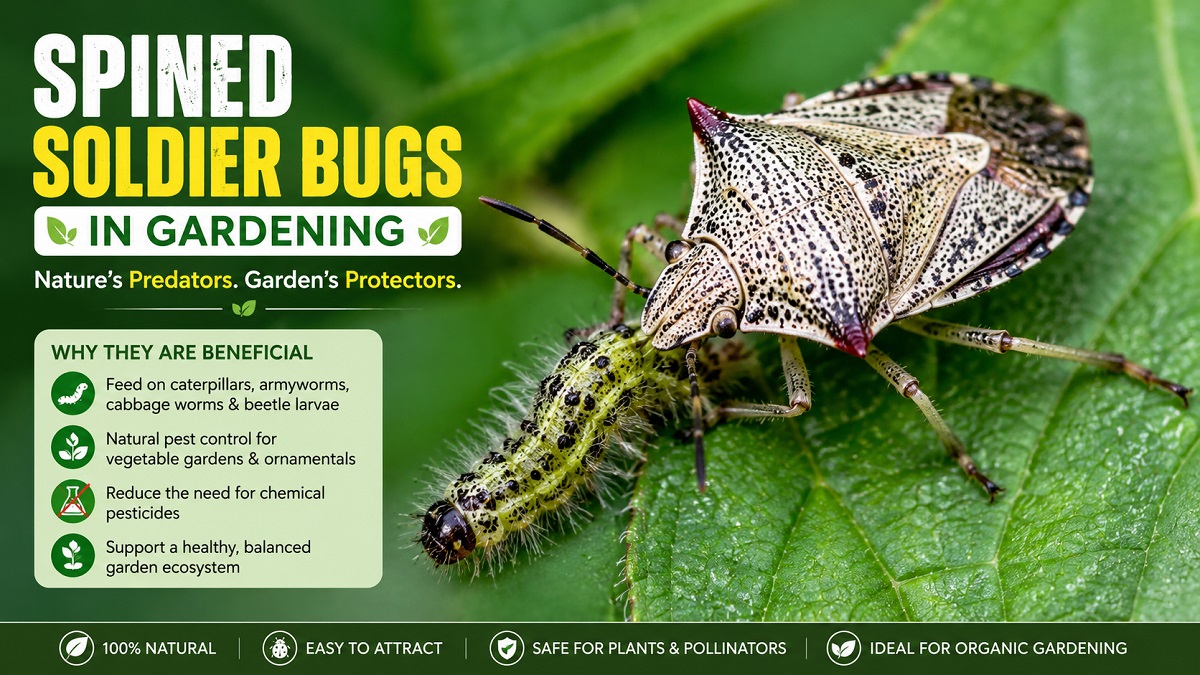
When gardeners discover a shield-shaped insect crawling across tomato leaves or flower stems, their first reaction is often to assume it's a stink bug. While many stink bugs are plant feeders capable of damaging vegetables and fruits, one species deserves a completely different reputation. The spined soldier bug (Podisus maculiventris) is a beneficial predator that actively hunts many destructive garden pests instead of feeding on plants.
Unlike common pest stink bugs that pierce fruits, beans, peppers, and tomatoes, the spined soldier bug feeds on insects such as caterpillars, beetle larvae, cabbage worms, armyworms, loopers, sawfly larvae, and even young Colorado potato beetles. Because of its appetite for damaging insects, it is widely considered one of North America's most important natural biological control agents.
Whether you grow vegetables, herbs, ornamentals, fruit trees, or native plants, encouraging populations of spined soldier bugs can reduce pest outbreaks and lessen the need for chemical insecticides. Learning to recognize this helpful insect also prevents accidental elimination of an important garden ally.
| Quick Facts | Details |
|---|---|
| Scientific Name | Podisus maculiventris |
| Common Name | Spined Soldier Bug |
| Type | Beneficial predatory stink bug |
| Adult Size | 10–14 mm (about ½ inch) |
| Diet | Caterpillars, beetle larvae, worms, soft-bodied insects |
| Garden Value | Natural biological pest control |
| Found In | Vegetable gardens, flower beds, orchards, meadows, forests |
| Safe for Plants? | Yes. They rarely feed on healthy plants. |
What Is a Spined Soldier Bug?
The spined soldier bug belongs to the stink bug family (Pentatomidae), but unlike many relatives, it is almost entirely predatory. Instead of sucking juices from leaves, stems, or fruits, it hunts other insects using a sharp beak-like mouthpart called a rostrum. Once prey is captured, digestive enzymes are injected into the victim before the liquefied tissues are consumed.
This efficient feeding method allows a single bug to consume dozens of pest insects throughout its lifetime. Because of this ability, commercial growers and home gardeners alike appreciate the species as part of an integrated pest management (IPM) program.
The species is native to North America and occurs naturally throughout much of the United States, southern Canada, and parts of northern Mexico. Populations are especially common in gardens that provide flowering plants, diverse habitats, and abundant insect prey.
How to Identify a Spined Soldier Bug
Correct identification is important because many gardeners mistakenly destroy these insects, assuming they are crop-damaging stink bugs. Fortunately, there are several characteristics that make the spined soldier bug relatively easy to recognize.
Adult Appearance
- Shield-shaped body typical of stink bugs.
- Light brown, gray, or tan coloration with darker markings.
- Distinct pointed "shoulders" or sharp projections extending from the thorax.
- Dark speckled abdomen edges.
- Strong piercing beak tucked beneath the body.
- Large, well-developed wings.
- Approximately half an inch long.
Nymph Appearance
Young nymphs look very different from adults. Newly hatched individuals are often black and bright red or orange before gradually developing darker markings as they mature. Unlike adults, immature stages lack fully developed wings.
The colorful nymphs frequently remain clustered together shortly after hatching before dispersing to search for prey.
Spined Soldier Bug Life Cycle
Understanding the life cycle helps gardeners recognize these beneficial insects throughout the growing season.
Egg Stage
Females deposit clusters of barrel-shaped eggs on the undersides of leaves. The eggs are usually pale cream, yellow, or bronze and arranged neatly in small groups. Depending on temperature, eggs hatch within about one week.
Nymph Stage
After hatching, the insects pass through five nymph stages. During each molt they become larger and gradually resemble adult bugs. Even immature nymphs are active predators capable of attacking surprisingly large prey.
Adult Stage
Adults live for several weeks to a few months depending on environmental conditions. During this time they continuously search for insect prey, mate, and lay additional eggs throughout the warm season.
In colder climates, adults overwinter beneath leaf litter, bark, logs, or other protected locations before becoming active again in spring.
Why Spined Soldier Bugs Are Valuable in the Garden
Most beneficial insects specialize in feeding on only one or two pest species. Spined soldier bugs are different because they consume a remarkably wide variety of insects. This broad diet makes them one of the most versatile natural predators available to gardeners.
Rather than relying on chemical sprays, gardeners who encourage these insects often experience more balanced ecosystems where pest populations remain below damaging levels.
Natural Pest Control
A healthy population of spined soldier bugs can significantly reduce infestations before they become severe. Since both nymphs and adults hunt insects, pest suppression continues throughout much of the growing season.
Reduced Need for Insecticides
Chemical pesticides frequently kill beneficial insects alongside harmful pests. Encouraging natural predators like spined soldier bugs can lower pesticide use, helping pollinators, earthworms, lacewings, lady beetles, and parasitic wasps survive.
Supports Biodiversity
Gardens containing a diversity of predators tend to be healthier and more resilient. Spined soldier bugs work alongside birds, spiders, assassin bugs, praying mantises, ground beetles, and beneficial wasps to create a balanced ecosystem.
What Do Spined Soldier Bugs Eat?
Unlike plant-feeding stink bugs, this species is almost entirely carnivorous. They patiently stalk prey across leaves before rapidly piercing it with their mouthparts.
| Common Garden Pest | Frequently Attacked? |
|---|---|
| Armyworms | ✔ Yes |
| Cabbage worms | ✔ Yes |
| Tomato hornworms (young) | ✔ Yes |
| Colorado potato beetle larvae | ✔ Yes |
| Imported cabbageworm | ✔ Yes |
| Cutworms | ✔ Yes |
| Sawfly larvae | ✔ Yes |
| Tent caterpillars | ✔ Yes |
| Leaf beetle larvae | ✔ Yes |
| Soft-bodied insect larvae | ✔ Frequently |
While they occasionally sample plant juices when prey is scarce, this behavior is uncommon and generally causes little or no noticeable plant damage. Their overall impact is overwhelmingly beneficial.
How Spined Soldier Bugs Hunt Their Prey
Unlike insects that wait for food to arrive, spined soldier bugs actively patrol leaves, stems, flowers, and surrounding vegetation. Excellent eyesight, sensitive antennae, and quick movements help them locate caterpillars and beetle larvae hiding beneath foliage.
Once prey is detected, the bug approaches cautiously before grabbing the insect with its front legs. It then inserts its sharp rostrum into the victim and injects digestive enzymes that break down internal tissues. Within minutes the predator consumes the liquefied contents, leaving behind an empty shell.
This feeding strategy allows even relatively small predators to overpower insects much larger than themselves. Gardeners often observe spined soldier bugs attacking caterpillars nearly equal to their own body length.
Because they constantly search for prey throughout the day, these insects provide continuous biological control in vegetable gardens, flower borders, berry patches, orchards, and native landscapes.
How to Attract Spined Soldier Bugs to Your Garden
The easiest way to increase the number of spined soldier bugs in your garden is to create an environment that supports beneficial insects year-round. Gardens with a wide variety of flowering plants, healthy soil, and minimal pesticide use naturally attract more predators than heavily managed landscapes.
Grow Nectar-Rich Flowers
Although spined soldier bugs primarily eat insects, adults occasionally feed on nectar and plant fluids for moisture and energy. Planting flowers that bloom throughout the season provides an additional food source.
- Sweet alyssum
- Dill
- Fennel
- Yarrow
- Goldenrod
- Coreopsis
- Cosmos
- Queen Anne's lace
- Sunflowers
Reduce Broad-Spectrum Insecticides
Many insecticides kill beneficial insects just as effectively as harmful pests. Avoid routine spraying whenever possible. Instead, monitor pest populations and rely on natural predators before considering chemical treatments.
Provide Shelter
Leave small areas of leaf litter, mulch, ornamental grasses, and native shrubs around the garden. These locations offer protection from predators and suitable places for adults to overwinter.
Encourage Biodiversity
Gardens with vegetables, herbs, flowering annuals, native perennials, shrubs, and small trees support a greater diversity of insects. A balanced ecosystem naturally attracts predators such as spined soldier bugs.
Spined Soldier Bug vs. Pest Stink Bugs
Many gardeners accidentally destroy beneficial soldier bugs because they resemble common stink bugs. Learning the differences helps protect an important natural predator.
| Feature | Spined Soldier Bug | Plant-Feeding Stink Bug |
|---|---|---|
| Diet | Predatory | Feeds on plants and fruit |
| Garden Impact | Beneficial | Usually harmful |
| Shoulder Spines | Long and pointed | Usually rounded |
| Feeds On | Caterpillars and larvae | Tomatoes, beans, peppers, fruit |
| Recommended Action | Leave it alone | Monitor population if damaging crops |
If you observe the insect actively attacking caterpillars or beetle larvae, it is almost certainly a beneficial predator rather than a plant-feeding pest.
Which Garden Pests Do They Help Control?
Spined soldier bugs are generalist predators, meaning they feed on many different pest species instead of specializing in only one. This makes them valuable throughout the growing season.
- Armyworms
- Cabbage worms
- Cutworms
- Tomato hornworms (young larvae)
- Colorado potato beetle larvae
- Mexican bean beetle larvae
- Elm leaf beetles
- Sawfly larvae
- Tent caterpillars
- Various moth and butterfly caterpillars that damage crops
Their appetite for soft-bodied larvae helps prevent many insects from reaching adulthood, reducing future pest populations naturally.
Where Are Spined Soldier Bugs Found?
These beneficial insects occur across much of North America and are commonly seen from late spring through early autumn. They inhabit both cultivated and natural landscapes wherever insect prey is available.
You may find them in:
- Vegetable gardens
- Flower beds
- Berry patches
- Apple orchards
- Corn fields
- Soybean fields
- Native prairies
- Woodland edges
- Pollinator gardens
Because they are highly mobile, adults frequently move between different habitats while searching for prey.
Seasonal Activity
Spring
Adults emerge from overwintering sites and begin searching for food. Mating occurs as temperatures warm and females begin laying eggs.
Summer
This is the period of greatest activity. Eggs hatch, nymphs develop rapidly, and adults actively hunt caterpillars and beetle larvae in vegetable gardens.
Autumn
As temperatures cool, adults continue feeding before seeking sheltered locations beneath bark, mulch, wood piles, and leaf litter for winter protection.
Winter
Most adults remain inactive until warmer weather returns the following spring.
Should You Buy Spined Soldier Bugs?
Some biological control suppliers sell spined soldier bug eggs or nymphs for commercial agriculture. While they can be useful in greenhouses or severe pest outbreaks, most home gardeners do not need to purchase them.
Creating habitat for naturally occurring populations is usually more sustainable and economical. Diverse gardens with flowering plants and reduced pesticide use often attract enough beneficial insects without additional purchases.
Common Mistakes Gardeners Make
- Destroying beneficial bugs because they resemble pest stink bugs.
- Applying insecticides before identifying the insect.
- Removing all leaf litter where beneficial insects overwinter.
- Growing only one crop, reducing biodiversity.
- Expecting predators to eliminate every pest immediately.
- Using pesticides that also kill pollinators and natural enemies.
Healthy gardens rarely become completely pest-free. Instead, beneficial insects help maintain populations below damaging levels.
Advantages and Disadvantages
| Advantages | Disadvantages |
|---|---|
| Excellent natural pest control | Can be mistaken for harmful stink bugs |
| Reduces pesticide dependence | May occasionally sample plant juices |
| Attacks many pest species | Needs prey to remain in the garden |
| Safe for vegetables and flowers | Population varies throughout the season |
| Supports organic gardening | Can emit odor if handled |
Final Thoughts
The spined soldier bug is one of the most valuable beneficial insects a gardener can encounter. Although its shield-shaped body resembles pest stink bugs, its behavior is completely different. Instead of damaging vegetables, fruits, and ornamental plants, it actively hunts caterpillars, beetle larvae, armyworms, cabbage worms, and many other destructive insects.
Protecting these natural predators is one of the simplest ways to build a healthier garden ecosystem. By planting diverse flowers, reducing pesticide use, and preserving overwintering habitat, gardeners can encourage thriving populations that provide free, long-term biological pest control.
Whenever you spot a shield-shaped insect with pointed shoulders stalking caterpillars across your garden, take a closer look before reaching for insecticide. It may be one of your garden's hardest-working allies.