Cabbage Worms: Complete Guide to Identification, Damage, Prevention & Control
Introduction
Few garden pests are as frustrating for vegetable growers as cabbage worms. These small green caterpillars may appear harmless at first glance, but they can rapidly transform healthy brassica crops into skeletonized plants full of holes. Whether you grow cabbage, broccoli, cauliflower, kale, Brussels sprouts, bok choy, collards, mustard greens, or other members of the cabbage family, sooner or later you may encounter these hungry larvae.
Unlike many insects that feed only occasionally, cabbage worms consume leaves continuously throughout their larval stage. A small infestation can quickly become a major problem because several generations may develop during a single growing season. If left unmanaged, these pests reduce plant vigor, contaminate harvested vegetables with droppings, and significantly lower crop quality.
Fortunately, cabbage worms are among the easiest garden pests to manage when they are detected early. Regular inspections, natural predators, organic biological treatments, protective row covers, and proper garden sanitation can dramatically reduce their numbers before serious damage occurs.
This guide explains how to correctly identify cabbage worms, distinguish them from similar caterpillars, understand their life cycle, recognize feeding damage, and choose the most effective prevention and treatment methods for both home gardens and larger vegetable plots.
What Are Cabbage Worms?
The name "cabbage worm" generally refers to the larval stage of several butterfly species that specialize in feeding on cruciferous vegetables. The most common species found in gardens is the imported cabbageworm, whose adult form is the familiar white butterfly often seen fluttering around vegetable patches during spring and summer.
Adult butterflies themselves cause little or no direct damage. The real problem begins after females lay tiny yellow eggs on the undersides of leaves. Within several days, the eggs hatch into green caterpillars that immediately begin feeding. Because their coloration closely matches the leaves they consume, cabbage worms often remain unnoticed until obvious chewing damage appears.
Although many gardeners use the term "cabbage worm" for any green caterpillar found on brassica crops, several related pests—including cabbage loopers and diamondback moth larvae—produce similar symptoms. Correct identification helps determine the most effective control strategy.
Plants Commonly Attacked
Cabbage worms strongly prefer plants belonging to the Brassicaceae family. These vegetables contain natural compounds called glucosinolates, which actually attract egg-laying butterflies and provide food for developing larvae.
Common host plants include:
- Green cabbage
- Red cabbage
- Savoy cabbage
- Broccoli
- Cauliflower
- Kale
- Brussels sprouts
- Collard greens
- Bok choy
- Chinese cabbage
- Turnips
- Mustard greens
- Radishes
- Kohlrabi
- Arugula
Wild mustard, shepherd's purse, and other brassica weeds can also serve as alternative hosts. These weeds allow cabbage worm populations to survive between vegetable plantings, making weed management an important component of long-term pest control.
How to Identify Cabbage Worms
Appearance
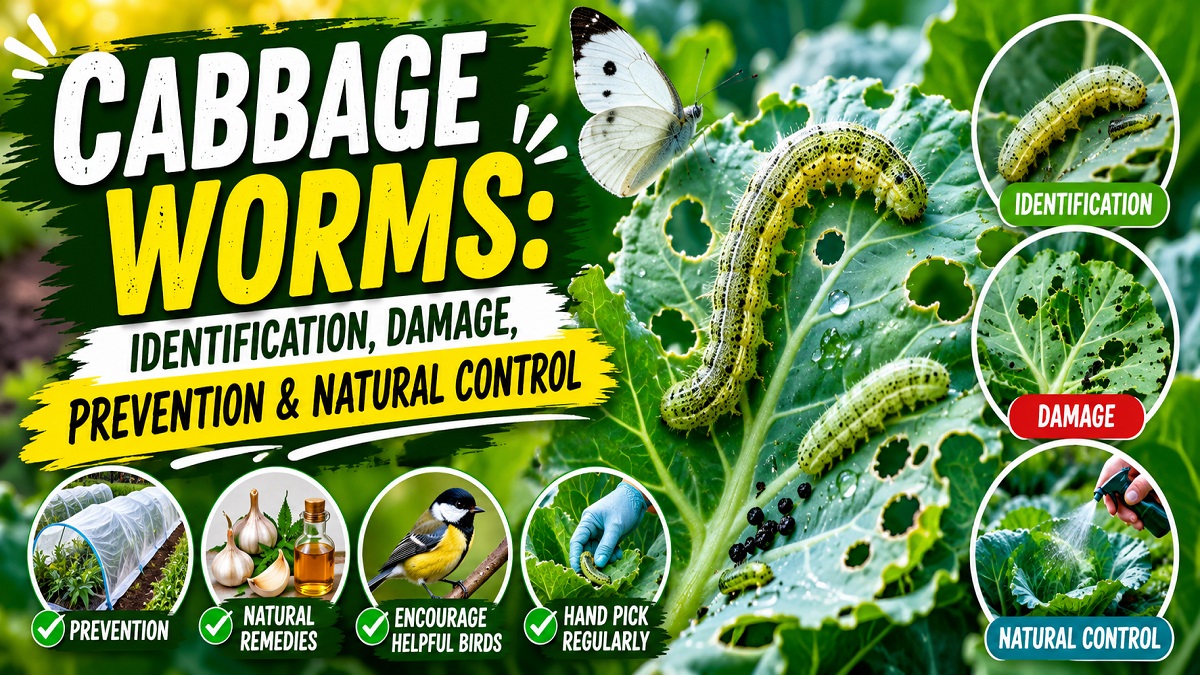
The imported cabbage worm is a velvety green caterpillar that typically grows between 1 and 1½ inches (2.5 to 4 centimeters) long. Its body is smooth with a faint yellow stripe running along the back and several lighter side markings. Fine, short hairs cover the body but are barely visible without close inspection.
Their green coloration provides excellent camouflage among cabbage leaves. During the day they often remain motionless along leaf veins or hide beneath foliage, making them surprisingly difficult to detect.
Eggs
Eggs are tiny, elongated, and pale yellow. They are usually deposited individually rather than in clusters, most often on the undersides of leaves where they remain protected from direct sunlight and many predators.
Adult Butterfly
Adult imported cabbage butterflies are creamy white with black markings near the wing tips. Females typically possess two dark spots on each forewing, while males usually have only one. These butterflies fly slowly around vegetable gardens, frequently landing on brassica plants to lay eggs.
Pupae
After completing their feeding stage, cabbage worms attach themselves to stems, fences, garden stakes, or nearby structures using silk. They then transform into green or brown chrysalides, remaining inactive until emerging as adult butterflies.
Cabbage Worm Life Cycle
Understanding the cabbage worm life cycle allows gardeners to interrupt population growth before serious infestations develop.
Stage 1 – Egg
Adult butterflies begin laying eggs soon after temperatures become consistently warm during spring. A single female can deposit hundreds of eggs over her lifetime, placing each individually on suitable host plants.
Stage 2 – Larva
Within approximately one week, eggs hatch into tiny caterpillars. This larval stage is responsible for virtually all crop damage. As the caterpillars grow, they molt several times while steadily increasing their appetite.
Young larvae begin by scraping leaf surfaces, producing small transparent "windowpane" patches. Older caterpillars consume entire leaf sections, leaving irregular holes and ragged edges. During this period they also produce large amounts of dark green droppings, known as frass, which contaminate edible portions of vegetables.
Stage 3 – Pupa
Fully grown caterpillars leave the host plant to pupate on nearby supports. Depending on weather conditions, this stage may last from one to several weeks.
Stage 4 – Adult
Adult butterflies emerge ready to mate and begin another generation. In warm climates, four to six generations may occur during a single year, allowing populations to build rapidly if not controlled.
Signs of a Cabbage Worm Infestation
Early detection is the key to preventing severe crop damage. Gardeners should inspect brassica plants at least once or twice each week, especially during spring and summer when butterflies are actively laying eggs.
Common signs include:
- Irregular holes throughout leaves.
- Skeletonized foliage with only major veins remaining.
- Fresh green caterpillars hidden beneath leaves.
- Small yellow eggs attached to leaf undersides.
- Dark green pellet-like droppings on leaves or within cabbage heads.
- Chewed developing heads of cabbage or broccoli.
- White butterflies frequently flying around brassica crops.
Young seedlings are especially vulnerable because even minor feeding can destroy their growing points. Mature plants usually survive light infestations but may produce lower-quality harvests if feeding continues unchecked.
Damage Caused by Cabbage Worms
Although cabbage worms primarily consume foliage, their impact extends beyond cosmetic leaf damage. Healthy leaves provide the energy required for plants to develop dense cabbage heads, large broccoli crowns, and vigorous root systems. Extensive feeding reduces photosynthesis, slowing overall growth and weakening plants.
As caterpillars mature, they chew increasingly large holes through leaves and often burrow deep into forming cabbage heads or broccoli florets. These protected feeding sites make the insects difficult to remove and can render vegetables unmarketable. Their droppings accumulate between tightly packed leaves, reducing crop quality and requiring extensive cleaning before harvest.
Repeated feeding also exposes plants to secondary problems. Torn leaf tissue provides easy entry points for bacterial and fungal diseases, while stressed plants become less capable of recovering from drought, heat, or nutrient deficiencies. Heavy infestations occurring early in the growing season may delay maturity by several weeks, and severe outbreaks can completely destroy young transplants before they become established.
| Plant | Typical Damage | Severity |
|---|---|---|
| Cabbage | Holes in wrapper leaves and contaminated heads | High |
| Broccoli | Chewed florets and foliage | High |
| Cauliflower | Damaged curds and leaves | High |
| Kale | Skeletonized leaves | Moderate to High |
| Brussels Sprouts | Leaf loss and feeding on sprouts | Moderate |
| Bok Choy | Rapid leaf destruction | High |
Recognizing these symptoms early allows gardeners to intervene before multiple generations become established. Routine monitoring remains one of the simplest and most effective defenses against widespread cabbage worm damage.
Organic Methods to Control Cabbage Worms
Organic control methods are highly effective when applied early and consistently. Since cabbage worms are relatively slow-moving caterpillars, they are easier to manage than many other garden pests. Combining several organic practices usually provides better long-term protection than relying on a single solution.
Hand Picking
For home gardens, manually removing cabbage worms remains one of the simplest and most effective control methods. Inspect both the upper and lower surfaces of leaves every few days, especially during spring and early summer when butterflies are actively laying eggs.
Remove any caterpillars and crush or discard the eggs before they hatch. A small bucket of soapy water makes disposal easy. Although this approach requires regular monitoring, it can completely prevent serious infestations in smaller vegetable gardens.
Remove Eggs Early
Destroying eggs prevents future generations from developing. Since cabbage butterfly eggs are laid individually rather than in clusters, careful inspection is necessary. Check the undersides of leaves where eggs are usually attached.
Encourage Healthy Plant Growth
Strong, vigorous plants recover more quickly from light feeding damage. Maintain proper soil fertility, water consistently, and avoid excessive nitrogen fertilizer, which encourages lush foliage that attracts egg-laying butterflies.
Biological Control
Nature provides numerous beneficial organisms that help keep cabbage worm populations under control. Encouraging these natural enemies reduces the need for pesticides while supporting a healthier garden ecosystem.
Parasitic Wasps
Tiny parasitic wasps are among the most valuable natural enemies of cabbage worms. Adult wasps lay eggs inside developing caterpillars. As the wasp larvae mature, they consume the cabbage worm internally, eventually killing it before it can complete development.
Avoid broad-spectrum insecticides whenever possible because they also kill these beneficial insects.
Birds
Many songbirds feed caterpillars to their young during nesting season. Chickadees, wrens, sparrows, robins, and other insect-eating birds help reduce cabbage worm populations naturally. Bird-friendly gardens containing shrubs, nesting boxes, and fresh water encourage these helpful predators.
Ground Beetles
Ground beetles consume caterpillars, eggs, and pupae hiding in garden debris. Leaving small mulch-free pathways and minimizing unnecessary pesticide use helps maintain healthy beetle populations.
Spiders
Although often overlooked, spiders capture both butterflies and young caterpillars. Maintaining plant diversity encourages these general predators throughout the growing season.
| Beneficial Organism | Target Stage | Effectiveness |
|---|---|---|
| Parasitic Wasps | Larvae | Excellent |
| Birds | Larvae | High |
| Ground Beetles | Eggs & Pupae | Moderate |
| Spiders | Butterflies & Young Larvae | Moderate |
| Predatory Bugs | Small Caterpillars | Moderate |
Using Bacillus thuringiensis (Bt)
One of the most effective organic treatments for cabbage worms is Bacillus thuringiensis var. kurstaki (Bt), a naturally occurring soil bacterium that specifically targets caterpillars.
When cabbage worms consume leaves treated with Bt, the bacteria disrupt their digestive system, causing them to stop feeding within hours. Death typically occurs within several days.
Bt is considered safe for people, pets, birds, earthworms, bees, and most beneficial insects because it only affects susceptible caterpillars that ingest treated foliage.
Best Practices for Bt
- Apply when young caterpillars first appear.
- Spray both upper and lower leaf surfaces.
- Reapply after heavy rain.
- Follow label directions carefully.
- Treat during evening hours to reduce sunlight degradation.
Because Bt works only after being eaten, thorough leaf coverage is essential for successful control.
Floating Row Covers
Floating row covers provide one of the most reliable preventive measures against cabbage worms. These lightweight fabrics allow sunlight, rainfall, and air circulation while physically preventing butterflies from reaching plants.
Install row covers immediately after transplanting or sowing seeds. Secure the edges with soil, landscape staples, or boards to eliminate gaps where butterflies can enter.
If plants require pollination, temporarily remove covers once flowering begins. Since most leafy brassicas are harvested before flowering, covers can usually remain in place throughout the growing season.
Advantages
- Prevents egg laying.
- Reduces insect damage without pesticides.
- Protects against flea beetles and aphids.
- Allows continuous plant growth.
- Reusable for multiple seasons.
Companion Planting
Companion planting alone will not eliminate cabbage worms, but it can help reduce butterfly activity while attracting beneficial insects that naturally suppress pest populations.
Recommended Companion Plants
- Dill
- Cilantro
- Parsley
- Sweet alyssum
- Yarrow
- Calendula
- Chamomile
- Nasturtiums
- Marigolds
Flowering herbs produce nectar that supports parasitic wasps, hoverflies, lacewings, and other beneficial insects. Planting a mixture of vegetables and flowers increases biodiversity, making it more difficult for butterflies to locate host plants.
Chemical Control Options
Chemical insecticides should generally be considered only when severe infestations threaten crop loss and other management practices have proven insufficient. Products specifically labeled for caterpillar control are generally more selective than broad-spectrum insecticides.
Always read and follow label instructions regarding application timing, protective equipment, harvest intervals, and environmental precautions.
When Chemical Control May Be Necessary
- Heavy infestations covering multiple plants.
- Commercial production requiring market-quality vegetables.
- Repeated generations despite organic management.
- Severe feeding during head formation.
Avoid spraying during periods when bees and other pollinators are actively visiting flowering plants.
Integrated Pest Management (IPM)
Integrated Pest Management combines monitoring, prevention, biological control, and selective treatments into one sustainable strategy. Rather than attempting to eliminate every insect, IPM focuses on maintaining pest populations below damaging levels while protecting beneficial organisms.
An Effective IPM Program Includes
- Weekly plant inspections.
- Removing eggs before they hatch.
- Hand-picking caterpillars.
- Using floating row covers.
- Encouraging beneficial insects.
- Applying Bt only when necessary.
- Practicing crop rotation.
- Keeping the garden free of brassica weeds.
By combining these techniques, gardeners often achieve excellent cabbage worm control without relying heavily on synthetic pesticides.
Preventing Future Infestations
Preventing cabbage worms is much easier than eliminating established populations. A few simple gardening habits significantly reduce future infestations.
Rotate Crops
Avoid planting brassicas in the same location every year. Crop rotation interrupts pest life cycles and reduces overwintering populations.
Clean Up Garden Debris
Remove old cabbage plants, fallen leaves, and weeds at the end of each growing season. Many pupae survive in crop residue and emerge the following spring.
Control Brassica Weeds
Wild mustard and related weeds serve as alternate hosts for cabbage worms. Removing these plants decreases breeding sites.
Inspect New Seedlings
Before planting nursery-grown vegetables, carefully inspect them for eggs and small caterpillars. Introducing infested transplants is a common source of garden outbreaks.
Plant at the Right Time
In some regions, adjusting planting dates helps crops avoid peak butterfly activity. Early spring or late summer plantings often experience lower pest pressure than midsummer crops.
| Prevention Method | Difficulty | Effectiveness |
|---|---|---|
| Row Covers | Easy | Excellent |
| Crop Rotation | Easy | High |
| Hand Inspection | Easy | High |
| Garden Sanitation | Easy | High |
| Companion Planting | Easy | Moderate |
| Bt Applications | Moderate | Excellent |
Seasonal Management Calendar
Cabbage worm activity varies throughout the growing season depending on local temperatures and the number of butterfly generations. Adapting your management practices to each season helps prevent infestations before they become severe. Regular scouting is more effective than waiting until plants show obvious feeding damage.
| Season | What Happens | Recommended Action |
|---|---|---|
| Early Spring | Adult butterflies begin laying eggs. | Install row covers and inspect seedlings weekly. |
| Late Spring | First generation of caterpillars appears. | Hand-pick worms and remove eggs. |
| Summer | Several overlapping generations develop. | Scout twice weekly and apply Bt if needed. |
| Autumn | Population gradually declines. | Harvest crops promptly and remove plant debris. |
| Winter | Pupae overwinter in sheltered areas. | Clean garden beds and rotate crops. |
Cabbage Worms vs. Cabbage Loopers
Many gardeners confuse cabbage worms with cabbage loopers because both are green caterpillars that feed on brassica crops. Although their damage is similar, they can be distinguished by their appearance and movement.
| Feature | Cabbage Worm | Cabbage Looper |
|---|---|---|
| Movement | Crawls smoothly | Moves in a looping or inchworm motion |
| Body | Velvety green | Slimmer with white side stripes |
| Adult | White butterfly | Brown moth |
| Damage | Large irregular holes | Large irregular holes |
| Control | Hand-picking, Bt, row covers | Hand-picking, Bt, row covers |
Fortunately, the same prevention and treatment strategies work well for both pests, making accurate identification helpful but not always essential for home gardeners.
Common Mistakes Gardeners Make
Many cabbage worm infestations become severe because the first signs are overlooked. Avoiding a few common mistakes can dramatically improve pest control.
Waiting Too Long to Inspect Plants
By the time large holes appear in leaves, caterpillars may have been feeding for several days. Weekly inspections are far more effective than reacting after damage becomes obvious.
Ignoring the Undersides of Leaves
Eggs and newly hatched caterpillars usually remain hidden beneath leaves. Looking only at the top surface allows many pests to go unnoticed.
Using Broad-Spectrum Insecticides Unnecessarily
These products may kill beneficial insects that naturally keep cabbage worm populations under control. Whenever possible, choose selective treatments and encourage natural predators.
Leaving Crop Residue in the Garden
Old brassica plants and weeds provide shelter for pupae. Cleaning the garden after harvest reduces the number of butterflies emerging the following season.
Planting Brassicas in the Same Bed Every Year
Repeated planting in one location allows pest populations to build over time. Crop rotation interrupts their life cycle and promotes healthier soil.
Can You Still Eat Vegetables After Cabbage Worm Damage?
Yes. Vegetables with minor cabbage worm damage are generally safe to eat once they have been thoroughly cleaned. Remove any caterpillars, eggs, or droppings before preparing the produce.
Outer leaves with extensive feeding damage can simply be discarded. Broccoli and cauliflower should be soaked in cool salted water for several minutes to encourage hidden caterpillars to emerge before rinsing thoroughly.
Although cosmetic damage may reduce market quality, home gardeners can often harvest perfectly edible vegetables from lightly infested plants.
Environmental Benefits of Natural Control
Choosing environmentally friendly control methods benefits both your garden and surrounding ecosystems. Encouraging beneficial insects, using row covers, and applying biological controls only when necessary reduces unnecessary pesticide exposure.
A balanced garden ecosystem supports pollinators, birds, predatory insects, earthworms, and soil microorganisms. Over time, these natural allies help regulate many pest populations, reducing the need for repeated chemical treatments.
Sustainable gardening practices also improve soil health, increase biodiversity, and create a more resilient vegetable garden capable of withstanding seasonal pest outbreaks.