Damsel Bugs in Gardening: A Natural Ally for Pest Control
Introduction
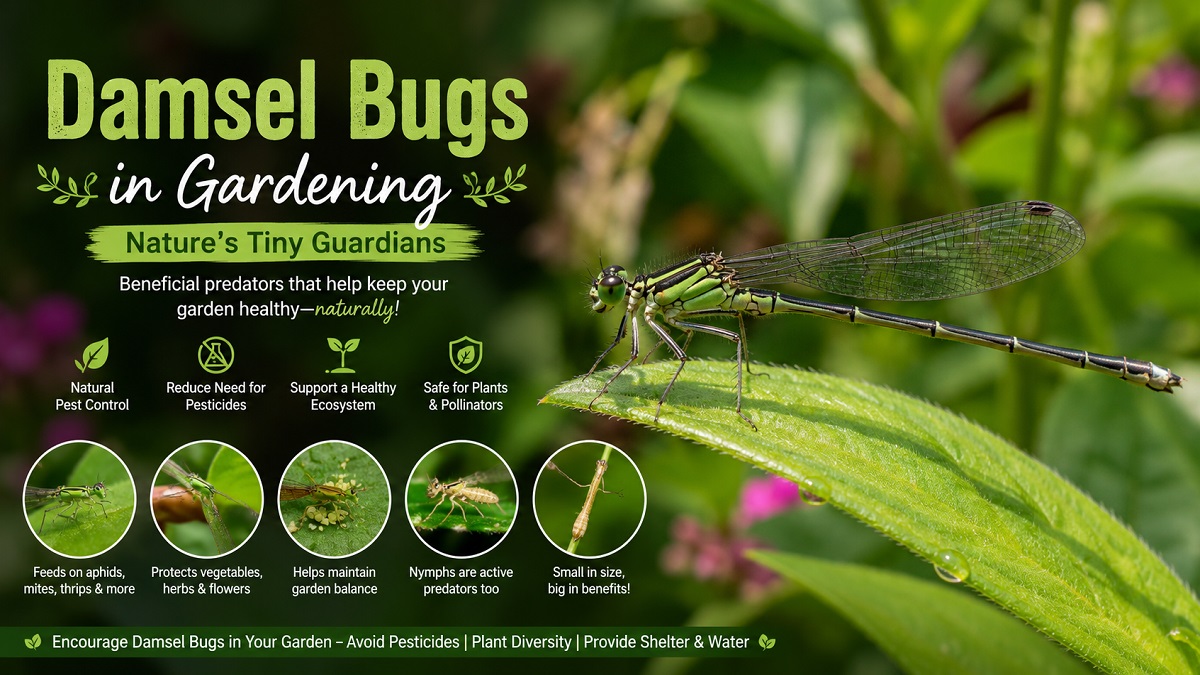
Healthy gardens are home to hundreds of insect species. While some insects damage vegetables, flowers, shrubs, and fruit trees, many others work as natural pest controllers. Among these beneficial insects, the damsel bug is one of the most effective yet overlooked predators. These slender, fast-moving insects feed on numerous soft-bodied pests that commonly attack garden plants.
Instead of relying solely on chemical pesticides, gardeners can encourage damsel bugs to establish healthy populations. Once present, they actively hunt throughout the growing season, helping reduce aphids, caterpillars, leafhoppers, mites, and many other destructive insects. Their appetite makes them an important component of integrated pest management (IPM) and sustainable gardening.
Understanding how damsel bugs live, what they eat, and how to attract them allows gardeners to maintain healthier plants while supporting biodiversity.
What Are Damsel Bugs?
Damsel bugs belong to the insect family Nabidae. Adults are usually grayish-brown or tan with long legs, narrow bodies, and elongated heads. They measure approximately 8–12 mm (0.3–0.5 inches) long and possess piercing-sucking mouthparts used to capture prey.
Unlike plant-feeding bugs, damsel bugs use their beak to inject digestive enzymes into insects, allowing them to consume internal fluids. They are agile hunters capable of stalking prey on leaves, stems, flowers, and even the soil surface.
| Feature | Description |
|---|---|
| Scientific Family | Nabidae |
| Average Size | 8–12 mm |
| Color | Gray, brown, or tan |
| Diet | Predatory |
| Benefit | Controls many garden pests naturally |
Garden Pests Controlled by Damsel Bugs
Damsel bugs are generalist predators, meaning they consume a wide variety of insects rather than specializing in one prey species. This flexibility makes them valuable throughout the gardening season.
- Aphids
- Small caterpillars
- Leafhoppers
- Plant bugs
- Spider mites
- Thrips
- Whitefly nymphs
- Small beetle larvae
- Moth eggs
- Various insect eggs
A single damsel bug may consume dozens of small insects over several days, helping keep pest populations below damaging levels. Although they cannot eliminate every pest outbreak, they greatly reduce pressure on garden plants.
Life Cycle
Egg Stage
Female damsel bugs lay eggs inside soft plant stems or leaf tissues where they remain protected until hatching.
Nymph Stage
Young nymphs resemble smaller wingless adults. They immediately begin hunting tiny insects and continue feeding as they grow through several molts.
Adult Stage
Mature adults develop wings and become highly mobile predators capable of searching large areas of the garden for prey.
Depending on climate, several generations may occur during a single growing season.
Benefits of Damsel Bugs
- Provide free, natural pest control.
- Reduce dependence on chemical insecticides.
- Protect vegetables, herbs, flowers, and fruit plants.
- Feed on many different pest species.
- Help maintain ecological balance.
- Support sustainable and organic gardening practices.
- Work continuously throughout the growing season.
Because they attack multiple pests, damsel bugs are often considered one of the most versatile beneficial insects in home landscapes.
How to Attract Damsel Bugs
Plant Diverse Flowers
Flowering herbs and native wildflowers attract many beneficial insects. Small blossoms provide nectar, pollen, and shelter for adult predators.
Reduce Pesticide Use
Broad-spectrum insecticides kill beneficial insects along with pests. Limiting pesticide use allows damsel bug populations to develop naturally.
Grow Mixed Plantings
Gardens containing vegetables, flowers, herbs, shrubs, and native plants create habitats where predators can find food throughout the season.
Provide Shelter
Mulch, ornamental grasses, perennial borders, and hedges offer protection from weather and predators, helping beneficial insects survive.
Best Garden Plants for Beneficial Insects
- Dill
- Fennel
- Yarrow
- Coreopsis
- Cosmos
- Goldenrod
- Sunflowers
- Asters
- Marigolds
- Sweet Alyssum
These plants also attract lady beetles, lacewings, hoverflies, parasitic wasps, and pollinators, making the garden more resilient against pest outbreaks.
Are Damsel Bugs Harmful?
Damsel bugs are considered beneficial and rarely cause problems for people. They are not aggressive toward humans or pets. If handled roughly, they may occasionally give a mild defensive bite, but this is uncommon and generally harmless.
Unlike many true bugs that feed on plants, damsel bugs rarely damage leaves, flowers, or fruit. Their primary focus is hunting insect prey.
Damsel Bugs vs. Assassin Bugs
| Characteristic | Damsel Bug | Assassin Bug |
|---|---|---|
| Size | Small | Medium to large |
| Body Shape | Slender | Robust |
| Main Diet | Small soft-bodied pests | Wide range of insects |
| Human Bite | Rare and mild | Can be painful if handled |
| Garden Value | Excellent | Excellent |
Tips for Organic Gardeners
- Inspect plants regularly instead of spraying automatically.
- Accept a small number of pests to support predator populations.
- Use companion planting for greater biodiversity.
- Leave some natural vegetation around the garden.
- Avoid unnecessary insecticide applications.
- Grow flowering plants throughout the season.
- Provide water sources during hot weather.
Organic gardens often support larger populations of beneficial insects because predators have consistent food sources and fewer toxic chemicals to contend with.
Conclusion
Damsel bugs are among the most valuable natural predators found in home gardens. Their ability to feed on aphids, caterpillars, mites, thrips, leafhoppers, and many other pests makes them an excellent partner for gardeners seeking environmentally friendly pest management.
By planting diverse flowers, minimizing pesticide use, and creating habitats that encourage beneficial insects, gardeners can enjoy healthier plants while reducing pest problems naturally. Supporting damsel bugs not only protects crops but also contributes to a balanced garden ecosystem where beneficial insects thrive alongside pollinators and other wildlife.