Assassin Bugs in Gardening: Nature's Helpful Predators for Pest Control
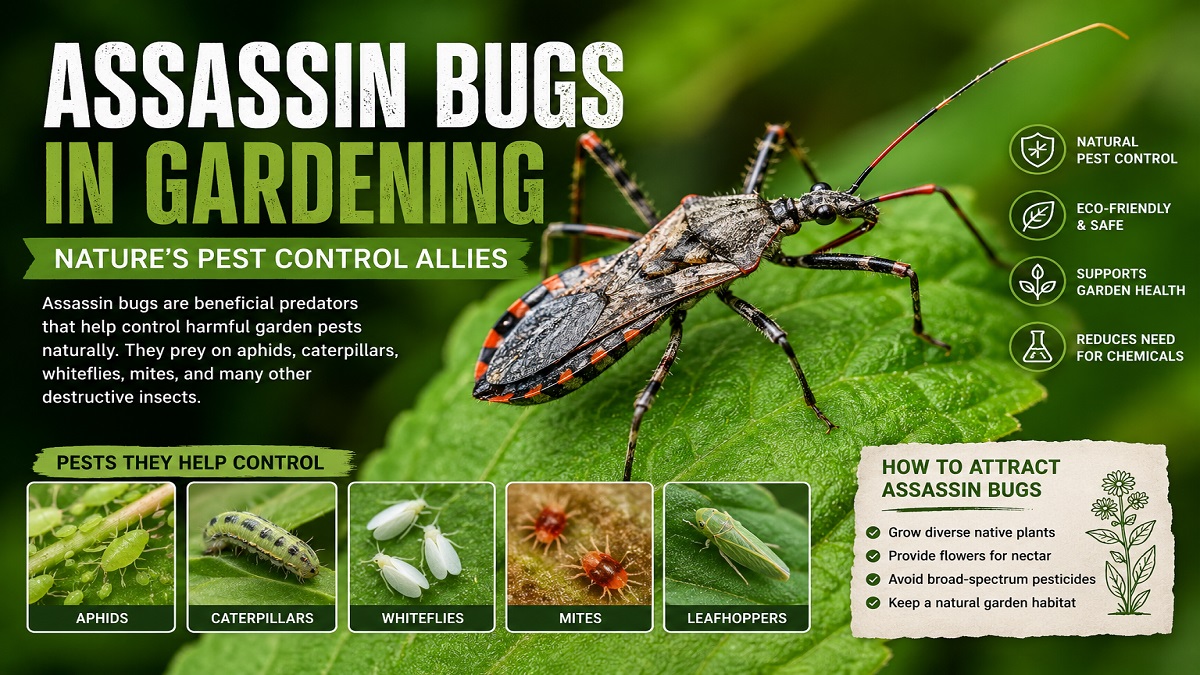
Healthy gardens are full of life, and not every insect is harmful to your plants. While gardeners often focus on eliminating bugs, many insects actually play an essential role in maintaining a balanced ecosystem. Among the most valuable beneficial insects is the assassin bug, a natural predator that feeds on numerous destructive garden pests.
Assassin bugs belong to the family Reduviidae and are found throughout many parts of the world. They are easily recognized by their elongated bodies, long legs, curved piercing mouthparts, and patient hunting behavior. Rather than feeding on plants, assassin bugs actively hunt insects that damage vegetables, flowers, shrubs, and fruit trees.
By encouraging assassin bugs in your garden, you can reduce dependence on chemical pesticides while promoting healthier plants and a more balanced environment. Understanding how these fascinating predators live, what they eat, and how to protect them can significantly improve your natural pest management strategy.
What Are Assassin Bugs?
Assassin bugs are predatory insects that capture prey using stealth and speed. Their most distinctive feature is a long beak-like mouthpart called a rostrum. Once they capture an insect, they inject digestive enzymes that liquefy the internal tissues before consuming the prey.
Unlike herbivorous insects, assassin bugs do not chew leaves, flowers, fruits, or roots. Their entire diet consists primarily of other insects, making them one of the most beneficial natural predators found in home gardens.
Adults vary in size depending on the species, ranging from about half an inch to over one inch long. Colors may include brown, black, gray, green, or reddish patterns that provide excellent camouflage among leaves and stems.
Why Assassin Bugs Are Beneficial
Many destructive insects reproduce rapidly and can damage crops within days. Assassin bugs naturally suppress these pest populations before they become severe infestations. Because they hunt throughout the growing season, they provide continuous biological pest control.
Major Benefits
- Reduce populations of harmful insects naturally.
- Lower the need for chemical pesticides.
- Help maintain ecological balance.
- Protect vegetables, flowers, herbs, and fruit plants.
- Support sustainable and organic gardening practices.
Unlike broad-spectrum pesticides, assassin bugs target living prey without contaminating soil, water, pollinators, or beneficial microorganisms.
Common Garden Pests They Eat
Assassin bugs consume an impressive variety of insects throughout their lives. Depending on the species and available food, they may prey upon:
- Aphids
- Caterpillars
- Leafhoppers
- Whiteflies
- Beetle larvae
- Japanese beetles
- Stink bugs
- Squash bugs
- Small grasshoppers
- Thrips
- Sawfly larvae
- Various fly species
Larger assassin bug species are capable of capturing insects nearly as large as themselves, making them highly efficient predators in vegetable gardens and ornamental landscapes.
Life Cycle of Assassin Bugs
The life cycle consists of three major stages:
Egg Stage
Females deposit clusters of tiny eggs on leaves, stems, or bark where they remain protected until hatching.
Nymph Stage
Young assassin bugs resemble miniature adults but lack wings. During this stage they actively hunt smaller insects while gradually molting several times before maturity.
Adult Stage
Adults develop fully functional wings and become efficient hunters capable of capturing a wide range of garden pests throughout the growing season.
Comparison of Beneficial Garden Predators
| Beneficial Insect | Main Prey | Best For |
|---|---|---|
| Assassin Bug | Aphids, caterpillars, beetles, leafhoppers | General pest control |
| Lady Beetle | Aphids | Soft-bodied insects |
| Green Lacewing | Aphids, mites, whiteflies | Vegetable gardens |
| Praying Mantis | Large insects | General predators |
| Ground Beetle | Slugs, larvae | Soil pests |
How to Attract Assassin Bugs
Creating a garden that supports beneficial insects is surprisingly simple. Assassin bugs thrive where there is abundant shelter, flowering plants, and a reliable food source.
Grow Native Flowers
Native flowering plants provide nectar for many beneficial insects while creating habitat that attracts prey for assassin bugs.
Avoid Broad-Spectrum Pesticides
Many insecticides kill beneficial predators along with harmful pests. Use targeted treatments only when absolutely necessary.
Maintain Plant Diversity
Mixed gardens with herbs, vegetables, flowering plants, shrubs, and trees provide ideal hunting grounds.
Leave Natural Shelter
Small piles of leaves, mulch, grasses, and perennial plants provide hiding places throughout the year.
Can Assassin Bugs Harm People?
Although assassin bugs are not aggressive toward humans, they can bite if handled or accidentally pressed against the skin. Their bite is painful because of the enzymes used to subdue prey, but it is generally not dangerous for healthy individuals.
The easiest way to avoid bites is simply to observe them without touching them. Gardeners should wear gloves when working in dense vegetation where insects may be hiding.
Should You Keep Assassin Bugs in Your Garden?
For most home gardeners, the answer is yes. Assassin bugs are among the most effective natural pest controllers available. Rather than purchasing expensive biological control agents, many gardeners simply create favorable habitats that encourage native assassin bug populations.
These predators are particularly valuable in vegetable gardens, flower beds, berry patches, orchards, and organic farms where reducing pesticide use is an important goal.
A balanced garden ecosystem includes pollinators, decomposers, predators, and healthy plants working together. Assassin bugs are an important part of that natural balance.