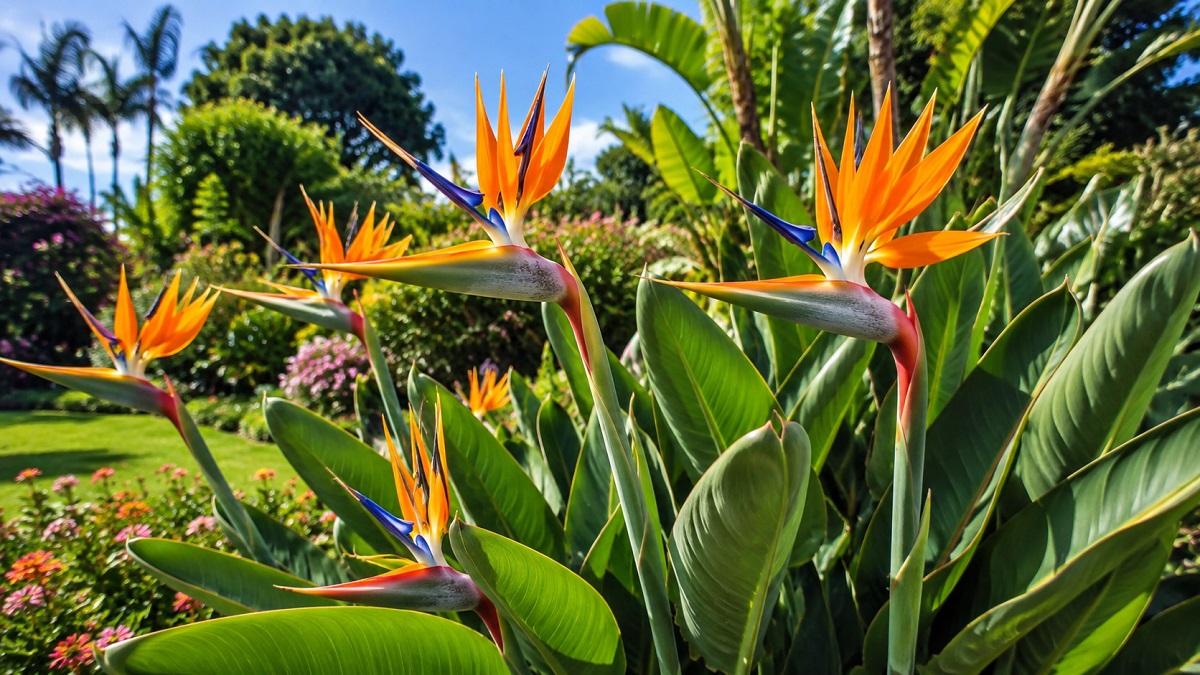
Healthy Bird of Paradise (Strelitzia) displaying lush tropical foliage and its distinctive orange and blue crane-like flowers.
Few plants possess the regal elegance, architectural drama, and tropical magnetism of the Bird of Paradise (Strelitzia). Known worldwide for its banana-like foliage and breathtaking, crane-like blooms that resemble an exotic avian creature in mid-flight, this South African native has cemented itself as the undisputed crown jewel of interior design and landscape architecture. Whether you are aiming to transform a sunlit corner of your living room into a lush indoor jungle or seeking to install an impressive outdoor privacy screen in warmer zones, mastering the nuances of Strelitzia care is your key to long-term success.
While they carry an aura of high-maintenance tropical delicacy, Birds of Paradise are remarkably resilient, fast-growing plants once their core physiological needs are met. However, navigating the balance between light intensity, soil hydraulics, atmospheric moisture, and seasonal fertilizing can feel daunting for beginner and intermediate plant parents alike. In this comprehensive guide, we will break down every single dimension of growing, nurturing, troubleshooting, and propagating these botanical giants, ensuring your plant doesn't merely survive, but genuinely thrives for decades.
Pro-Tip for Beginners: If you get the light level and pot drainage right, you have solved 80% of Bird of Paradise care!
LIGHTBright Direct to High Indirect
WATERAllow the top 50% of the soil to dry before watering
SOILRich, Chunky, Well-Draining Mix
HUMIDITY50% - 70% Recommended
TEMPERATURE65°F – 85°F (18°C – 29°C)
FERTILIZERBalanced Monthly (Spring–Summer)
TOXICITYMildly Toxic to Pets (If Ingested)
HARDINESSUSDA Zones 9b – 11 (Outdoors)
1. Understanding the Species: Strelitzia reginae vs. Strelitzia nicolai
Before purchasing a Bird of Paradise or diagnosing its care routine, it is essential to determine precisely which species you are cultivating. Although both belong to the family Strelitziaceae, their scale, growth habit, and flower color differ drastically. Purchasing the wrong species for a small indoor apartment can quickly lead to a structural space crisis!
If you are seeking a stunning interior accent piece that delivers huge tropical leaves without outgrowing your living room ceiling within three years, Strelitzia reginae is the ideal candidate. If you desire architectural height, sprawling leaf canopy, and drama, Strelitzia nicolai is unmatched.
2. Lighting Requirements: The Sunlight Engine
If there is one absolute rule in Bird of Paradise care, it is this: Light is not optional; it is their fuel source. In their native South Africa, these plants grow on coastal slopes and riverbanks bathed in raw, unfiltered sunshine. Bringing them indoors requires placing them in your brightest available window.
To keep your plant robust, stocky, and vibrant, aim to provide a minimum of 4 to 6 hours of direct sunlight daily, coupled with bright, indirect light for the remainder of the day. Unobstructed South-facing or West-facing windows are the gold standard for indoor specimens.
Evaluating Sunlight Conditions Indoors
South-Facing Window: Ideal position. Delivers high intensity and long hours of direct light required for robust petiole development and flowering.
West-Facing Window: Excellent secondary option. Provides strong afternoon direct sun. Watch for excessive leaf scorch on young plants during summer peak.
East-Facing Window: Acceptable for young plants. Morning sun is gentle, but you may notice slower growth and elongated stems (etiolation).
North-Facing Window: Not recommended. Light levels are generally too weak, causing the plant to stretch, lean, stop growing, and eventually drop lower foliage.
Light Stress Indicators
Too Little Light: Stem bending toward windows, pale leaves, weak petiole bases that collapse, no growth activity for over 6 months.
Too Much Light: Crispy bleached white or brown patches across the leaf center, scorched margins.
If you lack natural bright lighting indoors, investing in a high-output LED grow light panel (target 30–50 Watts of true draw placed 18-24 inches above the leaf canopy) will make the difference between a struggling plant and an explosive, healthy grower.
3. Watering Hydraulics & Moisture Balance
Understanding how a Strelitzia processes water is vital to keeping root systems healthy. Bird of Paradise roots are thick, fleshy, tuber-like structures designed to anchor a massive plant and store moisture during seasonal droughts. Because of this root morphology, they suffer severely when subjected to stagnant, waterlogged soil.
The Seasonal Watering Rhythm
A bird of paradise requires a dynamic watering strategy aligned with seasonal sun exposure and ambient temperatures:
Active Growth Season (Spring & Summer): During peak growing months, your plant is manufacturing leaves rapidly and transpiring moisture heavily. Water thoroughly whenever the top 2 to 3 inches of soil feel dry to the touch. Ensure water runs freely out of the drainage holes at the base of the container. Never allow the pot to sit in a saucer of stagnant runoff water for longer than 30 minutes!
Dormancy Season (Autumn & Winter): As day lengths shorten and sunlight intensity wanes, the plant's metabolic rate slows down dramatically. Reduce watering frequency significantly, allowing the top 50% of the potting medium to dry out completely between waterings.
The Touch-&-Weight Test
Do not rely solely on a scheduled calendar (e.g., "Watering every Tuesday"). Instead, insert your finger deep into the pot or use a wooden chopstick. If the chopstick comes out clean and dry, it's time to water. Additionally, learn the weight of your pot when fully saturated versus when dry—lifting the edge of the pot will immediately tell you how much water remains deep in the root zone!
4. Soil Formulation, Repotting & Fertilization
Providing the ideal soil foundation ensures that your plant's fleshy roots receive sufficient oxygen while retaining enough moisture to sustain immense leaf production. Standard, dense commercial potting soil straight out of the bag is often too heavy, compacting over time and causing root rot.
Crafting the Perfect Bird of Paradise Soil Recipe
Mix up a custom indoor tropical blend using the following proportions for maximum aeration and drainage:
Birds of Paradise actually bloom best when slightly root-bound! However, when roots start pushing the plant up out of the pot or breaking plastic containers, it is time to upgrade. Choose a heavy, stable container (terracotta or ceramic is superior to lightweight plastic) with ample bottom drainage holes. Always upgrade by only 2 to 3 inches in diameter; jumping into a massive pot retains excessive unabsorbed water, spiking root rot risks.
Fertilization Strategy
Because Strelitzias produce huge, thick leaves in rapid succession during spring and summer, they are heavy feeders. Apply a balanced liquid houseplant fertilizer (such as 10-10-10 N-P-K) diluted to half-strength every two to four weeks during active growth. Alternatively, incorporate slow-release fertilizer granules into the top soil layer in early spring. Halt fertilization completely during fall and winter to avoid mineral salt burn on dormant roots.
5. Temperature & Ambient Humidity Preferences
Hailing from sub-tropical coastal environments, Birds of Paradise enjoy warm, pleasant temperatures and moderate to high humidity levels. Fortunately, average home indoor temperatures are generally well-suited for them!
Temperature Thresholds
Ideal growing temperatures range from 65°F to 85°F (18°C to 29°C). While established outdoor plants can survive brief, light frosts down to 28°F (-2°C), extended exposure to freezing cold will kill the top foliage down to the root crown. Indoors, keep your plant away from cold drafty doors, air conditioning units in summer, and blasting heating vents in winter, as dramatic thermal swings induce leaf stress and curling.
Humidity Needs
While they tolerate standard home humidity (around 30-40%), Birds of Paradise flourish when ambient humidity levels are maintained between 50% and 70%. High humidity encourages new leaf spears to unfurl effortlessly without getting stuck or ripping.
If you notice new leaf unfurls becoming trapped or split prematurely, run a cool-mist humidifier near the plant or group it alongside other tropical plants to create a humid microclimate. Regularly wiping down leaves with a damp cloth not only boosts humidity locally, but also removes dust buildup that blocks photosynthesis!
6. Unlocking the Secrets to Flowers & Blooming
The iconic bloom of the Bird of Paradise is one of nature’s true masterpieces. However, getting an indoor plant to flower is often considered the ultimate challenge in houseplant hobbyism. If your plant is lush but stubborn when it comes to blooming, review these crucial flowering triggers:
Plant Maturity: Strelitzia plants will not flower until they are mature. For S. reginae, this usually means the plant must be 4 to 6 years old and possess at least 10–12 healthy, established leaf stalks. Young saplings simply do not have the metabolic energy reserves to flower.
Uncompromising Light Exposure: A Bird of Paradise requires massive amounts of direct sun to trigger flower bud differentiation. Without at least 4–6 hours of direct sun daily, blooming is virtually impossible.
Root Mass Pot-Bound State: Strelitzia flowers best when its root system is tight and compact within its pot. Constantly repotting into larger containers encourages leaf and root production at the direct expense of flowers!
High-Phosphorus Boosting: Switch to a bloom-booster fertilizer high in Phosphorus (such as a 5-10-5 formulation) in late spring to encourage flower spike production rather than purely vegetative leafy growth.
7. Pruning, Leaf Splitting & Division Propagation
Why Do Bird of Paradise Leaves Split?
One of the most frequent panic points for new Bird of Paradise owners is seeing mature leaves develop clean, vertical splits along their veins. Do not panic—this is a natural evolutionary design feature! In their native wind-swept coastal habitats, these massive paddle leaves act like giant sails. Nature designed the foliage to split along lateral veins under wind stress, allowing gusts to pass harmlessly through the plant without snapping the heavy stems or uprooting the entire specimen.
Pruning Protocol
Pruning a Strelitzia is straightforward. Older lower leaves will naturally yellow, brown, and die off as the plant allocates resources to newer, taller foliage above. To prune:
Equip yourself with a clean, sharp bypass pruner or shears sterilized with rubbing alcohol.
Trace the yellowing or damaged leaf stalk down to the base of the plant crown.
Make a clean, angled cut within 1 to 2 inches of the main trunk, taking care not to nick active adjacent leaf stems.
Division Propagation (Step-by-Step)
Birds of Paradise cannot be propagated via leaf cuttings or stem nodes; they grow through clumping underground rhizomes. Propagation is achieved exclusively by dividing these offshoots (suckers or "pups") from the mother plant during springtime repotting.
Step-by-Step Rhizome Division
Unpot the entire mother plant carefully and brush away loose soil to expose the underground rhizome structure.
Identify natural division points where offsets have formed their own distinct stem cluster and root system.
Using a clean, sharp saw or knife, slice through the connecting rhizome tissue, ensuring the offshoot retains a substantial cluster of healthy roots attached.
Pot the new division into fresh chunky soil mix in an appropriately sized container.
Keep the newly divided pup in warm, indirect light and maintain elevated humidity for 3-4 weeks until roots establish.
8. Pest Management & Common Ailments
While Strelitzia plants are robust, indoor environments can occasionally foster pest outbreaks or cultural problems. Early detection is key to preventing long-term damage.
Symptom / Pest
Probable Root Cause
Actionable Solution
Curling Leaves (Inward)
Underwatering, severe low humidity, root shock, or intense heat stress.
Perform deep soil soak; increase room humidity with a humidifier. Check for root damage.
Yellowing Lower Leaves
Natural aging process, overwatering, or nitrogen deficiency.
Check soil moisture deep down. If soggy, let dry out completely. Prune yellow leaf at base.
Browning Crispy Leaf Edges
Low humidity, mineral buildup from tap water, or underwatering.
Switch to filtered or distilled water; mist foliage and increase ambient room moisture.
Scale Insects
Small, brown shell-like bumps clinging along leaf veins and petioles.
Scrape off manually with alcohol-soaked swab; treat entire plant with systemic neem oil or insecticidal soap.
White cotton-like clusters nestled deep inside petiole crevices and unfurling leaves.
Dab bugs directly with 70% isopropyl alcohol; wash plant base thoroughly and apply horticultural soap.
Frequently Asked Questions (FAQ)
Q: Are Bird of Paradise plants toxic to cats and dogs?
Yes, Strelitzia species contain mild toxins (GI irritants, including hydrocyanic acid) predominantly concentrated in the seeds and fruit, though leaves can cause mild nausea, vomiting, and drooling if chewed in quantity by pets. Keep out of reach of curious pets.
Q: Why is my new leaf stuck and refusing to unfurl?
Stuck leaf spears are almost always caused by low relative humidity or dry soil conditions. The friction prevents the tightly wound leaf from sliding open. Wrap a warm, damp microfiber cloth around the spear for 10-15 minutes, or mist the spear daily to help lubricate the unfurling process.
Q: Can I grow a Bird of Paradise outdoors year-round?
You can grow Strelitzia outdoors year-round if you live in USDA Hardiness Zones 9b through 11, where winter temperatures rarely dip below freezing. In colder climates, keep your plant in a large container on wheels and move it outdoors during late spring and summer, bringing it inside before the first autumn frost.
Q: How big will my White Bird of Paradise (Strelitzia nicolai) actually get indoors?
Indoors, container size and ceiling height naturally restrict ultimate size. However, a healthy S. nicolai can easily reach 8 to 10 feet in height within 4-5 years, producing leaves up to 3 feet long. Annual pruning of top leaves or root-restricting containers helps control vertical growth.