Pruning Trees and Shrubs: A Complete Guide
Learn how to prune trees and shrubs correctly, including pruning tools, timing, techniques, branch cuts, common mistakes, and practical care tips.
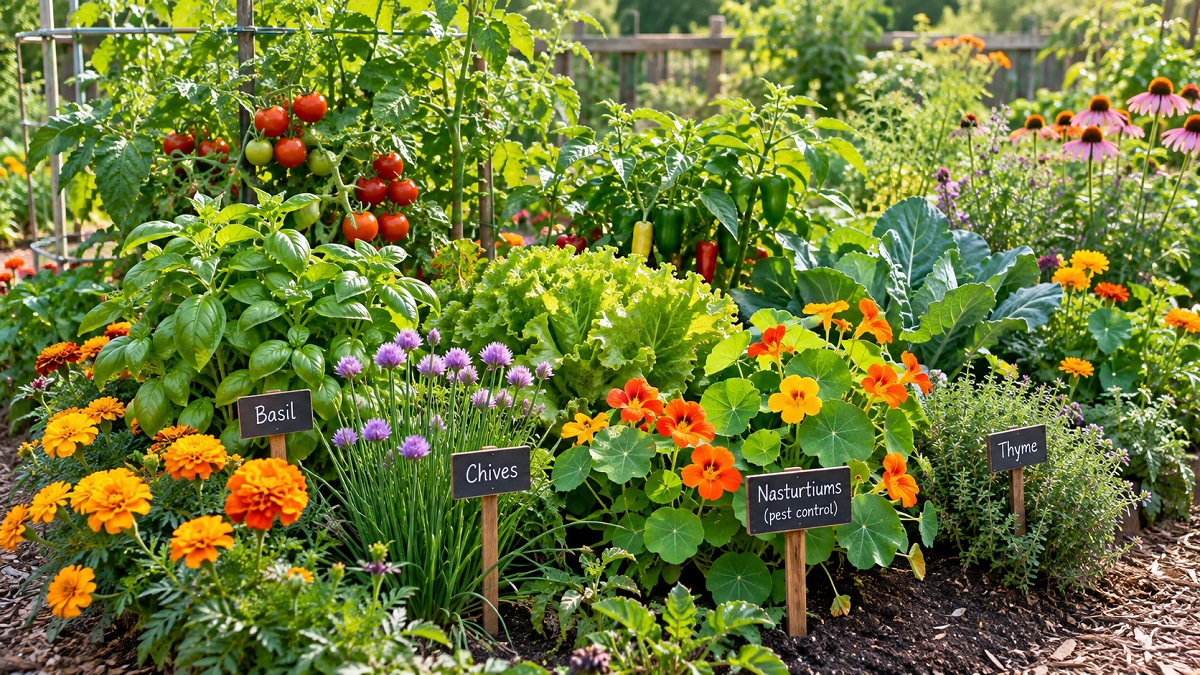
Companion planting is the practice of growing certain plants near one another because their growth habits, resource needs, or interactions may complement each other. In a home garden, it can be as simple as growing basil near tomatoes, planting leafy greens beneath taller crops, or combining flowers and herbs with vegetables to create a more diverse planting bed.
The idea is useful, but companion planting is sometimes presented as a collection of guaranteed rules. In reality, garden conditions matter. Soil, sunlight, water, spacing, weather, plant variety, pests and timing can all affect how well a combination performs. A good companion planting plan therefore starts with the needs of each plant rather than relying on a fixed list of "good" and "bad" neighbors.
Start with compatible growing conditions and use plant combinations to make better use of your garden space.
Companion planting means deliberately growing different plant species together or relatively close to one another. The goal can be practical, such as using vertical space efficiently, providing shade to a shorter crop, attracting pollinators, or simply creating a more varied garden.
Some combinations have become traditional among gardeners. Tomatoes and basil, carrots and onions, lettuce and radishes, and beans with corn are familiar examples. However, the reason for using a combination should be considered carefully. Plants do not automatically benefit one another simply because they are on the same list.
A successful companion planting arrangement usually has something to do with how the plants occupy the garden. One plant may grow tall while another stays low. One may mature quickly while another takes longer. Their roots may explore different parts of the soil, or their foliage may create useful ground cover.
Instead of asking only whether two plants are "compatible," consider whether they have similar environmental requirements and whether they compete for the same resources.
For example, two crops that both require full sun, regular watering and fertile soil may be easy to combine if they have different heights and root patterns. A drought-tolerant herb may be a poor partner for a vegetable that needs consistently moist soil, even if both plants are otherwise commonly recommended as companions.
Good plant combinations can contribute to a diverse garden, but they should not replace basic pest monitoring, crop rotation, proper watering, soil improvement, sanitation or appropriate spacing.
If a crop is struggling, first look at its growing conditions. Crowding several plants together will not correct poor drainage, inadequate sunlight or an unsuitable planting time.
Companion planting can work in several different ways. Some are straightforward examples of garden design, while others involve ecological relationships between plants, insects and the surrounding environment.
Tall plants can occupy the upper part of a garden while shorter plants use the space below them. Corn, for example, can provide a vertical structure in a garden where suitable beans or other crops are grown nearby. Lettuce and other shade-tolerant crops can sometimes be placed where taller plants provide partial protection from intense afternoon sun.
The important point is timing. A young crop may need full sunlight early in the season but become shaded later. Plan the arrangement according to the mature size of the plants rather than their appearance when they are seedlings.
Plants develop roots at different depths and patterns. Combining crops with different root systems can make more efficient use of the available soil, although all plants still compete for water and nutrients.
Deep-rooted plants should not automatically be described as harmless neighbors. Their roots still require resources. Good spacing and healthy soil remain important.
A fast-growing crop can be harvested before a slower crop reaches full size. Radishes and lettuce, for instance, can provide relatively quick harvests while longer-season vegetables continue developing.
This approach turns companion planting into a form of intensive garden planning. Instead of leaving empty spaces between young plants, you can use the available area for a short-lived crop and remove it before the main crop needs the space.
Flowering plants can add habitat and food resources for bees, hoverflies, butterflies and other insects. Some beneficial insects also prey on garden pests during part of their life cycle.
Flowers therefore have value even when they do not directly "protect" a vegetable. A diverse garden can provide more resources for wildlife than a bed containing only one crop.
Low-growing plants can cover portions of bare soil and help reduce the amount of exposed ground. In some gardens, low crops can also help make better use of space beneath taller plants.
Companion planting is most useful when it solves a practical gardening problem. The following benefits are realistic reasons to experiment with mixed plantings.
A mixed bed can contain tall, medium-height and low-growing plants instead of dedicating an entire area to crops with the same growth habit.
A garden containing vegetables, herbs and flowering plants provides a wider range of plant forms and flowering periods. Diversity can also make the garden more attractive and useful to people and wildlife.
Combining crops with different maturity periods allows gardeners to harvest from the same area at different times. This is particularly helpful in small gardens.
Flowering companions can make vegetable beds more inviting to pollinators. This is particularly useful for crops that depend on insect pollination for good fruit production.
Plants with similar moisture and soil requirements can share an irrigation zone. Grouping plants according to their needs makes watering easier and reduces the temptation to give every part of the garden the same treatment.
The combinations below are useful starting points for garden planning. They should be treated as practical planting ideas rather than guarantees of improved growth or pest control.
Tomatoes and basil are a familiar combination in home gardens. They have broadly similar preferences for warm conditions, good light and reasonably fertile soil.
The strongest reason to grow them together is practical garden organization and compatible growing conditions. Claims that basil will automatically repel all tomato pests should be treated cautiously.
Carrots and onions make an appealing combination because their foliage and underground growth patterns differ. Both can be incorporated into a mixed vegetable bed when their spacing and soil requirements are accommodated.
Lettuce and radishes can make good use of limited space because radishes mature quickly. Radishes can be harvested while lettuce continues developing.
Beans and corn have a long history as a mixed planting. Corn provides a tall structure, while climbing beans can use vertical space. The arrangement requires enough corn plants to provide suitable support and sufficient fertility and moisture for both crops.
Dill can be grown near cucumbers as part of a diverse garden. Its flowers can attract insects, while cucumber vines occupy horizontal or vertical space depending on how they are trained.
Peppers can be combined with herbs that prefer similar warm conditions, provided the planting does not become crowded. Herbs such as basil can be useful additions to a sunny vegetable bed.
Cabbage, kale, broccoli and related brassicas are often grown alongside aromatic herbs and flowers. These combinations can increase garden diversity, although no single companion should be relied upon to prevent caterpillars, aphids or other brassica pests.
The easiest way to plan companion planting is to begin with the vegetable you want to grow and then select nearby plants that have compatible requirements.
Tomatoes are warm-season plants that need plenty of sunlight, fertile soil and consistent moisture. Basil, lettuce, carrots, onions and some flowering plants can be incorporated around tomatoes when there is adequate room.
Avoid filling the area so densely that air movement is restricted. Tomato foliage can become very dense, particularly in vigorous varieties.
Peppers prefer warm weather and a sunny position. Basil and other herbs can be grown nearby if they have compatible watering requirements.
Carrots need loose soil so their roots can develop without obstruction. Onions, lettuce and radishes can be useful neighbors because they can occupy nearby space without requiring the same root shape.
Bush beans and pole beans should be treated differently when planning space. Pole beans need a support structure and can be positioned where their vertical growth will not shade smaller crops excessively.
Cucumbers can spread across a considerable area unless they are trained vertically. Lettuce, dill and other suitable low-growing plants can be positioned nearby, but avoid placing shallow-rooted crops where cucumber vines will make maintenance difficult.
Squash plants need considerable room. Their large leaves can shade neighboring plants, so they are better placed along the edge of a bed or in an area where their natural spreading habit can be accommodated.
Lettuce is useful for filling gaps between slower-growing crops. In warm climates, partial shade during the hottest part of the day can sometimes help extend the harvest period, although excessive shade can reduce growth.
Onions have relatively narrow foliage and can fit between broader crops. Carrots, lettuce and other vegetables can be arranged around them when soil and watering requirements overlap.
Broccoli, cabbage, kale and related crops are substantial feeders and need adequate nutrition. They can be combined with herbs and flowers, but companion plants should not be allowed to compete heavily for soil moisture or nutrients.
Herbs and flowers are valuable additions to vegetable gardens because they introduce different colors, scents, heights and flowering periods. They can also provide resources for pollinators and other insects.
Basil works well in warm, sunny vegetable gardens and is commonly planted near tomatoes and peppers. Its compact form makes it practical around larger plants.
Dill produces small flowers that can attract a variety of insects. Allowing some plants to flower can be useful when the goal is to create a more wildlife-friendly vegetable garden.
Marigolds are widely used in vegetable gardens. They add color and flowers and can contribute to a diverse planting scheme. However, they should not be treated as a universal pest-control plant.
Nasturtiums can trail or spread through garden beds and are useful where a low-growing flowering plant is desired. Their edible flowers and leaves can also make them attractive to gardeners who want multifunctional plants.
Calendula provides bright flowers and can fit into ornamental and edible garden designs. Its flowering period can make it useful as part of a pollinator-friendly planting.
Chives form narrow clumps that can fit along bed edges and between larger plants. Their flowers are also attractive to pollinating insects.
One of the biggest mistakes in companion planting is assuming that plants should be packed tightly together. More plants do not necessarily mean a better garden.
Every plant needs access to light, water, nutrients and air. Crowding can increase competition and make it harder to inspect plants, harvest vegetables and identify pests early.
Always plan according to the mature size of a plant rather than the size of the transplant. A small cucumber seedling may eventually produce several feet of vines, while a tiny squash plant can develop leaves that cover a large area.
A productive garden still needs to be maintained. Leave enough room to walk between beds, reach plants for harvesting and inspect foliage.
Tall plants should generally be positioned so they do not unnecessarily block sunlight from crops that need full sun. In hot climates, however, some afternoon shade can be useful for crops that struggle during extreme heat.
Companion planting becomes particularly useful when combined with succession planting. Instead of expecting every plant in a bed to remain there for the entire growing season, plan for different crops to occupy the space at different times.
For example, a fast-growing radish crop can be harvested before a slower vegetable becomes large enough to need the same amount of space. Lettuce can also be harvested while a larger crop continues growing.
This approach works best when you keep a simple planting calendar. Record sowing dates, expected harvest periods and the approximate mature size of each crop. Over time, you will learn which combinations fit your particular garden.
Young vegetables often leave large areas of bare soil around them. A short-season crop can sometimes make use of that space before the main crop reaches maturity.
Once a fast crop has finished producing, remove spent plants when appropriate and prepare the space for the next planting. Good garden hygiene also makes it easier to spot disease or pest problems.
You do not need a large vegetable plot to experiment with companion planting. Containers can hold carefully selected combinations of herbs, flowers and compact vegetables.
The main limitation is root space. Plants in containers have less soil available than plants growing in the ground, so overcrowding becomes a problem quickly.
Plants sharing one container should have broadly similar moisture requirements. Combining a plant that needs consistently moist soil with a drought-tolerant herb can make watering difficult.
A large tomato and several herbs may need a much larger container than a small collection of salad greens. Check the expected size of every plant before combining them.
Trellised cucumbers, compact beans and other climbing plants can make use of vertical space, but the support should be strong enough for the mature plant.
Companion planting charts are useful starting points, but they cannot account for every soil type, climate, cultivar, planting density or pest population. Use them as ideas rather than absolute rules.
Packing plants together can create competition and make maintenance difficult. Good companion planting should make the garden more functional, not simply more crowded.
A tall crop can unintentionally shade a shorter plant. Before planting, consider where the sun moves across the garden during the growing season.
Statements such as "this flower repels this pest" are often repeated without explaining the conditions under which the effect might occur. A diverse garden can be valuable without relying on a guaranteed pest-repellent effect.
Plants sharing the same bed will often share the same irrigation pattern. Choose neighbors with compatible moisture needs whenever possible.
Companion planting does not replace crop rotation. If the same plant family is grown in the same soil repeatedly, rotating crops can still be an important part of long-term garden management.
Always check the expected height and spread. A plant that looks small at planting time may become the dominant plant in the bed later.
You can create a useful companion planting bed without following a complicated chart. Start with the crops you actually want to harvest and build around them.
Write down the vegetables you want most. Tomatoes, peppers, beans, carrots, lettuce and cucumbers might form the core of a home vegetable garden.
Note the sunlight, soil, moisture, mature size and approximate growing season for each crop. This immediately eliminates many poor combinations.
Look for crops that can occupy spaces between larger plants without becoming overcrowded. Fast-growing greens and radishes can sometimes work well here.
Herbs such as basil, dill and chives can provide useful diversity while fitting into relatively small spaces.
Choose flowers that suit your climate and growing conditions. Place them around the edges or in available spaces rather than allowing them to interfere with vegetable production.
Before planting, check the mature dimensions of every crop. Leave enough room for airflow, harvesting and maintenance.
The first season is partly an experiment. Take notes about which plants became too crowded, which areas dried out quickly and which combinations were convenient to harvest.
Your own observations are often more useful than a generic companion chart because they reflect your soil, climate, garden layout and growing habits.
Use this table as a starting point when designing a mixed garden. "Good companion" here means a practical combination to consider, not a guarantee that one plant will improve the performance of another.
| Main Crop | Possible Companions | Why Consider Them? | Planning Note |
|---|---|---|---|
| Tomatoes | Basil, lettuce, carrots, onions | Compatible garden conditions and varied plant forms | Allow room for mature tomato growth |
| Peppers | Basil, carrots, onions | Warm-season plants that can share sunny beds | Avoid overcrowding |
| Carrots | Onions, lettuce, radishes | Different growth patterns and useful succession options | Keep soil loose for root development |
| Lettuce | Radishes, carrots, onions | Compact crops that can make efficient use of space | Protect from excessive heat where necessary |
| Beans | Corn, carrots, radishes | Can combine vertical and low-growing spaces | Pole beans need strong support |
| Cucumbers | Dill, lettuce, radishes | Different growth habits and flowering resources | Allow room for vines or provide a trellis |
| Brassicas | Dill, chives, lettuce, flowers | Creates a more diverse planting area | Provide adequate nutrition and spacing |
| Onions | Carrots, lettuce, peppers | Narrow foliage makes efficient use of bed space | Keep competing weeds under control |
| Squash | Corn, beans, flowering plants | Can form part of a layered planting arrangement | Give vines plenty of room to spread |
| Herbs | Vegetables and flowering plants | Add diversity and can fit into smaller spaces | Match watering and sunlight requirements |
Companion planting becomes easier when you think of the garden as a small ecosystem rather than a collection of isolated plants.
Remember that companion planting does not need to be complicated. Even a small herb planted beside a vegetable or a row of flowers along the edge of a vegetable bed can add useful diversity.
Companion planting works best when it is approached as thoughtful garden design rather than a collection of guaranteed plant pairings. Start with sunlight, soil, moisture, spacing and mature size. Then look for opportunities to combine different heights, harvest periods, textures and flowering plants.
You do not need to redesign the entire garden at once. Try a few combinations, observe how they perform through the season and make notes for next year. Over time, those observations can help you create a companion planting system that fits your own garden far better than a generic chart.
Continue exploring our gardening guides with more plant profiles, growing tips, and practical advice for creating a healthy, productive garden.