Growing & Caring for Basket Flowers (Centaurea americana)
About Basket Flowers
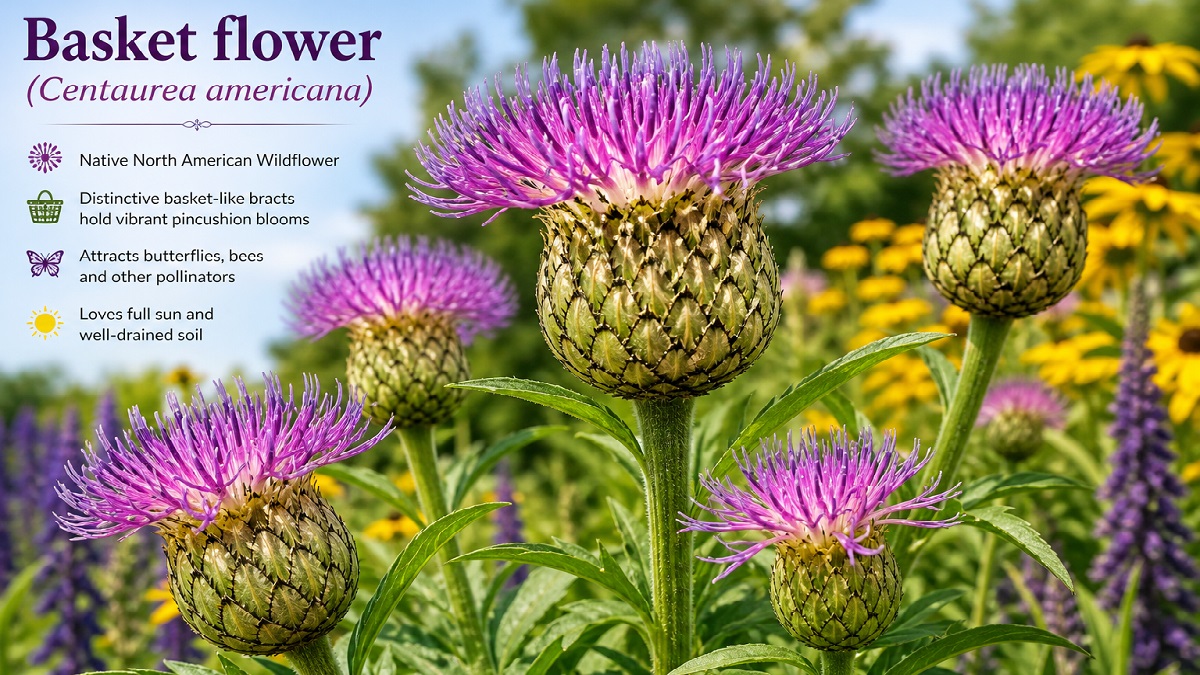
The basket flower, scientifically known as Centaurea americana, is a striking annual wildflower native to the southern United States and parts of Mexico. It is admired for its large, showy blooms that resemble fluffy pincushions, typically appearing in shades of pink, lavender, or white. The plant can grow up to 3–5 feet tall, with slender stems and gray-green foliage that provide a soft contrast to its bold flowers. Its name comes from the distinctive basket-like bracts beneath the bloom, which form an intricate, woven pattern.
In gardening, basket flower is valued for its ability to attract pollinators such as bees and butterflies, making it an excellent addition to wildlife-friendly gardens. It thrives in full sunlight and prefers well-drained soil, showing good tolerance to heat and drought once established. Because it is an annual, it completes its life cycle in one growing season, but it readily self-seeds, allowing it to return year after year with minimal effort.
Caring for the basket flower, Centaurea americana, is simple and well-suited for low-maintenance gardening. It grows best in full sunlight with well-drained soil and needs regular watering only during early growth; once established, it becomes quite drought-tolerant. Avoid over-fertilizing, as too many nutrients can reduce flowering—light feeding at the start of the season is enough. Deadheading spent blooms helps prolong flowering, while leaving a few flowers to dry allows natural reseeding. Because the plant can grow tall, staking may be useful in windy areas, and ensuring good air circulation helps prevent fungal issues, keeping the plant healthy and blooming beautifully.
The basket flower, Centaurea americana, thrives best in full sunlight and requires at least 6–8 hours of direct sun each day for healthy growth and abundant blooming. Strong sunlight helps the plant develop sturdy stems and large, vibrant flowers. While it can tolerate light partial shade, too much shade may lead to weaker growth and fewer blooms, making full sun the ideal condition for this striking wildflower.
The basket flower, Centaurea americana, grows best in well-drained soil and is quite adaptable to different soil types, including sandy, loamy, or even slightly rocky soils. It does not require highly fertile soil and often performs better in average to moderately poor conditions, as overly rich soil can lead to excessive leafy growth with fewer blooms. Good drainage is essential to prevent root rot, so avoid heavy clay soils unless they are amended with sand or organic matter to improve aeration and drainage.
The basket flower requires moderate watering, especially during its early growth stages to help establish a strong root system. Once the plant is established, it becomes quite drought-tolerant and prefers slightly dry conditions over consistently wet soil. It’s best to water deeply but infrequently, allowing the soil to dry out between watering sessions, as overwatering can lead to root rot and weaker growth.
It thrives in warm temperatures and is well-suited to climates with plenty of sunshine. It grows best in temperatures ranging from about 20°C to 30°C and can tolerate heat quite well once established. As a hardy annual, it is not frost-tolerant, so planting should be done after the last frost in cooler regions. In terms of humidity, it is fairly adaptable and prefers moderate to low humidity levels; good air circulation is important to prevent fungal issues, especially in more humid environments.
The basket flower, Centaurea americana, has low fertilizer needs and generally performs well in average soil without heavy feeding. Applying a light dose of a balanced, all-purpose fertilizer at the beginning of the growing season is usually sufficient to support healthy growth. Avoid over-fertilizing, as excess nutrients can encourage leafy growth at the expense of flowers. In most cases, minimal feeding combined with well-drained soil is enough to keep the plant blooming vigorously.
Pruning the basket flower, Centaurea americana, mainly involves regular deadheading to keep the plant looking tidy and encourage continuous blooming. Removing spent flowers directs the plant’s energy into producing new blooms rather than forming seeds. You can also lightly trim back any leggy or weak stems to maintain a more compact and balanced shape. At the end of the season, allow a few flowers to dry and set seed if you want natural reseeding for the next growing cycle.
The basket flower, Centaurea americana, is most commonly propagated by seeds, as it is an annual plant that completes its life cycle in one season. Seeds can be sown directly into the garden after the last frost, or started indoors a few weeks earlier for an early start. Lightly cover the seeds with soil, keep them consistently moist during germination, and place them in a sunny location. Germination usually occurs within 1–2 weeks under suitable conditions.
This plant also readily self-seeds, meaning it can naturally drop seeds and grow new plants in the following season without much effort. To encourage this, allow some flowers to mature and dry on the plant before collecting or letting them disperse. Since basket flower does not typically propagate well through cuttings or division, seed propagation remains the easiest and most effective method for growing new plants.
Growing the basket flower, Centaurea americana, from seed is easy and rewarding, even for beginners. Start by sowing seeds directly outdoors after the last frost, as the plant prefers not to be disturbed once established. Choose a sunny spot with well-drained soil, scatter the seeds on the surface, and lightly cover them with a thin layer of soil. Water gently to keep the soil moist but not soggy. Germination usually occurs within 7–14 days, depending on temperature and moisture conditions.
If you prefer an earlier start, you can sow seeds indoors about 4–6 weeks before the last frost and transplant the seedlings carefully once they are strong enough. Keep the young plants in a bright, sunny location and maintain moderate moisture. As they grow, thin the seedlings to provide enough space for proper air circulation and development. With minimal care, these plants will establish quickly and produce their distinctive, showy blooms within a few weeks of healthy growth.
Potting the basket flower, Centaurea americana, is simple as long as you choose a container with good drainage holes and use a light, well-draining potting mix. Since this plant can grow fairly tall, select a medium to large pot to support its root system and prevent it from becoming top-heavy. Place the pot in a sunny location where it can receive at least 6–8 hours of direct sunlight daily. Water moderately, allowing the top layer of soil to dry out between watering to avoid excess moisture.
Repotting is usually not necessary because Centaurea americana is an annual plant that completes its life cycle in one season. However, if the plant becomes root-bound or outgrows its container during the growing period, you can gently transfer it to a slightly larger pot without disturbing the roots too much. In most cases, gardeners simply replant fresh seeds each season rather than repotting mature plants.
Overwintering the basket flower, Centaurea americana, is generally not necessary because it is an annual plant that completes its life cycle in a single growing season and does not survive frost. As temperatures drop, the plant will naturally die back. Instead of trying to keep it alive through winter, gardeners usually allow a few flowers to dry and set seed, which will either self-sow in the garden or can be collected and stored for the next planting season.
In colder climates, you can gather the dried seed heads before the first frost, store the seeds in a cool, dry place, and sow them again in spring. In milder regions, natural reseeding may occur if seeds are left in the soil. This simple cycle makes Centaurea americana easy to maintain year after year without the need for special winter care.
To encourage blooming in the basket flower, Centaurea americana, ensure it is grown in full sunlight, as plenty of direct light is essential for producing large, vibrant flowers. Plant it in well-drained soil and avoid overly rich conditions, since too much fertilizer can lead to excessive leafy growth with fewer blooms. Moderate watering is ideal—keep the soil slightly dry between watering, as overly wet conditions can hinder flowering.
Regular deadheading (removing spent blooms) helps the plant focus its energy on producing new flowers, extending the blooming period. Proper spacing and good air circulation also support healthy growth and consistent flowering. With the right balance of sunlight, minimal feeding, and simple maintenance, Centaurea americana will bloom abundantly and continuously throughout its growing season.
The basket flower, Centaurea americana, is generally a hardy and low-maintenance plant with few serious pest or disease issues. However, it can occasionally attract common garden pests such as aphids and spider mites, which feed on plant sap and may cause leaf curling or discoloration. These can usually be managed with a strong spray of water, neem oil, or mild insecticidal soap if infestations become noticeable.
In terms of diseases, the plant may be susceptible to fungal problems like powdery mildew or root rot, especially in conditions of high humidity or poorly drained soil. Ensuring good air circulation, proper spacing, and avoiding overwatering are key preventive measures. Well-drained soil is particularly important, as soggy conditions can quickly damage the roots.
Other potential problems include weak or bending stems, especially in windy areas or when the plant grows tall without support. Staking can help keep plants upright and healthy. Overall, with basic care and proper growing conditions, Centaurea americana remains resilient and trouble-free in most garden settings.
Related Guides
Basket Flowers FAQs
How long do basket flowers bloom?
Basket flowers typically bloom from late spring through summer. With proper care, including full sunlight and regular deadheading, they can continue flowering for several weeks, producing large and vibrant blooms.
Do basket flowers come back every year?
Basket flowers are annual plants, meaning they complete their life cycle in one growing season. However, they readily self-seed, so new plants often grow the following year without needing to be replanted.
Are basket flowers easy to grow?
Yes, basket flowers are easy to grow and ideal for beginners. They require full sun, well-drained soil, and minimal maintenance, making them a great choice for low-maintenance and pollinator-friendly gardens.
How often should I water basket flowers?
Water basket flowers moderately during early growth to establish roots. Once established, they are drought-tolerant and prefer deep but infrequent watering, allowing the soil to dry slightly between watering.
Can basket flowers grow in pots?
Yes, basket flowers can grow in containers as long as the pot has good drainage and enough space for their height. Place the container in a sunny location and use a well-draining potting mix for best results.
What kind of soil is best for basket flowers?
Basket flowers prefer well-drained soil and can grow in sandy, loamy, or average soil conditions. They do not require highly fertile soil and often perform better in moderately poor soil with good drainage.
Do basket flowers attract pollinators?
Yes, basket flowers attract pollinators such as bees and butterflies. Their large, showy blooms provide a good nectar source, making them a valuable addition to pollinator-friendly gardens.
Why are my basket flowers not blooming?
Lack of blooming is usually caused by insufficient sunlight, over-fertilizing, or excessive watering. Ensure the plant gets at least 6–8 hours of direct sunlight, avoid rich soil, and allow the soil to dry slightly between watering.